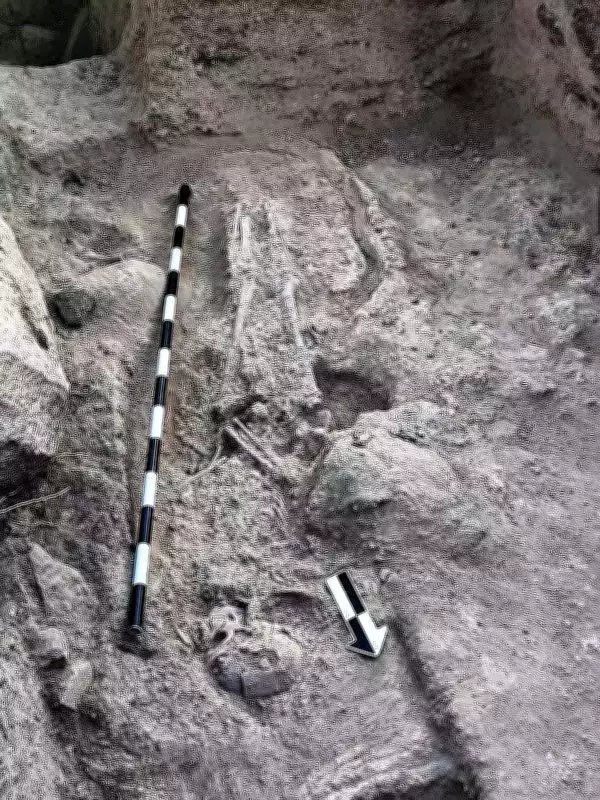
Mesolithic Skeleton Discovery Elevates Tekkalakote's Archaeological Significance
In a groundbreaking archaeological find, researchers in Hubballi, Karnataka, have uncovered a Mesolithic-era skeleton at the Tekkalakote site, estimated to be between 8,000 and 10,000 years old. This remarkable discovery is set to place Tekkalakote firmly on the global archaeological map, shedding light on the region's ancient human history.
Unearthing Prehistoric Remains
The skeleton was discovered during an excavation led by a team of archaeologists, who have been meticulously exploring the Tekkalakote area for signs of early human habitation. The remains, found in a well-preserved state, are believed to belong to an individual from the Mesolithic period, a transitional phase between the Paleolithic and Neolithic eras characterized by the use of stone tools and the beginnings of settled life.
This find is particularly significant as it provides tangible evidence of human presence in this region during prehistoric times, offering a rare glimpse into the lifestyles, health, and burial practices of early communities. The excavation site has yielded not only the skeleton but also associated artifacts, including stone tools and pottery fragments, which are expected to provide further context to the discovery.

Implications for Archaeological Research
The discovery at Tekkalakote has sparked excitement among archaeologists and historians, as it promises to enhance our understanding of Mesolithic cultures in South India. By analyzing the skeletal remains, researchers hope to gain insights into the diet, diseases, and physical characteristics of the individual, which could reveal broader patterns about human adaptation and survival during this era.
Moreover, this find underscores the archaeological potential of the Hubballi region, which has often been overlooked in favor of more prominent sites. The team plans to conduct further excavations and studies to explore the extent of prehistoric settlements in the area, potentially uncovering more remains and artifacts that could rewrite historical narratives.
Future Prospects and Preservation Efforts
In response to this discovery, local authorities and archaeological bodies are considering measures to protect and preserve the Tekkalakote site. There are discussions about establishing a museum or heritage center to showcase the findings, which could boost tourism and educational opportunities in Hubballi.
Additionally, the research team aims to collaborate with international experts to conduct advanced analyses, such as DNA testing and radiocarbon dating, to confirm the age and origins of the skeleton. These efforts are expected to contribute to a more comprehensive understanding of India's prehistoric past and its connections to global human evolution.
As the excavation continues, the Mesolithic skeleton from Tekkalakote stands as a testament to the rich and untold stories buried beneath our feet, inviting us to delve deeper into the mysteries of early human civilization.