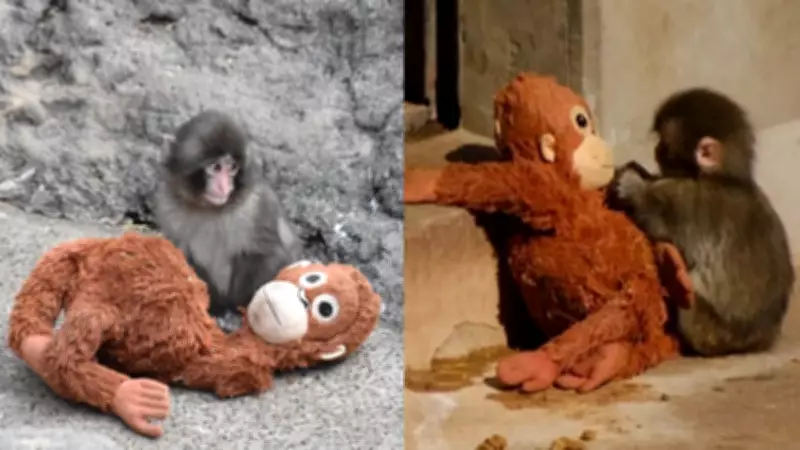
Abandoned Macaque Punch Captures Global Hearts with Plush Toy Companion
In today's fast-paced digital landscape, where fleeting trends dominate attention, it takes something profoundly tender to make people pause. A tiny macaque named Punch has achieved exactly that remarkable feat. At Ichikawa City Zoo in Japan, this six-month-old monkey has captured worldwide attention not through spectacle, but through raw vulnerability.
A Challenging Beginning to Life
Punch was born on July 26, 2025, weighing a mere 500 grams. According to detailed reporting by Japan's national daily Mainichi Shimbun, his mother, a first-time parent exhausted by the summer birth, showed no signs of caring for him shortly after delivery. Zookeepers explained that maternal abandonment can occur among monkeys in certain situations, particularly when inexperienced mothers struggle to form proper bonds.
Recognizing that the newborn was healthy but extremely vulnerable, dedicated zookeepers Kosuke Shikano and Shumpei Miyakoshi intervened to hand-raise the infant macaque. Rather than isolating him completely, they ensured Punch grew up surrounded by the sounds and scents of other monkeys, making eventual reintegration into the troop possible. Their goal extended beyond mere survival—they aimed to prepare Punch for a full life among his own kind.

The Significance of a Stuffed Toy
In natural habitats, infant macaques cling constantly to their mother's fur. This physical contact provides essential warmth, emotional security, and even helps develop crucial muscle strength. Without this fundamental bond, young monkeys can experience significant stress and difficulty adapting socially.
To compensate for this missing connection, caretakers experimented with various substitutes, including rolled towels and soft toys. As detailed by Mainichi Shimbun, Punch quickly formed an intense attachment to an orangutan plush toy whose textured fur made it easy to grip and whose appearance resembled another primate.
Zookeeper Shikano described the toy as functioning like a surrogate mother, offering vital reassurance especially during nighttime hours when staff were not present. Later videos showed Punch sleeping while tightly hugging the toy, an image that resonated instantly with viewers across the globe.
Social Media Embraces Punch's Story
Punch's narrative gained widespread attention after zoo visitors began sharing photos and videos online. When Ichikawa City Zoo officially introduced him on its X account in early February, posts were reposted thousands of times. A supportive hashtag translating to #HangInTherePunch quickly emerged, generating tens of thousands of posts within mere days.
Many users described powerful emotional reactions to watching the young macaque navigate life while holding steadfastly to his plush companion. Separate viral clips shared by the X account Volcaholic further amplified his popularity, noting that Punch carries the toy everywhere—hugging it while sleeping, using it for comfort when nervous, and even holding it close while interacting with other monkeys.
The overwhelming reactions reflected something profoundly universal. As one widely shared sentiment suggested, stories like Punch's remind people that the fundamental need for safety and emotional connection exists across all species boundaries.
The Journey Toward Belonging
In mid-January 2026, zookeepers successfully reintroduced Punch to the monkey mountain enclosure, home to dozens of macaques. The transition proved challenging initially. Other monkeys, initially wary, sometimes intimidated the young newcomer, and Punch struggled to let go of his stuffed companion during these early interactions.
Yet progress has been steadily encouraging. Now weighing approximately two kilograms, Punch has begun interacting more actively with the troop while still receiving supplemental feeding from keepers. According to observations shared with Mainichi Shimbun, he demonstrates notable resilience, recovering quickly even after being scolded by older monkeys.
Visitors gathering at the enclosure often watch closely as he alternates between cautious exploration and moments of comfort with his toy, drawing audible reactions of affection from captivated crowds.

Beyond a Mere Viral Moment
Punch's story resonates deeply because it mirrors something fundamentally familiar to all: the search for comfort during periods of uncertainty. Scientists have long observed that transitional objects—whether blankets, toys, or familiar items—help young mammals manage stress and adaptation. In Punch's specific case, the plush orangutan became a crucial bridge between dependence and growing independence.
While zoo staff continue guiding his gradual integration, his journey has already sparked empathy far beyond Japan's borders. What began as careful animal care has transformed into a powerful reminder that resilience often begins with small, comforting sources of security.
For now, Punch still holds tightly onto his stuffed companion. And for millions watching online, that simple yet profound image—a tiny monkey refusing to release his security while courageously learning to face the world—feels quietly, universally relatable on the most human level.