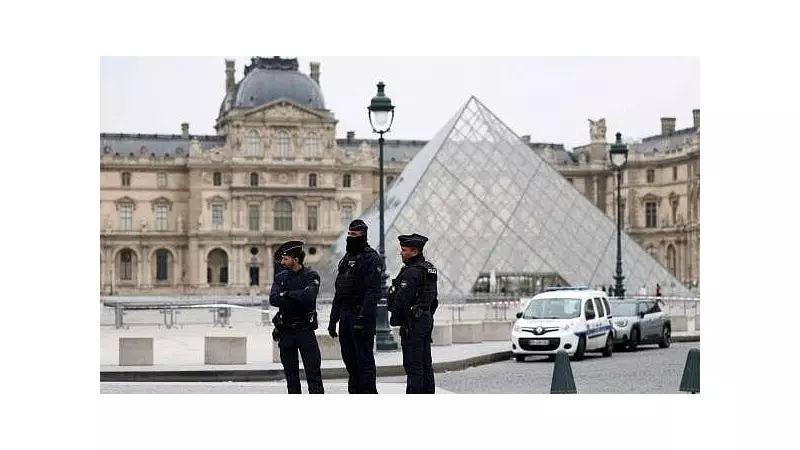
A significant water leak at the world-renowned Louvre Museum in Paris has caused damage to a collection of books housed within its prestigious Department of Egyptian Antiquities. The incident, which took place on Wednesday, June 26, 2024, has raised concerns about the preservation of invaluable scholarly resources, though museum officials have confirmed that no ancient artefacts were affected.
Incident Details and Immediate Response
The leak originated from a technical room located on the mezzanine level of the museum's Denon wing. This area is part of the complex that houses the famed Egyptian Antiquities department, home to treasures like the Great Sphinx of Tanis. Water seeped from this room into an adjacent storage space dedicated to housing the department's library and archival books.
Upon discovery, the museum's technical and conservation teams swung into immediate action. Their priority was to stop the water flow and begin the crucial process of salvaging the affected materials. A spokesperson for the Louvre stated that the teams worked diligently to secure the area and assess the extent of the damage to the book collection.
Scope of Damage and Reassurance on Artefacts
While the precise number of damaged books is still being evaluated, the museum has provided a critical reassurance. No Egyptian antiquities, sculptures, or historical artefacts from the collection suffered any harm. The damage was confined to the bibliographic resources. This distinction is vital for historians and art lovers globally, as the Louvre's Egyptian collection is one of the most important outside of Cairo.
The affected books are part of the department's reference and research library, used by curators, researchers, and scholars. Damage to such resources, while not involving millennia-old objects, can still impact academic work and the preservation of scholarly knowledge related to the collection.
Investigation and Preventive Measures
An investigation has been launched to determine the exact cause of the leak in the technical room. The Louvre, which receives millions of visitors annually, has robust systems in place for the protection of its collections against various risks, including water damage. This incident will likely prompt a review of these protocols in non-gallery spaces like storage and technical areas.
The museum's response highlights the ongoing challenges faced by major cultural institutions in maintaining and protecting their vast holdings. It underscores the fact that threats to heritage are not limited to high-profile gallery spaces but can occur in auxiliary areas housing supporting collections vital for research and curation.
Context and Importance of the Collection
The Department of Egyptian Antiquities at the Louvre is a cornerstone of the museum, established in 1826. It spans from prehistoric Nile civilizations to the Coptic period. Its collection includes iconic pieces like the Seated Scribe and the colossal statue of Ramesses II. The department's library is an essential tool for the curatorial staff managing this immense chronological span.
This incident follows other high-profile museum leaks globally, bringing attention to the constant vigilance required in heritage preservation. The prompt containment and the lack of damage to artefacts demonstrate effective crisis management, but the event serves as a stark reminder of the vulnerabilities inherent in managing historic buildings and their contents.
The Louvre administration is expected to provide further updates as the damage assessment is finalized and restoration efforts for the books begin. The focus remains on ensuring such incidents are prevented in the future to safeguard every component of the world's cultural heritage entrusted to the museum.