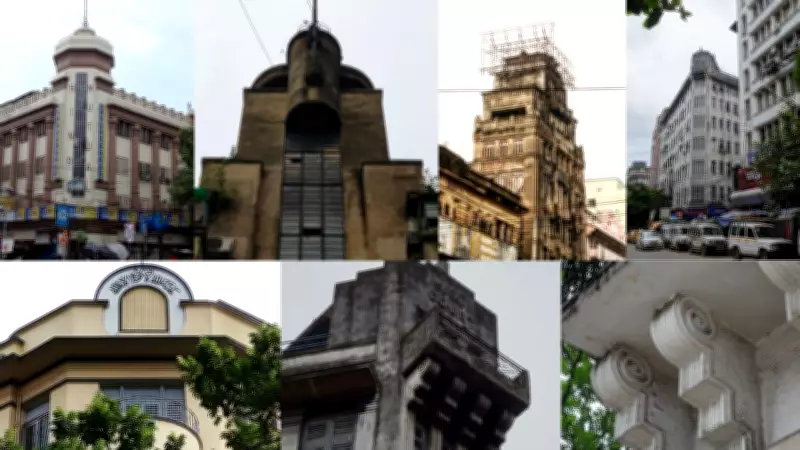
KOLKATA: As global celebrations mark the centenary year of Art Deco architecture, characterized by its geometric patterns, sleek lines, zigzags, and sunburst motifs, conservation architects and heritage experts in Kolkata are raising urgent calls for the preservation and adaptive reuse of the city's rich Art Deco built heritage. Drawing inspiration from successful models like Miami in the United States, these advocates emphasize that Kolkata's collection of over 400 Art Deco buildings holds immense potential for cultural and economic revitalization.
Spotlight on Kolkata's Overlooked Architectural Treasures
The renewed focus on Kolkata's Art Deco buildings, an often-neglected aspect of the city's architectural legacy, emerged following a presentation by Art Deco researcher Adhiraj Bose and the Calcutta Heritage Collective (CHC). This event was organized by the Chicago Art Deco Society (CADS), bringing international attention to Kolkata's unique heritage. The city's inventory includes a diverse array of structures such as commercial façades, residential blocks, offices, cinemas, apartments, and private homes, many featuring repeating Deco details that define neighbourhood streets.
A Historical Parallel with Global Evolution
Interestingly, the Art Deco style was adopted in Kolkata concurrently with its evolution in Europe and America during the mid-1920s to mid-1950s. This period captured a decisive moment in the city's history, as it navigated modernity amid dramatic economic and social transformations. Bose noted, "The city's inventory has the potential to rank among the most significant Art Deco collections in India and to be recognized globally." These buildings reflect a time of affluence followed by hardship, recording shifting aspirations towards new technologies, lifestyles, and a cosmopolitan identity.

CADS board President Joseph Loundy highlighted this duality, stating, "This was a period of great affluence followed by great poverty. It's an important story that needs to be more widely known." CHC founder Mukul Agarwal further pointed out that the value of Kolkata's Art Deco buildings extends beyond their visual appeal, revealing insights into the city's urban history and the people who commissioned, designed, built, and inhabited them.
Cultural Significance and Urban Narratives
Culturally, these buildings showcase Kolkata's engagement with international design trends while expressing local tastes and social ambitions. Art Deco represented progress through innovative materials, construction methods, and a forward-looking aesthetic that contrasted with earlier colonial classicism. It intersected with evolving patterns of leisure and consumption in entertainment and retail, where elements like lighting, signage, and façade composition projected glamour and novelty.
Agarwal emphasized that Kolkata's Art Deco buildings offer a layered urban narrative, where Deco styles coexist with colonial, indigenous, and modern histories. This creates a compelling destination for architecture enthusiasts, photographers, researchers, and cultural travelers. She added, "If Miami Beach City makes tourists flock and the economy boosts, Kolkata's Art Deco treasure can do the same too. Art Deco can be a game changer in the heritage map of India."
Architectural Features and Local Adaptations
Key architectural features associated with Kolkata's Art Deco include:
- Strong horizontal lines and curved corners
- Stepped profiles and geometric ornamentation
- Sunbursts, chevrons, fluting, and stylized floral motifs
- Bold parapets and innovative façade designs
These buildings adapted the global Art Deco vocabulary to local conditions through practical elements such as verandahs, recessed windows, and ventilation features, effectively responding to Kolkata's heat, monsoon climate, and dense urban streetscapes. This blend of international style with regional practicality underscores the unique character of Kolkata's Art Deco heritage.

As the centenary year provides an opportunity to showcase Kolkata's Art Deco not merely as heritage but as a cultural asset with international appeal, conservationists stress the need for concerted efforts in preservation. By leveraging this architectural legacy, Kolkata can enhance its heritage tourism, foster economic growth, and secure a prominent place on the global map of Art Deco destinations.