Kolkata Restorers: Citizen Collective Illuminates Heritage, Sparks Civic Movement
A remarkable citizen-led initiative is transforming Kolkata's urban landscape through dedicated heritage preservation. The Kolkata Restorers, a collective of 306 donors united by their commitment to safeguarding the city's architectural and cultural legacy, has emerged as a powerful force in conservation efforts.
Celebrating 25 Years of Calcutta Times
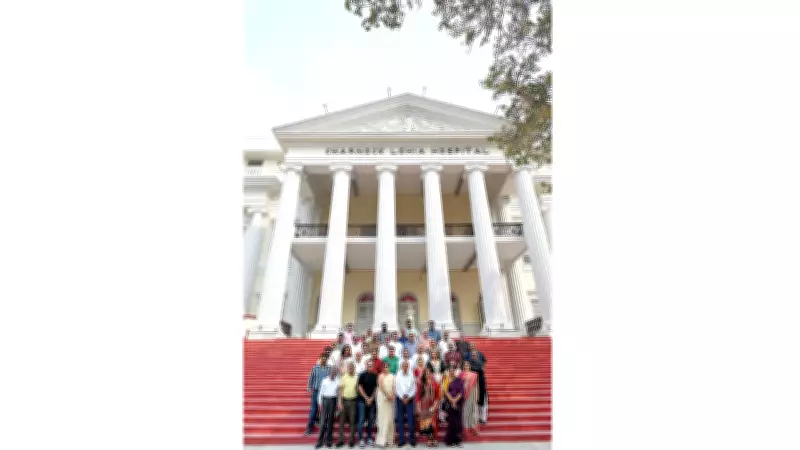
Recently, 49 members of this changemaker collective gathered for an exclusive photoshoot at the newly restored Charnock Lohia Hospital, commemorating 25 years of Calcutta Times. During the event, they emphasized that restoration transcends mere brick-and-mortar preservation—it's about protecting memory, identity, and the layered histories that define Kolkata.
Who Are the Kolkata Restorers?
The Kolkata Restorers represent a unique community-driven initiative powered by residents who voluntarily contribute time, resources, and expertise toward conservation. Unlike formal institutions, this collective operates through grassroots participation, demonstrating how heritage conservation can evolve into a shared civic movement.

Their most visible achievement is the large-scale illumination project launched in late 2023, which has transformed dozens of heritage buildings across the city. By lighting these structures after dark, they've created entirely new ways for residents and visitors to experience Kolkata's architectural treasures.
Beyond Illumination: Comprehensive Conservation
The group's work extends far beyond lighting installations. They engage in hands-on conservation efforts including restoring heritage clock towers, cleaning historic sites, and bringing neglected structures back into public consciousness. Their approach strategically blends aesthetics with awareness, using illumination not just for visual enhancement but to spark meaningful conversations about preservation.
At its core, the initiative represents a reclamation of ownership over Kolkata's legacy. By demonstrating that ordinary citizens can drive meaningful change, they've created a model for urban conservation that other cities might emulate.
Voices from the Movement
Ketan Desai, known as the Bald Man of Tea, expressed his deep connection to the city: "I am a Kolkatan at heart—born and brought up in this city. The illumination of these iconic landmarks has created a unique night circuit that few places worldwide can claim."
Sandip Nowlakha highlighted the changing attitudes: "Kolkata sits on one of the largest concentrations of heritage sites, yet much went underappreciated. Now we're witnessing a significant shift in awareness and action toward preserving our heritage."
Raj Agarwal, a Chartered Accountant, drew international comparisons: "When we see how London or Paris preserve their heritage, it makes you reflect on what we can do for our own city. Kolkata deserves the same level of care and commitment."
Economic and Social Impact
Mudar Patherya, restorer and Chief Craziness Officer at Trisys, explained the broader vision: "The industrial slowdown affected Kolkata for decades. Tourism can be an alternative revenue generator, and without illumination and restoration, we cannot create this alternative engine. The response has been overwhelmingly positive."
He revealed impressive statistics: illumination of 113 buildings, restoration of 8 public clocks and 4 monuments, and cleaning of 1,312 heritage plaques—all accomplished within 2.5 years.
Aditya Jajodia, Chairman of Jai Balaji Group, noted the tourism benefits: "The illumination project is reshaping the city's relationship with its heritage. It's steadily boosting tourism, drawing both locals and visitors to explore previously overlooked areas."
Philosophical Foundations
Dilip Shah, Rector at The Bhawanipur Education Society College, poetically described the transformation: "Heritage buildings are silent storytellers, and restoration gives them back their voice. When heritage is illuminated, streets become galleries, and the city becomes an open museum."

Soumen Mitra, former Kolkata Police Commissioner, emphasized continuity: "Today's Kolkata is yesterday's Calcutta—an international cosmopolitan city. Heritage restoration ensures a city's story isn't interrupted but carried forward with dignity and relevance."
Personal Connections and Civic Responsibility
Anant Nevatia of Rural Health Care Foundation shared his lived experience: "I live in a heritage building in Chowringhee. Living within that space makes you acutely aware of the history it holds and the responsibility that comes with it."
Vivek Mundra connected heritage to modern challenges: "In times of AI and rapid technological change, it becomes more important to stay rooted—and that begins with preserving our heritage. It anchors us to our identity and cultural context."
Looking Forward
Sunil Bhandari, poet and podcaster, emphasized storytelling: "We need to talk more about Kolkata—beyond the clichés—about its depth of culture, history, and character. By telling its stories consistently, we reshape perception and unlock opportunities for growth and renewed civic pride."
Navpreet Arora, heritage walk curator, observed the experiential impact: "The illumination project has literally brought the city to light, revealing details and histories that often go unnoticed. It has transformed how people connect with these spaces."
The Kolkata Restorers demonstrate that heritage conservation isn't just about preserving the past—it's about creating vibrant foundations for the future. Through their illumination projects, restoration work, and community engagement, they're ensuring that Kolkata's architectural legacy remains not just preserved, but actively celebrated and integrated into the city's evolving identity.