ISRO Scientist Decries 'Monumental Cruelty' of Heritage Destruction
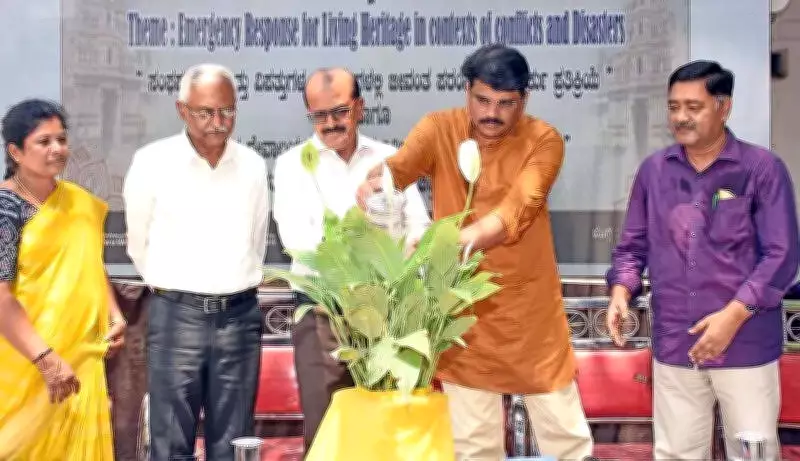
Senior ISRO scientist Srinath Ratnakumar has issued a strong condemnation of the destruction of monuments, labeling it a "monumental cruelty" that must be resisted irrespective of religious affiliation or ownership. He emphasized the shared responsibility of all stakeholders in safeguarding heritage structures, delivering these remarks during a special lecture commemorating World Heritage Day at the Shwetha Varahaswamy Temple premises in Mysuru on Saturday.
Shared Duty in Times of Conflict and Development
Ratnakumar underscored that heritage structures require protection even during periods of conflict, stressing that the duty of preservation does not fall on one side alone. He asserted that destruction merely for satisfaction is entirely unacceptable. The scientist cautioned that threats to heritage are not confined to natural disasters or wars; ambitious development projects also pose significant risks to invaluable structures.
Elaborating further, he noted that conflicts are not always external. Internal pressures, such as infrastructure expansion, frequently endanger monuments. Pointing to road construction as a common hazard, Ratnakumar advocated for solutions like shifting alignments or implementing protective interventions to ensure the safety of heritage sites.

Addressing Structural Deterioration in Living Temples
Referring to prominent temples, Ratnakumar observed that some continue to function as "living temples" spiritually but are suffering from structural decay. "Melukote temple is a living temple as puja rituals are continuing. But we feel sad when we see the overall structure. We get the same feeling when we visit Nanjangud temple," he stated. He called for practical solutions to address this issue, highlighting the simultaneous need to reconstruct temples that are in a depleted state. He cited developments in north India, such as the Kashi corridor, as examples of reconstruction efforts.
Leveraging Technology for Heritage Conservation
Ratnakumar highlighted the pivotal role of technology in heritage conservation. He mentioned that ISRO's Bhuvan platform provides high-resolution satellite images available since 2002, enabling users to study landscape changes, including at heritage sites like Chamundi Hills. He encouraged students to undertake projects tracking the evolution of such sites over time.
The scientist also pointed out that while the history of major cities is well-documented, many smaller villages with rich heritage remain unexplored. "Students must focus on documenting the history of such places," he urged. Additionally, Ratnakumar noted that ISRO's Kasturi portal currently hosts digital data on 20 monuments and plans to expand further.
Support from Historians and Officials
The event, organized by the Department of Archaeology, Museums and Heritage, also featured a lecture by historian Kengeri Chakrapani on Karnataka's temples. Director of the department A Devaraju and deputy director (heritage) CN Manjula were present, underscoring the collaborative effort in heritage preservation.