Indore's Lalbagh Palace: A Hidden Tunnel and Renaissance Revival Amid Global Tensions
As global conflicts like the Israel-Iran war dominate headlines, a historical gem in Indore offers a peaceful escape. Lalbagh Palace, inspired by the Versailles Treaty site that ended World War I, holds secrets beneath its grand facade. Notably, a 400-meter secret tunnel lies hidden, not for spies but for a practical royal purpose.
The Secret Tunnel: A Culinary Passage for Royal Banquets
This tunnel was designed to transport food from a nearby street directly to the palace, shielding the royal interiors from cooking heat and odors. Ashutosh Mahashabde, assistant curator at Lalbagh Palace, explains, "The palace had extensive wooden interiors and valuable artefacts, so cooking inside the building was avoided." Today, the tunnel is sealed, and the adjacent Saraswati River has nearly vanished from Indore's landscape.
Built between 1849 and the early 1900s under Maharaja Tukoji Rao II Holkar, the palace served as the Holkar dynasty's hub for political meetings, diplomatic receptions, and social gatherings with princely states and British officials. Its European-inspired architecture is unique in central India, with an unusual north-south orientation.

Renaissance Rebirth: Artisans Restore Historical Threads
True to its Renaissance inspiration—meaning rebirth—the palace is undergoing a major conservation revival. In November 2023, the state archaeology department, tourism department, and Indira Gandhi National Centre for the Arts launched a project to restore original elements without replacement. Mahashabde emphasizes, "The idea is to retain the original character while ensuring structural stability."
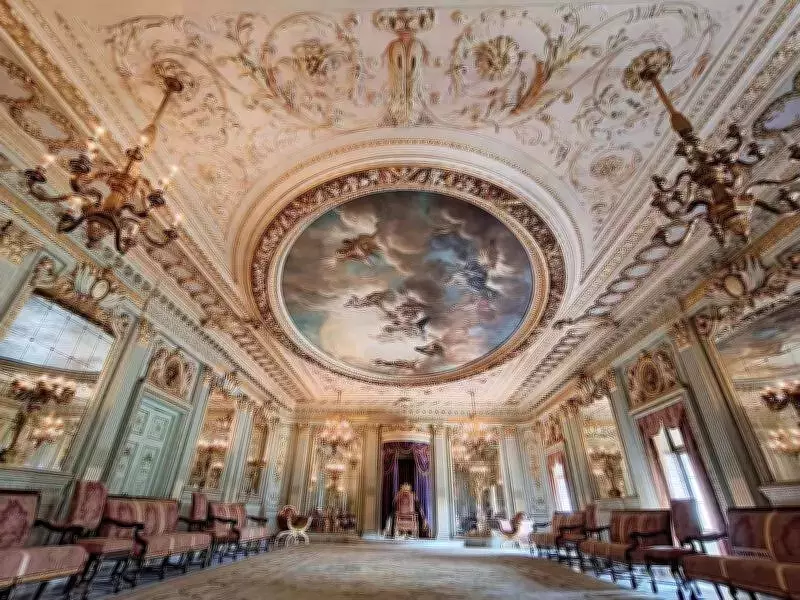
At the heart of this effort is Ekhlaq Ahmad, a 62-year-old carpet weaver from Bhadohi, Uttar Pradesh, a town famed for its weaving tradition. Working in the grand Darbar Hall, Ahmad repairs nearly 80-year-old carpets with his sons, Bilal and Jalal. "These carpets are very delicate. Every damaged thread must be repaired carefully so that the original design remains intact," he says, his hands moving meticulously over insect-damaged threads.
Bilal Ahmad adds, "Restoring these carpets feels like working with history. We try to preserve the original weaving style." Over fifty carpets are being restored through dusting, washing, drying, and thread-by-thread repairs.
National Collaboration for Conservation
The project has united experts from across India, including teams from Delhi, Pune, Bhadohi, Panipat, and Banaras. They work on antique chairs, woodwork, paintings, and fabrics, aiming to complete a major portion before the upcoming Simhastha festival.
Today, Lalbagh Palace attracts nearly one thousand daily visitors, offering more than architectural beauty. It invites imagination of past royal life—music in ballrooms, formal gatherings in the Darbar Hall, and elaborate banquet preparations. This conservation ensures the palace's legacy endures, reflecting the Holkar dynasty's nearly two-century rule over Indore.