IndiGo Flight Sticker Incident Ignites Fierce Parenting Debate Across Social Media Platforms
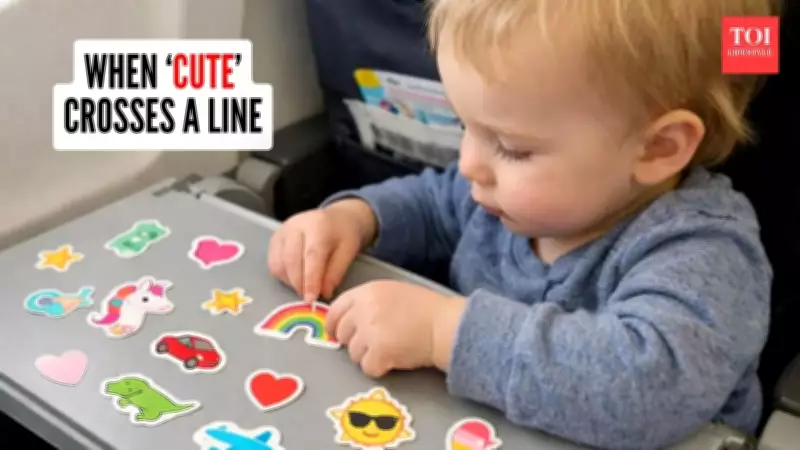
A seemingly innocent moment aboard an IndiGo flight has erupted into a major social media controversy, exposing deep divisions about parenting approaches and civic responsibility in public spaces. The incident began when a Reddit user shared a photograph on an Indian aviation forum showing a young child placing colorful emoji stickers on the seat tray of an IndiGo aircraft. The original poster captioned the image with the phrase "the kind of vandalisation I don't mind," but this lighthearted framing quickly gave way to a torrent of passionate responses that revealed much broader societal concerns.
Social Media Explodes with Anger, Concern, and Sarcastic Commentary
The comments section beneath the Reddit post transformed into a battleground of conflicting perspectives almost immediately. While a small minority expressed amusement or understanding, the overwhelming response ranged from genuine concern to outright anger. Many commenters viewed the incident not as harmless childhood exploration but as a dangerous precedent that could normalize disrespect for public property. One particularly pointed comment stated, "This is exactly what teaches children that defacing public property is acceptable behavior. We should absolutely nip this habit in the bud before it becomes ingrained." Another user offered a more ominous warning: "Today it's stickers, tomorrow it could be permanent markers or something even more destructive."
For these concerned voices, the issue extended far beyond adhesive decorations on an airplane seat. They saw the incident as symptomatic of a larger "chalta hai" attitude—a Hindi phrase meaning "it's okay" or "it will do"—that many Indians criticize in public discourse but sometimes practice themselves. These commenters argued that preventing such behavior in childhood represents genuine civic responsibility rather than excessive strictness or cruelty toward young children.

Parenting Under Public Scrutiny in Shared Spaces
The debate quickly escalated beyond the specific act to broader judgments about parenting styles and parental responsibility. Several comments took direct aim at the child's caregivers, with one user declaring, "Typical entitled Indian parenting on display here," while another simply labeled it "Bad Parenting 101." These reactions highlight how quickly parenting decisions become subject to public scrutiny in shared environments like airplanes, shopping malls, and public parks.
In such communal spaces, there exists an unspoken social contract—a set of invisible rules that most people expect others to follow. When children violate these norms, their parents often face immediate judgment as either careless or entitled. The context surrounding the incident—whether the parents intended to remove the stickers later, whether they were momentarily distracted, or whether this represented an isolated incident—typically gets ignored in the heat of online reaction. The moment becomes frozen in time, and labels become firmly attached.
Balancing Perspectives and Seeking Middle Ground
Amid the polarized commentary, some voices advocated for a more nuanced approach. One thoughtful response suggested, "If the behavior causes actual harm to someone or something, then it's clearly wrong and should be addressed." Another commenter questioned whether society sometimes holds parents to unrealistic standards, expecting perfect control over children's behavior at all times in all environments.
These moderate perspectives did not defend vandalism or suggest that rules should be ignored. Instead, they challenged the assumption that every childhood mistake inevitably predicts future behavior patterns. Children naturally explore their environments through tactile experiences—touching, coloring, and manipulating objects. The crucial educational moment, these commenters suggested, lies not necessarily in preventing every exploratory act but in how adults respond afterward to guide understanding and behavior.

What Children Actually Learn from Public Incidents
Young children don't remember online debates or social media commentary. What they do remember are the immediate reactions of the adults around them. If caregivers laugh and describe behavior as "cute" or amusing, children learn that public spaces lack boundaries or rules. Conversely, if adults respond with anger, shame, or fear, children may learn that mistakes bring humiliation rather than opportunities for learning.
The most effective educational approach often exists between these extremes. A calm, clear explanation—such as saying, "This seat isn't ours, so we don't put stickers here"—can teach concepts of ownership, respect, and social responsibility simultaneously. This approach treats children as capable of understanding reasonable boundaries rather than as problems requiring immediate silencing or punishment.
Key Takeaways for Parents from This Heated Discussion
This controversy ultimately transcends the specific issue of airplane stickers. It reveals fundamental questions about parental intention, response strategies, and behavioral repetition. Several important insights emerge from the heated exchange:
- Public spaces serve as powerful classrooms. Children develop civic awareness more through observing adult behavior in real situations than through abstract lectures or instructions.
- Effective correction doesn't require public drama. Quietly addressing the behavior with a simple explanation often creates more lasting understanding than public scolding or embarrassment.
- Language shapes perception and memory. Describing questionable behavior as "cute" or amusing sends stronger signals to children than parents might realize, potentially normalizing actions that violate social norms.
- Patterns matter more than isolated incidents. While not every childhood mistake predicts future behavior, repeated permission or indifference to boundary-testing can indeed shape long-term habits and attitudes.
Disclaimer: This analysis is based entirely on a public Reddit discussion and reflects opinions shared by various users in that forum. It does not intend to label or judge any specific parent, child, or family. The purpose is to encourage thoughtful reflection about parenting choices in public environments and the social conversations they generate.