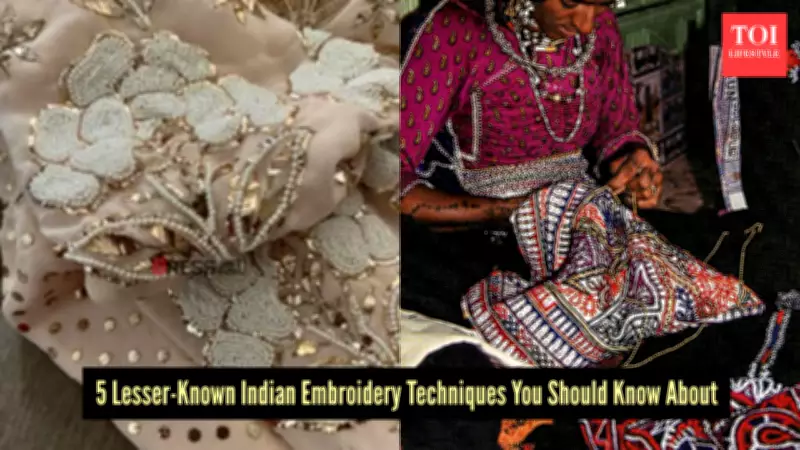
Unveiling India's Hidden Embroidery Treasures
The narrative of Indian textiles is not confined to a single chapter but spans an entire library, with each state, culture, and region contributing its distinct flair and legacy, passed down through generations. However, numerous traditional embroidery forms are fading into obscurity, overshadowed by modern trends. The rise of fast fashion and machine-made imitations has left many unaware of these underrated embroidery techniques in India, which merit far greater recognition and preservation.
Mukaish Embroidery: The Subtle Shimmer of Royalty
Mukaish embroidery, also referred to as kamdani or badla, involves the meticulous application of tiny metallic threads to create delicate dotted patterns on fine fabrics such as chiffon and muslin. Originating in the suburbs of Uttar Pradesh, this craft is historically associated with Mughal royal attire. Mukaish imparts a gentle, ethereal glow without overwhelming sparkle, thanks to its repetitive motifs that add a soft luminescence. While zardozi garners more attention, only a select few are acquainted with the intricate beauty of mukaish embroidery, making it a hidden gem in India's textile heritage.
Rabari Embroidery: Storytelling Through Stitches
Rabari embroidery hails from the Rabari tribe of Gujarat, characterized by dense stitches in bold colors enhanced with mirror work. Each piece serves as a canvas for storytelling, featuring motifs of birds, animals, and sacred symbols that render every ensemble deeply personal and utterly unique. The narrative depth of Rabari sets it apart, weaving cultural tales into vibrant textiles that reflect the tribe's rich traditions and artistic expression.

Kasuti Embroidery: Geometric Precision from Karnataka
Kasuti is a centuries-old folk embroidery from the dense regions of Karnataka, renowned for its intricate geometric patterns. The name derives from kai (hand) and suti (weave), emphasizing pure handwork. Remarkably, Kasuti designs appear identical on both sides of the fabric, showcasing the exceptional skill and craftsmanship of the weavers. Motifs and symbols are often inspired by Karnataka's folk traditions, making this technique a testament to regional artistry and meticulous detail.
Lambadi Embroidery: The Vibrant Fusion of Banjara Culture
Originating from the Banjara community of Rajasthan, Lambadi embroidery is a dynamic fusion of beadwork, patchwork, and colored thread stitching, adorned with small mirrors. It bursts with vibrant shades and geometric motifs, capturing the raw energy and spirit of Banjara culture. Embellishments like cowries, beads, and shells add to its distinctive charm. Recognizing its cultural significance, this embroidery has been awarded a Geographical Indication (GI) tag, underscoring its importance in India's artisanal landscape.
Preserving India's Embroidery Legacy
These embroidery techniques—Mukaish, Rabari, Kasuti, and Lambadi—represent just a fraction of India's vast textile heritage. As fast fashion continues to dominate, it is crucial to raise awareness and support for these traditional crafts. By appreciating and promoting these underrated arts, we can help ensure they are not lost to time but celebrated as vital components of India's cultural identity and artistic diversity.