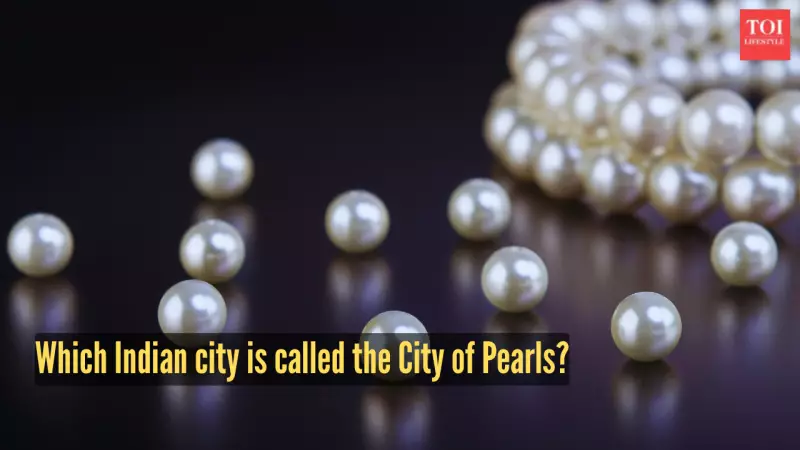
For centuries, Hyderabad has glittered with a unique title that sets it apart from every other Indian metropolis: the 'City of Pearls'. This reputation, built long before the rise of IT parks and famous biryani, is rooted in a delicate and shimmering trade. The remarkable fact is that Hyderabad is not located on any coast. Despite this, it stands as the nation's most crucial centre for pearl processing and trading.
The Village of Drillers: Chandanpet's Generational Craft
The heartbeat of this sparkling legacy is found just outside Hyderabad, in the small village of Chandanpet. Here, a community has dedicated itself entirely to the intricate art of pearl drilling. This skill, passed meticulously from one generation to the next, demands fine motor control, immense precision, and deep patience. Artisans transform tiny, raw orbs into polished works of art ready for jewellery. Consequently, Chandanpet is recognized as one of India's largest hubs for this specific craft, ensuring Hyderabad's continued dominance in the national gemstone trade.
A Royal Affair: The Nizams and Their Love for Pearls
Hyderabad's ascent as the pearl capital was not accidental. Its regal history under the Qutub Shahi dynasty and later the Asaf Jahi dynasty (the Nizams) provided the essential foundation. These rulers were exceptional patrons of jewels and diamonds, with pearls occupying a central place in their royal aesthetic. Pearls were far more than mere fashion accessories for the nobility; they were woven into the fabric of court life and ceremony.

Historical accounts reveal fascinating traditions, such as princesses of the royal household being measured against jewels on their birthdays. Mir Osman Ali Khan, celebrated as the wealthiest Nizam, was rumoured to keep sacks of pearls stored like treasure in his palace basements. The royal fascination extended beyond adornment; crushed pearls were also believed to possess therapeutic and beautifying properties, adding to their allure in the courts.
From Basra to Hyderabad: A Global Trade Shift
Before Hyderabad's name became synonymous with pearls, the world looked to Basra in Iraq as the premier source of high-quality pearls. Basra pearls were globally prized for their exceptional hardness and durability, superior to the softer varieties from the Bay of Bengal. For a long time, these prized Basra pearls fed the royal demand in Hyderabad, arriving via extensive trade networks.
However, the global pearl industry faced a seismic shift. The discovery of oil in the Persian Gulf led to industrial pollution that severely damaged the natural pearl beds around Basra. This environmental change caused a steep decline in Basra's pearl industry, forcing merchants and master artisans to seek new horizons for their trade.
Hyderabad, with its established royal patronage and growing commercial networks, emerged as the perfect new home. Many skilled pearl artisans from Basra migrated to the Deccan city, bringing centuries of expertise in sorting, drilling, grading, and polishing genuine pearls. Their world-class skills fused seamlessly with local craftsmanship, giving birth to the legendary pearl markets that define Hyderabad today. Their enduring influence is visible in every corner of the city's jewellery trade, from bustling bazaars like Laad Bazaar to specialised workshops.
Hyderabad's title as the City of Pearls is a testament to a rich tapestry of history. It reflects centuries of artistry, royal sponsorship, skilled migration, and unwavering craftsmanship. The glimmer of these pearls has fundamentally shaped the city's cultural and economic identity. Today, this luminous tradition continues to thrive, preserved in the hands of artisans in Chandanpet and celebrated in the historic markets across the region, ensuring that Hyderabad's legacy continues to shine brightly.