Gunjan Ahlawat: The Visual Storyteller Behind India's Literary Icons
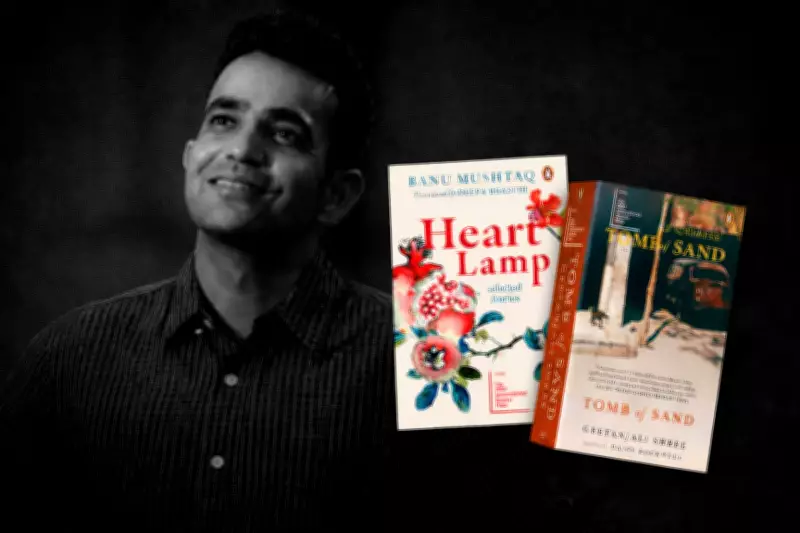
Gunjan Ahlawat stands as a pivotal figure in contemporary literature, not as an author, but as the designer whose art gives first life to the words of some of the world's most celebrated writers. Through his meticulous craft, he has created iconic covers for luminaries such as Arundhati Roy, Salman Rushdie, Amitav Ghosh, Jhumpa Lahiri, and Orhan Pamuk, transforming narratives into compelling visual invitations. His work on International Booker Prize winners, including Tomb of Sand and Heart Lamp, showcases his unique ability to distill literary essence into striking imagery that resonates deeply with readers.
The Philosophy of Design: Service, Translation, and Originality
In a revealing conversation, Ahlawat delves into the core principles that guide his creative process. He emphasizes that design is fundamentally an act of service, rooted in loyalty to the text. "The designer isn't a decorator; they are a translator," he asserts. His role involves converting the essence of words into visually intelligent, contextually accurate, and aesthetically compelling forms. Ahlawat rejects the notion of book covers as mere packaging, viewing them instead as organizing principles that shape an author's message and provide a face for the words before the book is even opened.
He stresses that originality is not optional but a lifeline in a culture saturated with sameness. "In a world drowning in repetition, where everything feels like a scroll or a swipe, a designer must think differently, trust intuition, and take risks," Ahlawat explains. This approach allows risk to transform into clarity, making the unexpected feel inevitable in his designs.

Behind the Covers: Heart Lamp and Tomb of Sand
Ahlawat recently unveiled a special edition cover for Heart Lamp, a collection that explores themes of womanhood, love, loss, and tradition. The design process was highly collaborative, involving editors, sales teams, and the author. Editor Deepa Basti suggested the motif of pomegranate seeds, which Ahlawat embraced after reading the manuscript. "The pomegranate symbolizes boldness, vibrancy, and fragility, reflecting the duality in Mushtaq's stories," he notes. He layered a full-color illustration with delicate line motifs to capture the warmth, resilience, and transformation central to the work.
For Tomb of Sand, Ahlawat immersed himself in the narrative of an eighty-year-old woman defying conventions. "This book is about freedom—breaking boundaries of religion, nation, and gender," he recalls. The special edition features a flock of black crows in flight, symbolizing defiance and release, while the paperback version adopts an atmospheric, moody aesthetic rooted in the textures of the protagonist's environment. The photograph used doesn't merely illustrate but suggests, carrying memory and constraint through its shadows and framing.
The Design Process: Collaboration and Instinct
Ahlawat's approach varies between fiction and non-fiction projects. For fiction, he insists on reading the entire manuscript to connect deeply with characters and themes, allowing visual ideas to emerge organically. "My goal is to align everyone's visual vision, involving authors, editors, and sales teams in a collaborative dialogue," he says. For non-fiction, he often relies on cover briefs or key chapters to spark inspiration.
He values insights from sales and retail perspectives but believes the final design decisions should rest with editorial and design teams. "Design is a collaborative process, but it requires the designer's instinct to filter and shape inputs into something striking and elegant," Ahlawat explains. His style prioritizes simplicity and clarity, avoiding visual noise in an already cluttered typographic and imagery landscape.

Evolution and Challenges in Modern Cover Design
Reflecting on his career, Ahlawat observes significant changes in the industry, particularly with the rise of digital sales. "Designers must now ensure covers are readable as thumbnails on phones and laptops, balancing digital effectiveness with print integrity," he notes. However, he expresses concern over increased sales intervention, arguing that while input is welcome, ultimate creative control should remain with design professionals.
When asked about his personal favorites, Ahlawat highlights three covers: Mir Taqi Mir by Ranjit Hoskote, Arundhati Roy's non-fiction box set, and Gun Island by Amitav Ghosh. He also mentions an unselected cover for Salman Rushdie's Knife, which he felt was a strong, meaningful design for the region, lamenting that publisher preferences sometimes override creative vision.
Timeless Inspirations and Legacy
Ahlawat draws inspiration from timeless covers designed by others, citing The Woman Destroyed by Simone De Beauvoir (designed by Peter Mendelsund), The Fraud by Zadie Smith (designed by Jon Gray), and Grief is the Thing with Feathers by Max Porter (designed by Eleanor Crow) as exemplary works. These examples underscore his belief in the enduring power of thoughtful, innovative design.
As a designer and avid reader, Ahlawat finds the process deeply rewarding, allowing for informed discussions and decisions that honor the author's work. His contributions continue to shape the visual identity of Indian literature, making him a key figure in bridging literary art and visual storytelling.