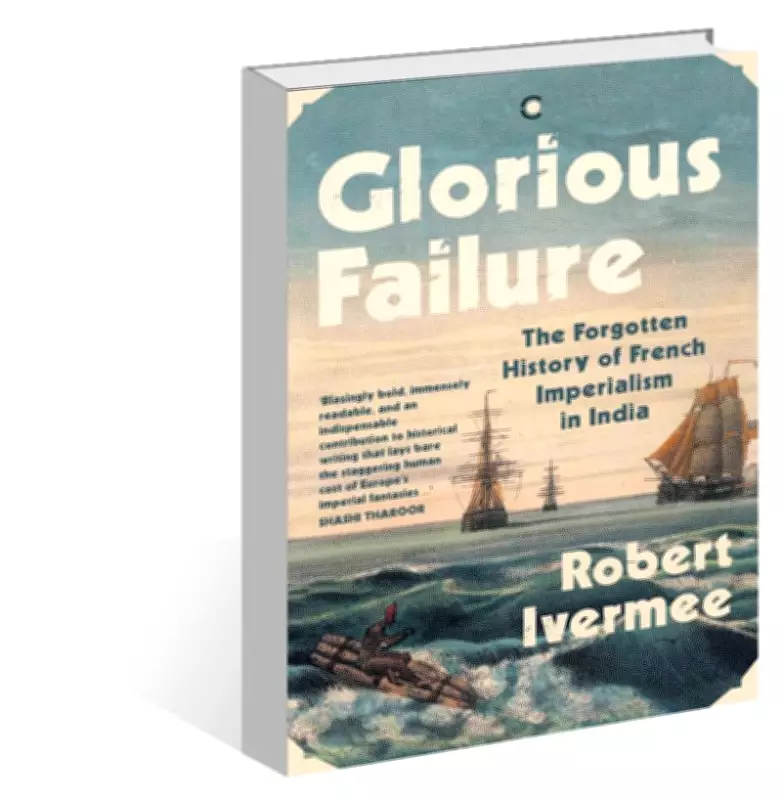
Glorious Failure by Robert Ivermee: Uncovering France's Forgotten Legacy in India
In the vast tapestry of Indian history, the British colonial narrative often overshadows other European influences, but a new book by Robert Ivermee, titled Glorious Failure, seeks to rectify this oversight by delving into the rich and complex French legacy in the subcontinent. This meticulously researched work sheds light on a chapter of history that has long been relegated to the shadows, offering readers a fresh and nuanced perspective on the interactions between France and India.
The Forgotten French Influence
Ivermee's book meticulously traces the French presence in India from the early colonial era to the modern day, highlighting how French ambitions, though ultimately unsuccessful in establishing a dominant political foothold, left an indelible mark on Indian culture, architecture, and society. Unlike the British, who focused on territorial conquest, the French engaged in a more subtle form of influence, fostering intellectual exchanges, artistic collaborations, and diplomatic ties that have persisted through the centuries.
The author argues that this "glorious failure"—a term he uses to describe France's inability to match British colonial power—paradoxically allowed for a more profound and lasting cultural impact. By not being burdened with the administrative and political responsibilities of a vast empire, the French were able to engage with Indian society on a deeper level, contributing to fields such as education, science, and the arts.

Key Themes and Insights
Glorious Failure is structured around several key themes that illuminate the multifaceted nature of French-Indian relations:
- Colonial Ambitions and Rivalries: The book details the fierce competition between France and Britain for control over Indian territories, culminating in events like the Carnatic Wars and the Battle of Plassey. Ivermee provides a balanced account of these conflicts, emphasizing how French strategies, though often thwarted, shaped the geopolitical landscape of the time.
- Cultural Exchanges and Legacy: Beyond politics, Ivermee explores the enduring cultural contributions of the French in India. This includes the architectural marvels of Pondicherry and Chandannagar, the influence of French language and literature, and the role of French missionaries and scholars in documenting Indian traditions and knowledge systems.
- Modern-Day Relevance: The book also examines how this historical legacy continues to resonate in contemporary India-France relations. From diplomatic partnerships to cultural festivals, Ivermee shows that the bonds forged centuries ago remain relevant in today's globalized world, influencing areas such as trade, education, and mutual understanding.
Why This Book Matters
In an era where historical narratives are often simplified or dominated by a single perspective, Glorious Failure serves as a crucial corrective. By bringing the French influence to the forefront, Ivermee enriches our understanding of India's colonial past and highlights the diversity of European engagements with the subcontinent. His work is not just a historical account but a call to appreciate the complex, layered nature of history, where even "failures" can yield significant and lasting contributions.
The book is written in an accessible yet scholarly style, making it suitable for both academics and general readers interested in history, colonialism, or Indo-French relations. Ivermee's use of primary sources, including archival documents and personal accounts, adds depth and authenticity to his arguments, ensuring that Glorious Failure is both informative and engaging.
Overall, Robert Ivermee's Glorious Failure is a timely and important contribution to the field of historical scholarship. It challenges readers to look beyond the dominant narratives and discover the hidden threads that connect India and France, reminding us that history is often more intricate and interconnected than it appears at first glance.