Five Powerful Types of Daan in Hinduism Believed to Improve Your Karma
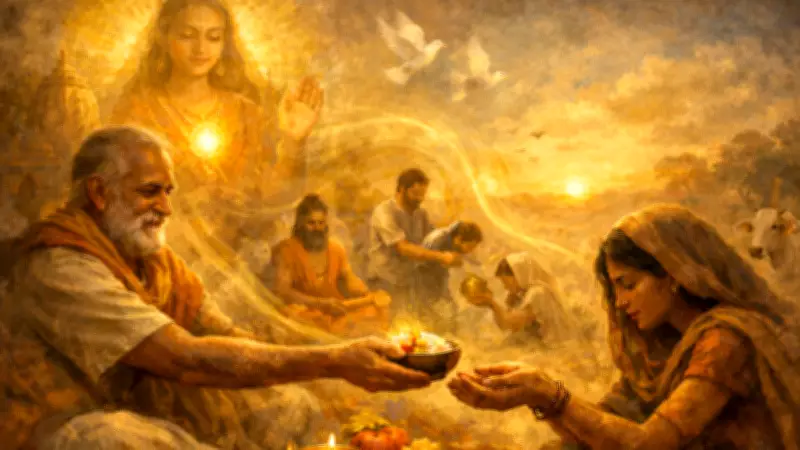
In the profound tapestry of Hindu tradition, daan transcends mere charity. It is a sacred offering made with humility, often without expectation of return, and anchored in the belief that selfless giving lightens the soul. This concept is elegantly simple yet deeply impactful: what is shared with sincerity does not diminish the giver. Instead, it enriches both the receiver's life and the moral weight of the giver's own actions. Across scriptures, festival rituals, and daily household practices, daan emerges as a quiet force of balance, never intended to be loud, performative, or transactional. The true essence lies in intention, timing, and the spirit in which something is given. Certain forms of daan are especially revered, as they are believed to purify karma, reduce selfishness, and cultivate a more generous inner life. Here, we delve into five powerful types of daan that continue to hold deep meaning in Hindu belief.
Anna Daan: The Gift of Sustenance
Among all forms of giving, anna daan, or the donation of food, is often regarded as one of the highest acts of charity. To feed someone is to address a fundamental human need in the most immediate and compassionate manner. Hunger strips life down to its simplest truth, and food restores dignity, strength, and calm. That is why anna daan is seen as especially meritorious. Temples, community kitchens, and family rituals have long placed food at the heart of giving. Whether it is a meal shared with a stranger, grain offered to the needy, or food distributed during religious occasions, this act carries immense symbolic weight. It powerfully communicates that life is to be sustained, not hoarded, fostering a sense of shared humanity and compassion.
Vastra Daan: The Offering of Dignity
Vastra daan, the gifting of clothes, is another deeply respected form of charity in Hindu thought. Clothing is not merely practical; it is intrinsically tied to comfort, dignity, and social belonging. To give someone clothes is to help them face the world with greater ease and protection. This kind of giving is often associated with compassion and respect, making it especially meaningful during colder months, religious festivals, or periods of hardship. Even a simple garment can transform into a profound offering when given without judgment. Vastra daan serves as a poignant reminder that dignity is not a luxury but an essential component of a humane and compassionate life.

Bhumi Daan: The Legacy of Land
Bhumi daan, or the donation of land, stands as one of the most consequential forms of giving in Indian tradition. Land is not just property; it represents livelihood, shelter, and legacy. To give land is to hand over the possibility of stability, growth, and future prosperity. Historically, bhumi daan was linked with kings, temple endowments, and acts of public welfare. In modern contexts, it may manifest as land donated for schools, hospitals, worship spaces, or community use. Because land carries enduring value, bhumi daan is often viewed as an especially noble act. It reflects a deep trust in the future and a remarkable detachment from material possession, emphasizing long-term societal benefit over personal gain.
Vidya Daan: The Eternal Gift of Knowledge
Vidya daan, the gift of knowledge, is frequently described as one of the most lasting and transformative forms of charity. Unlike material gifts, knowledge possesses the unique ability to grow, be shared, deepened, and passed on through generations. A book offered to a child, tuition supported for a student, or the patient teaching of a valuable skill all constitute forms of vidya daan. This type of giving is exceptionally powerful because it has the potential to alter futures. Hindu philosophy has long esteemed learning as a pathway to clarity and self-mastery, and vidya daan beautifully embodies this belief. When knowledge is given freely, it does not merely assist one individual; it can uplift entire families and communities, creating a ripple effect of enlightenment and progress.
Additional Forms of Daan: Expanding the Circle of Giving
Beyond these core types, Hindu tradition recognizes other significant forms of daan that contribute to karma purification. These include:

- Abhaya Daan: The gift of fearlessness or protection, offering safety and security to those in need.
- Aushadha Daan: The donation of medicine or healthcare, addressing physical well-being and healing.
- Jala Daan: The offering of water, a vital resource that sustains life and symbolizes purity.
Each of these forms underscores the holistic approach of daan, aiming to address various aspects of human need—physical, emotional, and spiritual. By engaging in these acts with sincerity and selflessness, individuals can cultivate a more generous inner life, reduce karmic burdens, and contribute to a more balanced and compassionate world. In essence, daan is not just about giving; it is about transforming both the giver and the receiver through the profound power of selfless action.