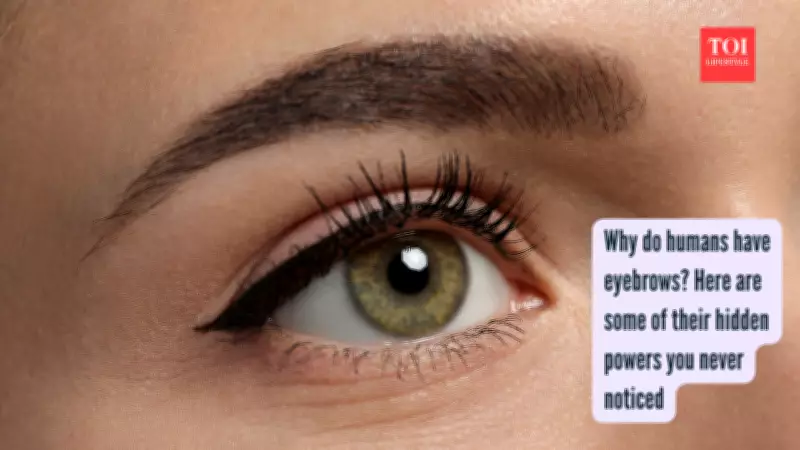
Eyebrows: More Than Just Facial Hair
Ever catch yourself raising an eyebrow at a bad joke? That instinct is so simultaneous and quick that even analyzing the reason behind it gives us no time. Those little arches above the eyes do more than add flair to our expressions; they are actually an interesting piece of human evolution.
Protective Function and Evolution
Eyebrows aren't just there for show. They quietly shield our eyes from sweat, rain, or dust during a run or a dusty hike. But dig deeper, and there's a bigger tale tied to our evolution. Our ancient relatives had heavy brow ridges that handled the protection job. As modern humans emerged, those ridges shrank, freeing up space for mobile, expressive eyebrows. A study published in Nature Ecology & Evolution explains that reduced brow ridges let us signal subtle emotions, helping us understand each other better than our ridge-heavy cousins.
Role in Facial Recognition
Turns out, eyebrows are secretly and unrecognizably very important in spotting familiar faces. Eyebrows give hidden hits for identification. In a 2003 experiment by MIT researchers in Perception, people struggled more identifying celebs like Nixon when eyebrows were erased digitally than when eyes were. Eyebrows provide that stable shape, with the curve, thickness, and spacing that our brains depend upon for configural processing, enhancing the face layout.

Enhancing Facial Expressions
Beyond basics, eyebrows also elevate the attractiveness and identity across cultures. We define them by threading, plucking, tinting, or Botox for that perfect arch to maintain their pull. They are also related to sexual dimorphism, with thicker ones often signaling masculinity. In our chatty species, these unsung heroes keep us connected, expressive, and uniquely human.
Communication and Social Bonding
Forget grunts, eyebrows let us talk quickly and sometimes without even speaking much. A quick raise says hey, I see you or a furrow means what's wrong? These low-effort actions make big differences, even in dim light, and they're tough to fake, building group trust. The 2018 York study says our more expressive faces, due to flexible eyebrows, helped us form bigger friend groups. This beat out Neanderthals, who had smaller, less connected tribes due to inbreeding. In early human teams, faces you could easily read built stronger bonds and helped everyone survive. Heavy brow ridges on Neanderthals looked scary and aggressive, but our movable eyebrows share soft feelings like hello, care, or question.