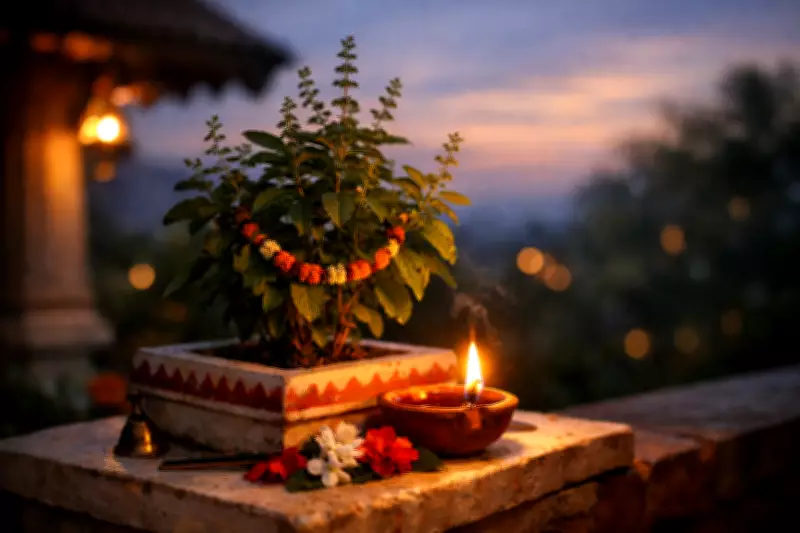
As dusk gently descends upon Indian households, a quiet and deeply meaningful ritual unfolds across balconies, courtyards, and verandas. This daily practice, though simple in appearance, carries centuries of cultural and spiritual significance that continues to resonate in modern life.
The Sacred Presence of Tulsi in Hindu Homes
In Hindu tradition, Tulsi is far more than an ordinary medicinal herb or decorative plant. Revered as a living embodiment of devotion and divine protection, this sacred basil occupies a special place in domestic spaces. Families engage with Tulsi through daily conversations, careful watering rituals, ceremonial circling during prayers, and occasional adornment with miniature garlands.
Ancient texts like the Puranas weave rich narratives around Tulsi's spiritual significance, while practical wisdom recognizes its healing properties. From Tulsi leaves steeped in hot water to soothe coughs to stems placed near doorways for protection, this plant serves multiple roles in household wellbeing.

Beyond Mythology: Tulsi as a Symbol of Steadiness
Over generations, Tulsi has evolved into something greater than mere mythology or herbal remedy. The plant represents constancy and resilience amidst life's inevitable chaos. Its presence offers a tangible reminder that something sacred and alive can thrive within the bustling environment of family life. The evening ritual of lighting a diya near Tulsi acknowledges this living presence before the day concludes.
The Spiritual Significance of the Evening Flame
In Hindu philosophy, light transcends mere illumination. A diya symbolizes the transition from daytime activity to evening tranquility, from external engagement to internal reflection. This explains why lamps feature prominently during festivals, weddings, and daily prayers at twilight.
When placed beside Tulsi, the diya's flame creates what many describe as a conversational energy between two living entities. The plant represents continuity and life force, while the lamp signifies awareness and gratitude. Together, they establish a small sanctuary of calm within the home environment.
Varied Interpretations of a Shared Practice
Different families attribute varied meanings to this ritual. Some believe it wards off negative energies and invites prosperity. Others find that it simply creates a sense of order, completeness, and settledness within the household. Regardless of interpretation, the practice persists through good days and challenging ones alike, maintaining its quiet consistency.
The Transformative Power of Daily Repetition
The true strength of this ritual lies in its integration into ordinary life. Unlike festival observances that occur periodically, the evening diya lighting happens consistently amidst daily responsibilities. It unfolds between office work and dinner preparation, alongside homework supervision and household chores.
This regular repetition builds a gentle rhythm into domestic life. The act of stepping outside to light the lamp becomes a conscious pause between day's chapters. As the flame flickers, shoulders relax unconsciously, breathing slows, and mental chatter diminishes. Whether approached from spiritual or psychological perspectives, the effect remains remarkably similar: it cultivates presence and carves out moments dedicated solely to stillness.
Practical Guidance for the Ritual
While traditions vary between families, certain common practices guide this evening observance:

- Begin by maintaining cleanliness around the Tulsi area, sweeping fallen leaves and wiping the platform or pot
- Use a small clay or brass diya filled with ghee or oil (sesame and mustard oil are common, while ghee holds special devotional significance)
- Set a cotton wick and light it deliberately rather than hastily
- Position the diya respectfully near the plant—close enough to show intention but sufficiently distant to prevent heat or smoke from affecting the leaves
- Pause briefly with folded hands, offering a silent prayer, reciting a Tulsi mantra if known, or simply expressing gratitude for the day
Some families incorporate additional elements like gentle circumambulation around the plant, ringing small bells, or lighting incense. However, these remain optional enhancements rather than essential components. The ritual's core revolves around mindful attention rather than elaborate accessories.
Why Evening Holds Special Significance
Sunset occupies a unique position in Indian tradition as a transitional threshold. As daylight yields to darkness and activity gives way to rest, homes turn inward. Lighting a lamp during this liminal period is believed to invite protection and stability as night approaches. While many families greet Tulsi in morning hours too, the evening diya provides a sense of closure, formally marking the day's completion.
Respectful Boundaries and Considerations
Several gentle guidelines typically accompany this practice:
- Avoid placing the diya so close that it might scorch leaves or blacken the pot
- Steer clear of plastic holders or unstable surfaces for safety reasons
- Refrain from plucking Tulsi leaves in evening hours when the plant is thought to rest
- Maintain the area as an uncluttered sacred space rather than treating it as ordinary household storage
The Enduring Relevance of an Ancient Practice
In today's fast-paced world dominated by digital notifications, relentless schedules, and constant connectivity, the simple act of lighting a diya beside Tulsi represents a quiet rebellion. This ritual demands nothing complicated—no technological applications, no expensive purchases, just basic materials and a minute of conscious attention.
For some practitioners, it remains an authentic expression of faith. For others, it's a cherished habit inherited from elders that continues to provide unexpected comfort. For many, it represents both simultaneously. The small flame beside Tulsi makes no grand statements but persists evening after evening, reminding households to conclude each day with care, gratitude, and the gentle reassurance of light maintained at home.