In the historic twin towns of Jiaganj-Azimganj in Murshidabad, a quiet revolution is underway to breathe new life into architectural treasures that are over three centuries old. Spearheading this movement is Sandip Nowlakha, the vice-president of the Murshidabad Heritage Development Society (MHDS) and founder-president of Atulniya Virasat Manyata Sansthan (AVMS). He emphasizes a fundamental truth often overlooked in preservation projects: the emotional bond of the local community with its built heritage is the most critical ingredient for successful conservation.
The Heart of Conservation: Community Ownership and Pride
Nowlakha, a founder member of the MHDS which was established in 2010, argues that technical expertise and funding alone cannot guarantee the survival of heritage. "Heritage can survive only when communities feel pride in their inheritance and legacy and consider the responsibility of preserving it as their own," he stated. Without this deep-seated emotional connection, even the most well-funded restoration efforts face an uphill battle for long-term sustainability.
The society was created with a clear vision: to restore and revive the heritage of Azimganj and Jiaganj specifically, and Murshidabad at large. Its mission is tri-fold: to preserve the past, seamlessly integrate it with contemporary life, and establish a strong foundation for future conservation work.

Bengal's Unique Challenge: Mud vs. Stone
While the grand palaces of the Nawabs are famous, Murshidabad is also home to numerous heritage buildings constructed by the Marwari community, who settled in this former capital of Bengal approximately four centuries ago. Nowlakha highlights a key distinction between conserving old buildings in Rajasthan and those in Bengal: the primary building material.
"Many historic structures in Bengal were built using mud and clay. That makes restoration far more challenging than those in Rajasthan, where stone-built architecture is comparatively easier to preserve," he explained. This fundamental difference necessitates specialized techniques and a more delicate approach to restoration in Bengal.
A Festival-Led, Multi-Pronged Strategy for Revival
The connection between Bengal and Rajasthan remains particularly strong in Murshidabad, a district boasting 97 identified heritage sites. These include colleges, museums, churches, 14 Jain temples, and various other historic structures. To tackle the conservation challenge, MHDS has adopted an integrated strategy that brings government bodies, local communities, and all stakeholders together under a shared, long-term vision.
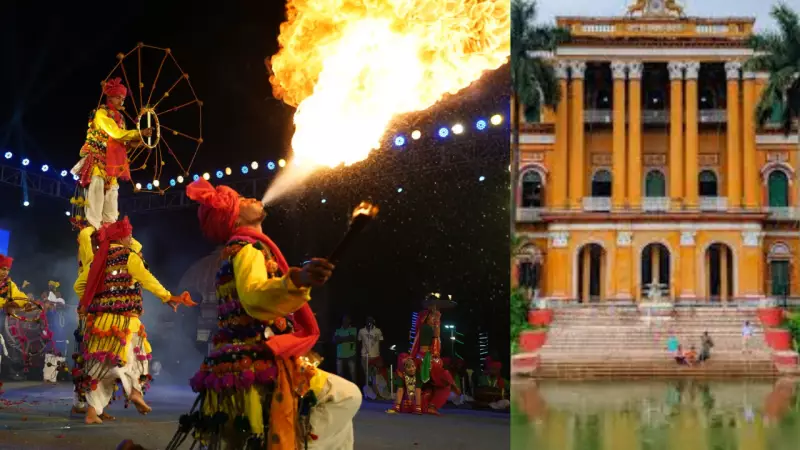
A central tool in this strategy is the activation of heritage through festivals. "These festivals aren't designed merely as cultural showcases but as tools to instil pride, responsibility, and a sense of ownership among local residents," Nowlakha added. To this end, MHDS organizes a major two-day mega festival annually. This event showcases the region's rich heritage, art, culture, and cuisine, serving as a powerful platform to rekindle local pride and ensure the legacy of Murshidabad's magnificent havelis endures for generations to come.