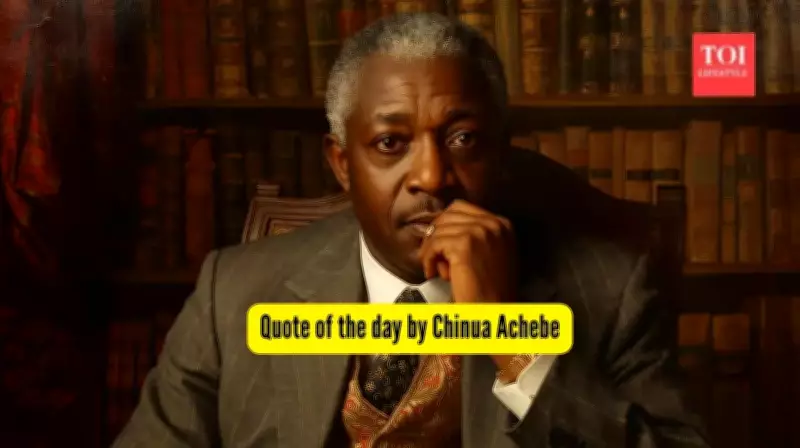
Chinua Achebe: The Visionary Who Redefined African Literature
Chinua Achebe, born in 1930 in Ogidi, Nigeria, stands as a monumental figure in global literature, widely hailed as the father of modern African writing. His profound impact reshaped perceptions of African narratives, offering a powerful counterpoint to Western stereotypes and giving voice to a continent often marginalized in literary discourse.
Early Life and Cultural Influences
Achebe's upbringing was marked by a unique duality: his father's devout Christian faith and the rich Igbo traditions of his ancestral village. This cultural tension fostered a deep awareness of identity and difference, shaping his worldview. He pursued English literature at University College Ibadan, where he admired classics like Shakespeare and Dickens but grew disillusioned with their one-dimensional portrayals of Africa, such as the savage imagery in Joseph Conrad's Heart of Darkness. This frustration ignited his mission to craft stories from an African perspective, aiming to restore dignity to his people.
Literary Breakthrough and Major Works
Achebe's career soared with the 1958 publication of Things Fall Apart, a seminal novel that has sold over 20 million copies and been translated into more than 50 languages. The book follows Okonkwo, a proud Igbo warrior whose rigid masculinity crumbles under British colonial intrusion. It vividly depicts pre-colonial Igbo life, featuring yam harvests, wrestling matches, oracle rituals, and a wealth of proverbs and communal wisdom. Critics praised it as a masterpiece that portrayed Africans as complex humans, not mere objects of pity or primitivism.

This novel launched his acclaimed African Trilogy, which includes No Longer at Ease (1960), exploring corruption in Lagos's civil service through Obi Okonkwo, the grandson of the original protagonist, and Arrow of God (1964), delving into the struggles of chief priest Ezeulu caught between traditional duties and missionary influences. These works collectively trace the erosion of Igbo identity amid colonial expansion.
Later Contributions and Political Engagement
Amid Nigeria's turbulent nation-building, Achebe continued to write with sharp insight. A Man of the People (1966), released just before a military coup, uses satire to critique political greed, depicting leaders who treat elections like market transactions. During the devastating Biafran War (1967-1970), he served as a Biafran ambassador, advocating for his Igbo homeland. His later works, such as Anthills of the Savannah (1987), employ multiple narratives to mock dictatorship in a fictional tyranny, while memoirs like There Was a Country (2012) blend historical analysis with personal loss. Across approximately 20 books, including novels, essays, poems, and children's stories like How the Leopard Got His Claws, Achebe explored themes of faith, power, and resilience.
Distinctive Writing Style and Philosophical Insights
Achebe's literary style is deceptively simple yet profoundly layered. Writing in English, he infused his prose with Igbo proverbs, idioms, and rhythms, creating an authentically African voice. His narrative approach is direct and reportorial, avoiding florid embellishments in favor of irony and restraint, allowing tragedies to unfold naturally. Characters are portrayed as flawed, arrogant, and deeply human, challenging stereotypical representations.
One of his most iconic quotes encapsulates his intellectual ethos: “To me, being an intellectual doesn't mean knowing about intellectual issues; it means taking pleasure in them.” This reflects his belief in engaging with ideas joyfully, akin to savoring palm wine, rather than treating them as mere academic commodities. In today's digital age of endless scrolling and echo chambers, this philosophy resonates strongly, emphasizing the joy of storytelling as a tool for empowerment and unity.

Legacy and Global Influence
Achebe's legacy is immense and far-reaching. As a professor at the University of Nigeria and later at institutions like Brown and Bard in the United States, he mentored emerging writers, including Chimamanda Ngozi Adichie. His accolades include the Man Booker International Prize in 2007, France's Commander of the Legion of Honour, and Nigeria's highest honors. Despite being wheelchair-bound after a 1960s accident, he remained active, delivering lectures, editing the magazine Okike, and founding publishing ventures.
His work dismantled Eurocentric myths, demonstrating that African stories are both locally specific and universally relevant. Things Fall Apart remains a staple in global education and a cornerstone of postcolonial studies. Achebe did not merely write; he reconstructed narratives to reveal how stories shape our world, using words to heal divisions and honor cultural roots. His enduring legacy inspires readers worldwide to embrace truth and diversity in literature.