Dhai Seedhi ki Masjid: Bhopal's Tiny Mosque Defies Size with Centuries of Faith
In the heart of Bhopal, where the vibrant energy of a modern city blends with the whispers of a bygone era, lies a hidden sanctuary that feels like a secret preserved through time. Nestled within the serene grounds of Gandhi Medical College, the Dhai Seedhi ki Masjid stands as a powerful testament to the region's rich cultural and historical legacy. This miniature marvel, born in 1716 from the vision of Bhopal's first Nawab, Dost Mohammad Khan, holds a remarkable distinction: it is arguably the smallest mosque on Earth, a title that belies its profound spiritual significance.
A Fortress of Faith with Humble Beginnings
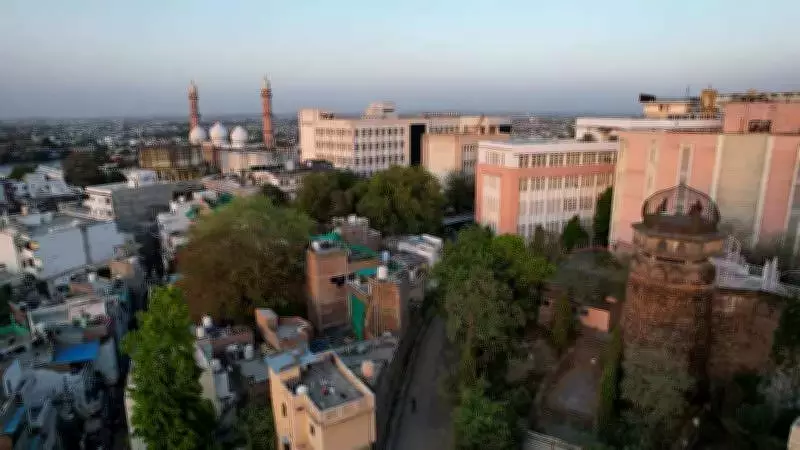
The origins of Dhai Seedhi ki Masjid are as rugged and practical as the stone from which it was meticulously carved. It began not as a grand architectural dream, but as a functional burj—a watchtower positioned on the northwestern flank of the historic Fatehgarh Fort. According to local legend, the fort itself was conceived during a moonlit hunting expedition by Nawab Dost Mohammad Khan and his wife, Fateh Bibi, and was subsequently named in her honor.
This structure served a dual purpose, where duty and devotion coexisted seamlessly. Soldiers stationed as sentinels did not need to abandon their posts to connect with the divine; they could simply turn towards the Kaba and offer namaz within a hall that measures a mere sixteen square meters in size. "The turret walls still bear the scars of its military past," observes retired archaeologist Ahmad Ali. Small apertures, once designed for the barrels of muskets aimed at potential adversaries, now frame peaceful and scenic views of the bustling modern city below, symbolizing a transition from conflict to contemplation.

A David and Goliath Contrast in Islamic Architecture
There is a poetic irony in the world's smallest mosque residing just a few hundred meters from India's largest. The Taj-ul-Masajid, known as the "Crown of Mosques," reaches skyward with its majestic pink minarets and expansive courtyards, capable of accommodating thousands of worshippers. In stark contrast, the Dhai Seedhi ki Masjid occupies its own unique space, with a capacity for only three to five individuals at a time.
This tiny stone room fosters an environment of intense intimacy, where the prayers of a few resonate with the weight and sincerity of a multitude. The juxtaposition highlights the diversity within Islamic architecture and worship, proving that spiritual grandeur is not solely defined by scale but by the depth of devotion and historical continuity.
A Living Heritage That Echoes Through Time
Unlike many miniature mosques in Hyderabad and other parts of the world that have fallen into silence and disuse, the Dhai Seedhi ki Masjid remains vibrantly alive. Five times each day, the call to prayer, or Azaan, rings out, and the small chamber fills with the soft murmurs of faithful observance, just as it has for over three centuries.
Constructed during the dawn of the Bhopal state under its first ruler, this archaeological gem has outlasted not only its founder but also the subsequent rulers who followed. Near the watchtower, the tombs of Nawab Dost Mohammad Khan and Fateh Bibi rest in quiet proximity, as if the couple remains in a final, stony embrace within this sacred union. This enduring presence makes the mosque a living heritage site, continuously weaving the threads of history, faith, and community into the fabric of contemporary Bhopal.