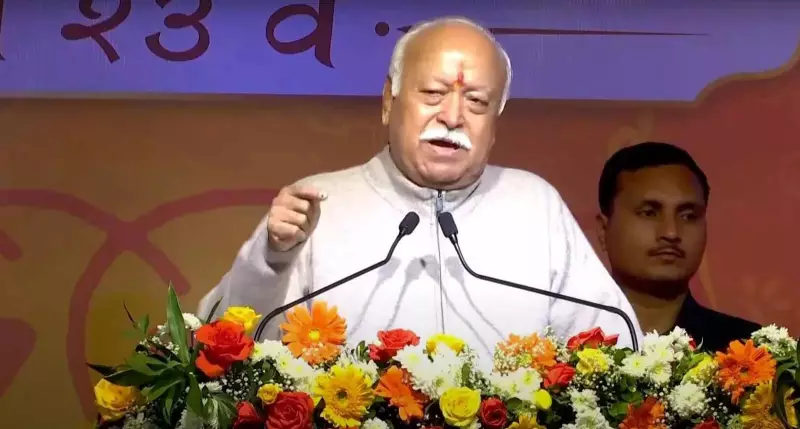
In a significant address that has captured national attention, RSS Chief Mohan Bhagwat articulated a profound vision of Indian nationhood, emphasizing cultural foundations over territorial conflicts. Speaking at a public gathering on November 29, 2025, Bhagwat presented a compelling perspective on what constitutes the essence of India as a rashtra.
Cultural Consciousness: The Bedrock of Indian Nationhood
The RSS leader made a powerful declaration that India's concept of a rashtra is fundamentally shaped by cultural consciousness and collective identity rather than being defined by territorial or political disputes. This philosophical stance distinguishes India's national character from many foreign nations whose sense of nationhood historically developed through rivalries and conflicts.
Bhagwat emphasized that India's national identity has existed for centuries, deeply rooted in shared traditions, values, and cultural practices that have withstood the test of time. This long-standing cultural continuity forms the unique fabric of Indian nationhood, making it inherently different from Western models of nationalism that often emerged from political confrontations.

RSS Vision: Unity Through Cooperation, Not Conflict
Addressing the core philosophy of the Rashtriya Swayamsevak Sangh, Bhagwat clearly stated that the organization does not believe in conflict as a means to achieve national objectives. Instead, he articulated the RSS's commitment to moving forward alongside every community in the country, fostering an environment of mutual respect and collective progress.
The RSS chief explained that India believes in unity, nationhood, and cooperation rather than aggressive nationalism. This approach reflects the ancient Indian wisdom of "Vasudhaiva Kutumbakam" - the world is one family - which has been integral to Indian cultural thought for millennia.
The Path to True National Progress
Bhagwat outlined his vision for genuine national development, emphasizing that true progress is only possible when personal egos dissolve and society works together with mutual respect and responsibility. This perspective highlights the importance of individual transformation in achieving collective national advancement.
The RSS leader's address comes at a time when discussions about national identity and cultural values are increasingly relevant in contemporary discourse. His emphasis on cultural consciousness as the foundation of nationhood provides an alternative framework for understanding India's unique position in the global community of nations.
Bhagwat's message reinforces the idea that India's strength lies in its cultural unity and diversity, rather than in opposition to external forces or internal divisions. This vision of nationhood, built on shared cultural heritage and cooperative progress, offers a distinctive approach to national development that aligns with India's historical and philosophical traditions.