Viral Post Questions Bengaluru's Holi Scene
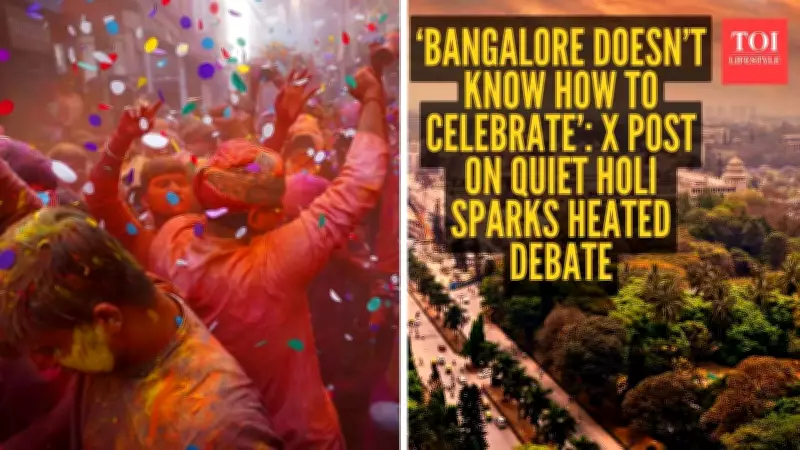
A recent social media observation about Bengaluru feeling unusually quiet during Holi afternoon has ignited a significant online conversation about regional festival traditions across India. The discussion began when an X user named Vanshita shared her experience of stepping out during the festival, expecting vibrant street celebrations but finding the city remarkably subdued.
"Bangalore doesn't know how to celebrate festivals," she wrote in her now-viral post. "I stepped out now at 1 pm and don't see a single person in Holi rang? No kids throwing balloons? Not even colours by the roadside. Why is this city so boring?"
The post quickly gained substantial traction, accumulating thousands of reactions and lakhs of views as users from across India began responding with diverse perspectives about festival celebrations in different regions.

Locals Explain Historical Festival Traditions
Many Bengaluru residents who responded to the viral post explained that the quieter streets during Holi reflect long-standing local traditions rather than any deficiency in celebration spirit. According to numerous users, Holi has historically not been a widely celebrated public festival in the region.
One user shared their personal experience growing up in the city: "It has nothing to do with the city being boring. Holi was never a festival of colours for us locals. I did not see colours other than in 1 or 2 houses until my college days in the late 1990s – that is, when we had more people who celebrated it entering the city."
Another user highlighted the regional diversity of Indian festivals: "With all due respect, Holi was never a thing for us South Indians. It's like asking, 'Why does North India never celebrate Varamahalakshmi Vrutha?' Different regions have different traditional celebrations."
Migration's Impact on Festival Culture
The online discussion revealed how internal migration has gradually transformed festival celebrations in Bengaluru over recent decades. Many commenters noted that the visible Holi celebrations now occurring in the city largely reflect traditions brought by people from other regions of India.
"Holi traditionally wasn't a big festival in South India," explained one commenter. "Most of the celebrations you see now are because North Indians brought the colours with them. Slowly, the city is learning to celebrate together as communities become more integrated."
Private Celebrations in Residential Complexes
Several users pointed out that Holi celebrations in Bengaluru often occur within private residential communities rather than public streets. This represents a significant difference from the more public celebrations commonly seen in northern Indian cities.
One user described the typical Bengaluru Holi experience: "Mostly because people leave for home during Holi/Diwali. Major festivals are well celebrated inside the apartment complex. Holi in the South/West/East is celebrated 1 day before North India, so it was yesterday when the majority of them celebrated it."
Other users shared contrasting experiences from different neighborhoods, with some reporting vibrant celebrations in specific areas. "We live in Bangalore; our apartment was rocking in colours, and kids were having a great time," wrote one resident. "While returning from work, many were seen with rang on Brigade Road...so it's there, just not everywhere."
Broader Discussion About Festival Expectations
As the conversation expanded, users reflected on how festival expectations vary across India's diverse cultural landscape. The debate highlighted the importance of understanding regional differences rather than imposing uniform expectations.
One thoughtful comment captured this perspective: "Expecting Bangalore to look like North India during Holi is like expecting Diwali in Delhi to look like Onam in Kerala. Different regions celebrate different festivals. That doesn't make the city boring. It just means it has its own unique cultural traditions."

The viral discussion ultimately revealed how social media can spark meaningful conversations about cultural diversity, migration patterns, and the evolving nature of festival celebrations in India's rapidly changing urban landscapes.