Bengaluru Art Weekend Panel Delves Deep Into Modern Identity Challenges
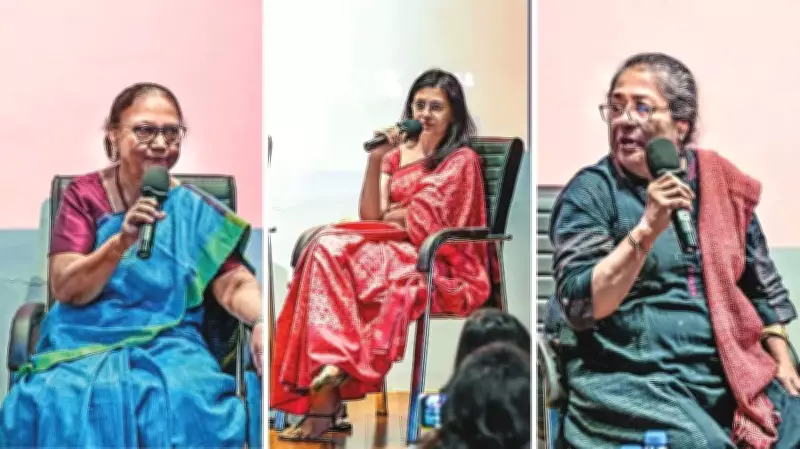
At a moment when discussions about personal and social identity appear increasingly prominent yet complex, the Bengaluru Art Weekend hosted a significant panel titled "Becoming and Unbecoming." This thought-provoking session brought together acclaimed actor-filmmaker Nandita Das, distinguished theatre veteran Arundhati Nag, and Booker Prize-winning author Banu Mushtaq for a rich dialogue moderated by Varun Rana.
Navigating Confidence and Confusion in Contemporary Society
Nandita Das opened the conversation by reflecting on the societal pressure to project certainty. "There is a sense of falseness that has crept into our being. It's better to look confident than to be confused. But confusion and questioning are the starting points of finding answers," she stated. She highlighted how young individuals today face an overwhelming barrage of expectations, often lacking meaningful, deep interactions. Her counsel to the youth emphasized experiential learning: "Throw yourself into different experiences without the fear of failure."
The Persistent Grammar of Patriarchy Across Platforms
Banu Mushtaq framed the discussion within the enduring structures of patriarchy, noting its adaptability. "The language, the strategy, and the medium may change, but the grammar of patriarchy remains the same," she asserted. She observed that even modern platforms like social media reinforce these patriarchal norms, where women face severe repercussions for deviating from expected behaviors. "Patriarchy is speaking, conditioning and controlling even there. If a woman violates these expectations, she is severely punished. That is the power of social media," Mushtaq explained.

Generational Stress and the Quest for Balance
Arundhati Nag contributed insights from her extensive experience, sharing her deliberate avoidance of social media as a coping strategy. "I'm not on social media — that's my way of dealing with it. My only reason for being here is theatre; every decision I take is in its interest," she said. Expressing concern for younger generations, Nag pointed out their tendency to overcommit. "Youngsters today want to learn languages, take classes, and work jobs all at once. You can see the stress. Many last only three to six months in a new job — that seems to be the trend," she noted, highlighting the pressures of modern life.
Writing as a Sanctuary and Art as Transformation
Banu Mushtaq revealed that writing emerged as a necessary refuge for her. "Everything was 'don't do this, don't do that'. The only space left for me was writing," she shared, describing her evolution to writing about human experiences. Nandita Das spoke passionately about art's transformative potential. "Street theatre opened up a whole new world for me. I met people I had never engaged with before. Art can move people — it appeals to the mind, the heart, and even subconsciously," she reflected, underscoring art's role in fostering connection and understanding.
Addressing Inclusivity and the Unprepared Rush of AI
The panel also tackled issues of masculinity and inclusivity, with Arundhati Nag critiquing societal gaps. "We pretend to normalise things, but we have not made our spaces open enough for dialogue," she said, particularly regarding transgender identities. As the conversation shifted to technology, Nandita Das voiced concerns about artificial intelligence and social media. "You put on a filter and look a certain way, but when you see yourself in the mirror, it's different. That gap is unsettling," she remarked, discussing the dissonance created by digital tools.
She further warned about the risks of AI and algorithmic biases. "Even tools like ChatGPT can tell you what words to use — but what happens to your own voice? We all sound intelligent today, but are we really thinking? AI is racing ahead, and we are not prepared. Social media is creating confirmation bias — it shows you only what you already believe," Das concluded, urging a more mindful approach to technological advancements.