Ancient Carthaginian Coin Uncovered in Leeds Bus Fare Collection
A small bronze coin, once used as payment for a bus ride in Leeds several decades ago, has unveiled a far richer history than anyone could have anticipated. Initially regarded as an exotic item in a cashier's desk, this object has now been confirmed as a means of payment from an ancient civilization that thrived over two millennia ago.
Bus Fare Collection at Leeds Transport Company Reveals Unusual Coins
According to the BBC, in the 1950s, James Edwards served as the chief cashier for the Leeds Transport Company. His responsibilities included collecting fares from bus and tram drivers throughout the city. During his rounds, he reportedly encountered coins that did not belong to the standard currency. Rather than discarding them, he set them aside for safekeeping.
Over time, these coins were passed down to his grandson, Peter. For more than 70 years, the collection remained within the family, preserved quietly without formal examination. Peter, now 77 years old, eventually grew curious about one particular coin that stood out due to its distinctive markings, which hinted at an older and unfamiliar origin.

Investigation Leads to Surprising Discovery
Peter's interest prompted him to investigate the coin's origins, leading to an unexpected revelation. The coin was not modern foreign currency but was linked to the Carthaginians, an ancient civilization with Phoenician roots. It had been minted in Cádiz, a historic city in what is now Spain, around the 1st Century BC.
Melqart Imagery and Cross-Cultural Design of the Coin
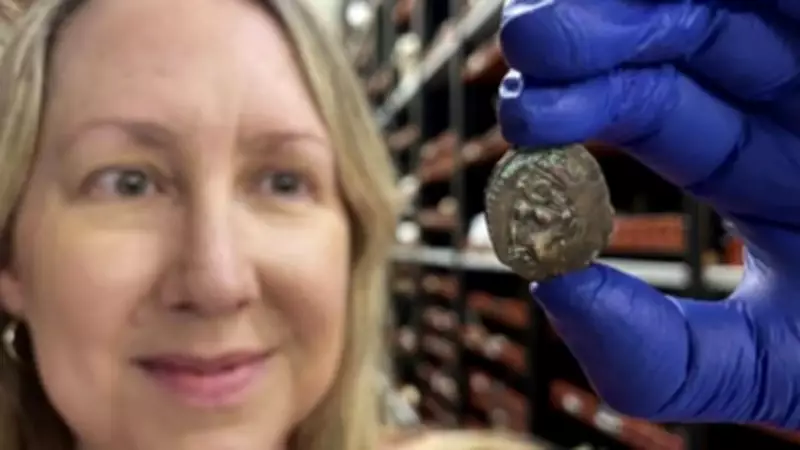
Perhaps the most striking feature of this coin is its design. The front displays the face of Melqart, a god often depicted similarly to the Greek hero Herakles, wearing a characteristic lionskin. This blending of cultural symbols was no coincidence. During that era, coins minted in the Phoenician region occasionally incorporated Greek-associated imagery to enhance their appeal among traders.
The design helped establish the coin's provenance. After realizing the significance of his find, Peter contacted Leeds Museums and Galleries. The museum has accepted the coin into its archives for future reference.
Coin to Be Housed at Leeds Discovery Centre
As reported by the BBC, the coin is set to be housed at the Leeds Discovery Centre, where researchers and visitors can study and learn from it. Peter reportedly felt this was the right decision, noting that returning the coin to an institution for proper study gives it a more meaningful future than remaining in private hands.