Ancient City Iuliopolis Resurfaces After Decades Underwater in Turkey
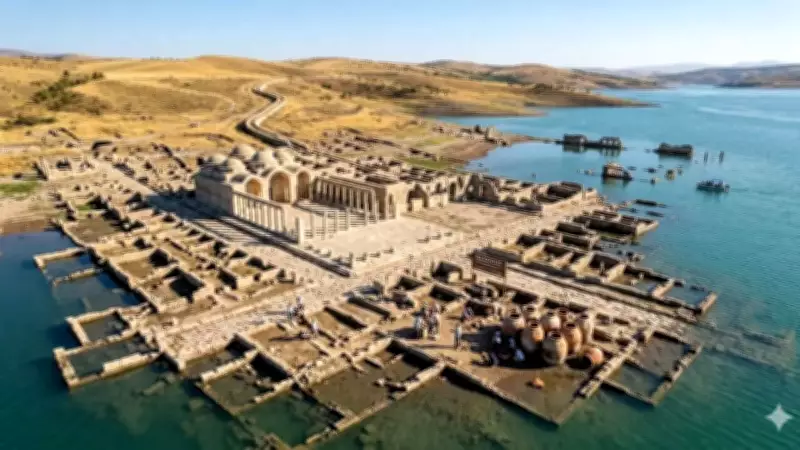
In a remarkable archaeological breakthrough, the ancient city of Iuliopolis, dating back 2,000 years, has re-emerged from the depths of the Sarıyar Dam reservoir in present-day Turkey. Submerged for nearly seven decades since the mid-20th century, this site is now reshaping historical understanding through extensive excavations conducted from 2009 to 2025.
Location and Historical Significance
Located approximately 123 kilometers from Turkey's capital, Ankara, Iuliopolis initially thrived during the Roman period and continued to flourish throughout the Byzantine era. Contrary to earlier assumptions that it was a minor settlement, recent findings indicate it was a significant urban center with organized structures and a robust economy.
Key Archaeological Discoveries
Research led by archaeologists from Karabuk University and the Museum of Anatolian Civilisations, detailed in the study "Juliopolis Anthropological Research: Preliminary Results" published in the Journal of Ankara Studies, has uncovered compelling evidence. Excavations revealed:

- Ceramic and storage vessels, including African Red Slip Ware, which highlights trade connections with distant Mediterranean regions via Roman traders.
- A larder with large clay vessels used for storing agricultural products like grains, wine, and olive oil, some bearing religious markings that suggest economic and religious interactions, possibly through church institutions.
- Well-planned urbanism and religious structures, pointing to an efficiently organized city rather than a marginal town.
Preservation by Submergence
Ironically, the construction of the Sarıyar Dam, which flooded the area, played a crucial role in preserving Iuliopolis. By reducing exposure to environmental elements and human interference, the underwater conditions acted as a protective shell, safeguarding artefacts for decades. While parts of the city remain flooded, ongoing archaeological digs at sites like Aşıklık Höyük continue to uncover insights into ancient life.
Importance of Underwater Archaeology
Discoveries at submerged sites like Iuliopolis offer rare opportunities for researchers. Unlike surface sites vulnerable to degradation, underwater locations often preserve artefacts intact, providing a clearer window into the past. This exploration enhances knowledge of ancient urban communities, their commercial practices, and religious systems, revealing that small cities played vital roles in the economic and religious frameworks of Roman and Byzantine cultures.
Implications for Future Research
The uncovering of Iuliopolis illustrates how modern infrastructure projects, such as dams, can both conceal and protect archaeological sites. Future excavations are expected to shed more light on the city's physical planning, demography, and its significance in the ancient world. As archaeology advances, submerged cities are becoming increasingly valuable sources of information, contributing to a growing body of knowledge about ancient urban life in regions influenced by Roman and Byzantine civilizations.
This discovery underscores the dynamic nature of historical research, where even long-lost cities can resurface to challenge and enrich our understanding of the past.