India's Ambassador to Bhutan, Sandeep Arya, undertook a significant visit to the renowned Buddhist heritage circuit in Odisha's Jajpur district on Thursday. His tour focused on the three ancient sites of Lalitgiri, Ratnagiri, and Udayagiri, collectively celebrated as the 'Diamond Triangle' of Indian Buddhism.
Promoting Odisha's Buddhist Heritage to the World
Ambassador Arya emphasized the international significance of these locations, noting that many global Buddhist scholars, including those from Bhutan, remain unaware of their rich historical depth. "The famous Buddhist sites in Lalitgiri, Udayagiri and Ratnagiri are world-class heritage sites," Arya stated. He expressed confidence that his visit would help bridge this knowledge gap and spotlight Odisha's monumental contribution to Buddhist history and culture.
A Journey Through Ancient Monasteries and Museums
The ambassador's exploration began with a detailed visit to the Archaeological Survey of India (ASI) museum at Ratnagiri, also known as the 'hills of jewels'. Here, he examined a vast collection of 3,535 Buddhist antiquities, with 244 carefully curated items displayed across four galleries. Senior ASI officials provided insights into the site's profound historical importance. Moved by the experience, Arya wrote in the visitors' book, "It is a great pleasure for me to visit the world class Buddhist site and museum at Ratnagiri."

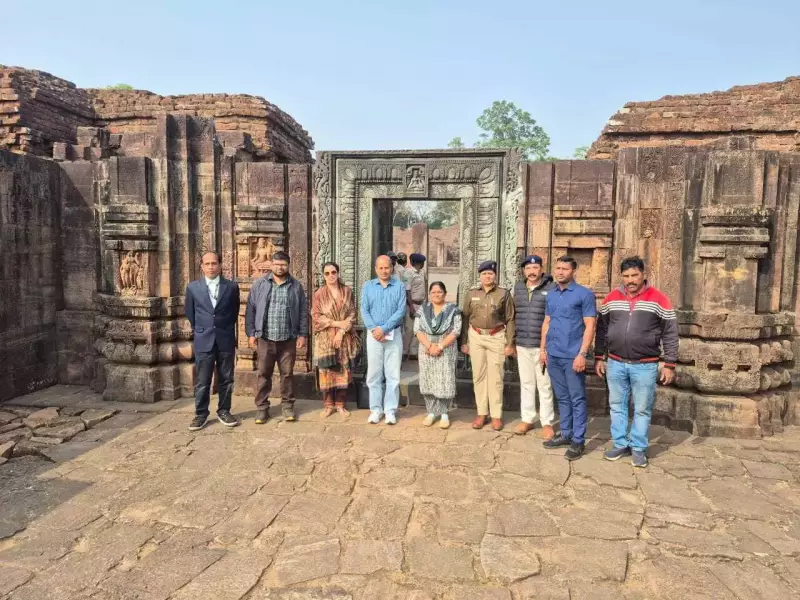
The tour continued to the Udayagiri monastery, located approximately 10 kilometers from Lalitgiri. Arya admired the site's architectural marvels, including a perfectly preserved doorway adorned with intricate and ornate sculptures.
Paying Homage to Sacred Buddha Relics
A deeply reverent moment of the visit occurred at the museum in Lalitgiri. Ambassador Sandeep Arya paid his respects to the sacred relic of Lord Buddha, which is housed within the museum in a unique set of caskets. These relics, discovered in 1985, consist of tiny bones believed to belong to Buddha and one of his disciples.
The relics are preserved in a remarkable manner reminiscent of a Chinese puzzle box. They are encased within four nested caskets, each placed inside the other. The containers are crafted from Khandolite and designed in a stupa shape, made from pale grey soapstone, and feature enclosures of silver and gold, highlighting the exquisite craftsmanship of the era.
This high-profile visit underscores the Indian government's ongoing efforts to promote its rich cultural and spiritual tourism circuits. The 'Diamond Triangle' of Odisha stands as a testament to the country's diverse religious history and offers immense potential for deeper cultural diplomacy and scholarly exchange, particularly with Buddhist-majority nations like Bhutan.