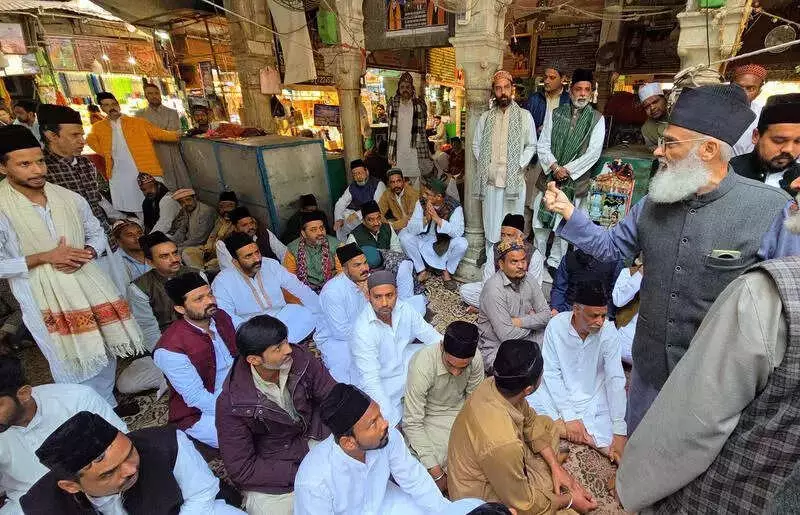
The centuries-old traditions of the revered Dargah of Khwaja Moinuddin Chishti in Ajmer faced a new challenge this week. The hereditary khadim community staged a strong protest on Tuesday against a recent directive that mandates they must obtain licenses to perform rituals at the 12th-century shrine.
What Sparked the Controversy?
The order was issued by the Dargah Committee, an autonomous body under the Union Ministry of Minority Affairs that manages the shrine under the Dargah Khwaja Saheb Act of 1955. The khadims, who are traditional caretakers and ritual conductors, learned of the mandate after it was published in newspapers on Tuesday. The committee cites Section 11(f) of the 1955 Act as its authority, which allows it to regulate the presence of khadims by granting licenses where necessary.
Officials explained that the move was recommended by the district administration following a recent security audit. They stated the licensing system aims to streamline crowd management and better assist the millions of devotees who visit the holy site. However, the khadims see it as a direct attack on their hereditary rights.

A Clash of Perspectives: Tradition vs. Regulation
The protest was organized by the Anjuman Moinia Fakhria, the representative body of the khadims. They have demanded the immediate withdrawal of the order and warned of intensified agitation if it is not revoked. Anjuman secretary Syed Sarwar Chishty vehemently opposed the decision, framing it as more than an administrative step.
"By restricting the traditional rights of the khadims, the decision strikes at the heart of constitutional freedoms," Chisty argued. He elaborated that the order violates multiple constitutional articles:
- Article 14 by treating one community unfairly.
- Article 19(1)(g) by obstructing their lawful profession.
- Article 25 by interfering with their religious practice.
- Article 31 by undermining historical property rights.
Chisty further claimed that the decision, taken by Dargah CEO and Nazim Bilal Khan, is arbitrary and unlawful. He asserted that Khan lacks the authority to issue such directions in the absence of a duly constituted nine-member Dargah Committee and its Advisory Committee, as required by law.
The Administration's Defense and Legal Standoff
In defense of the move, Nazim Bilal Khan stated it is a necessary reform for the shrine's management. "A licensing system will bring transparency, enhance security, and improve management for all stakeholders—administration, police, devotees, and even khadims themselves," he said.
Despite this justification, the khadim community remains unconvinced. Syed Sarwar Chishty has made it clear that they plan to challenge the directive in court, setting the stage for a legal battle over the interpretation of the 1955 Act and the constitutional rights of the hereditary caretakers. The outcome of this dispute will have significant implications for the management of one of India's most important Sufi shrines.