People have always been drawn to beautiful and expensive things, from polished cars and giant houses to designer clothes. Even funerals are sometimes turned into displays of wealth and status, with families spending enormous amounts on elaborate ceremonies, decorated graves, and handcrafted coffins. Some coffins are so detailed they resemble museum pieces rather than symbols of grief.
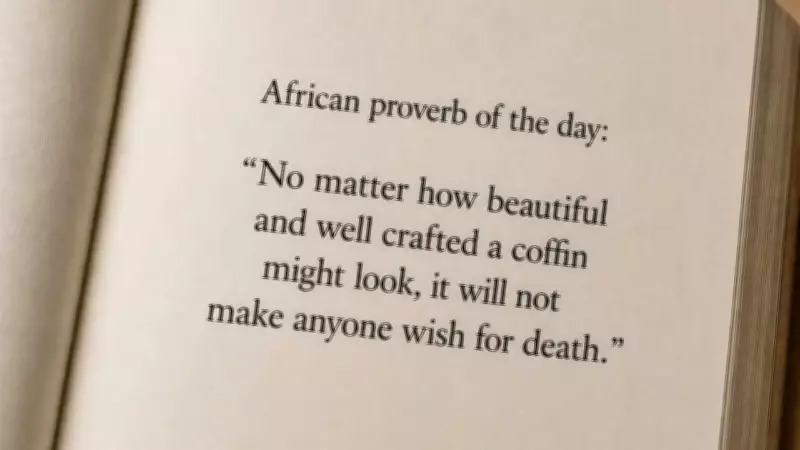
This is why an old African proverb still resonates strongly today: "No matter how beautiful and well crafted a coffin might look, it will not make anyone wish for death." It is blunt and uncomfortable, wasting no words on poetry. The saying points to a truth people often ignore: no amount of beauty can change what a coffin represents. The polish, decoration, and craftsmanship do not remove the underlying reality.
Perhaps the real point of the proverb is that humans spend much of life dressing things up, trying to make painful realities appear softer than they are. This proverb cuts through appearances. A coffin could be made from the finest wood, covered in gold, and decorated with expensive carvings, but it still would not make anyone excited about dying. The object may look beautiful, but its purpose remains the same.

The contrast makes the proverb memorable. It challenges the idea that appearance equals value, an idea modern life constantly pushes. Social media encourages people to stage holidays, meals, outfits, and ordinary moments, polishing everything to look desirable. But the proverb asks a simple question: how much can appearances really change? Not everything can be improved with decoration. Death, loss, and loneliness cannot.
Why the Saying Still Feels Modern
This proverb is likely much older than the internet, luxury branding, or influencer culture, yet it fits perfectly into today's world. Experts in traditional African oral storytelling note that many proverbs survive because they address recurring human behavior. While technologies and lifestyles change, certain habits remain similar across centuries. The obsession with status is one of them.
Today, status symbols may be luxury cars or online followers; hundreds of years ago, they were jewelry, land, or elaborate ceremonies. The details change, but people still chase symbols that make them appear important or successful. This proverb strips that illusion down to its basics: a beautiful coffin is still a coffin. That line feels harsh because it removes all distraction, leaving no place for the mind to hide.
People Often Confuse Comfort with Meaning
The proverb does not say money is evil or comfort does not matter. Most people want stability, and there is nothing wrong with a decent home or financial security. However, there is a warning hidden in the saying: material things have limits. At some point, they stop solving deeper human problems. A person can own expensive things and still feel miserable.
This sounds obvious when written down, yet societies act as if external success automatically creates happiness. It rarely works that neatly. Examples are everywhere: famous celebrities talking openly about burnout, wealthy business figures admitting isolation, and public figures who appear successful but struggle with anxiety or depression. The polished image often hides something messier underneath. The proverb exposes the gap between appearance and reality in a single sentence.
Funeral Traditions Inspired This Wisdom
In some African cultures, funerals are major community events. Historians and anthropologists have written about elaborate burial traditions across the continent. In certain places, handcrafted coffins became symbols of respect, identity, or social status. Ghana, for example, is known for fantasy coffins shaped like fish, birds, airplanes, or luxury cars, some of which are stunning pieces of craftsmanship. Yet even there, the emotional truth remains: a beautiful coffin still represents someone's death.
The proverb may have emerged from observing this contradiction. People naturally want to honor loved ones with beauty and ceremony, but no amount of artistry removes grief itself. That emotional tension gives the saying its power.

The Proverb Says More About Life Than Death
Oddly, this is not really a proverb about dying but about living. It reminds people to pay attention to what genuinely matters before it is too late: health, time, relationships, and peace of mind. These things become incredibly valuable during moments of crisis. Nobody lying in a hospital bed suddenly wishes they had bought more luxury items.
This reality appears whenever people face genuine hardship. During disasters, wars, or personal tragedies, human priorities become clearer. Family, time, and survival matter more. Superficial things shrink quickly. Perhaps that is why the proverb resonates across generations: it points to something people know deep down, even if they do not always live by it.
Modern Culture Rewards Appearances Constantly
Part of the reason this proverb feels uncomfortable today is that modern culture rewards appearance almost nonstop. People are encouraged to market themselves constantly with better photos, lifestyles, and images. Entire industries are built around presentation and perception. The strange thing is that many people recognize the performance while still participating in it. Social media is curated, yet comparisons happen automatically.
The proverb cuts through that performance. No amount of polish changes fundamental reality. This idea applies to careers, relationships, public image, wealth, and success. Something may look impressive externally while hiding serious problems underneath.
Why Simple Proverbs Survive for Generations
Long explanations are easy to forget; sharp images are harder to ignore. Proverbs survive for centuries while complicated philosophical ideas disappear because a person may forget an entire lecture but remember a striking sentence. This proverb works because the image is immediate: everyone understands that a beautiful coffin changes nothing.
There is also something deeply human about the honesty of the statement. It does not pretend life is always fair or comfortable. It simply recognizes that certain realities cannot be softened by decoration or status. That message feels increasingly relevant in a world obsessed with appearances. People still want real things underneath all the performance: real connection, real happiness, and real purpose. The older people get, the more obvious that often becomes.