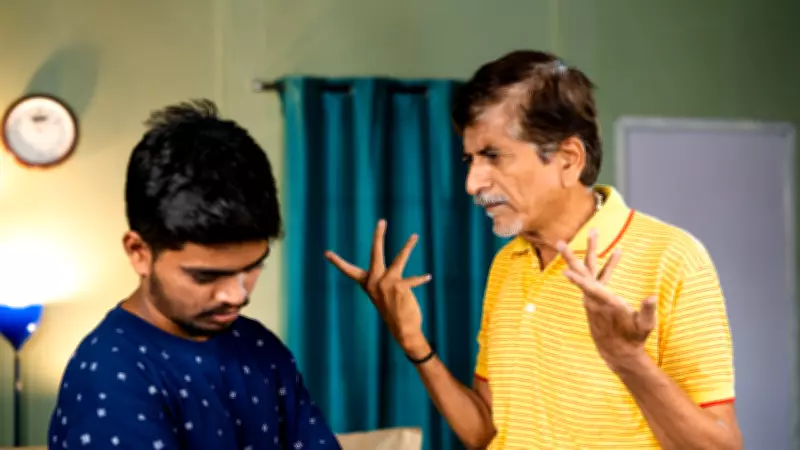
Children throwing toys, talking back, refusing to share, or melting down during a calm evening can appear as simple misbehavior. However, what seems 'bad' on the surface is often the loudest expression of something harder to name. Children rarely have the words to say, 'I am overwhelmed,' 'I feel left out,' or 'I need help.' Instead, they communicate through behaviour. This does not mean every outburst is deeply symbolic; children are still learning limits, self-control, and social rules. Yet when difficult behaviour repeats, it is worth looking beneath the irritation to understand what the child may be trying to convey. Here are seven hidden meanings behind your child's 'bad behaviour.'
1. 'I Am Overwhelmed'
A child who suddenly becomes noisy, defiant, or tearful may not be trying to challenge anyone. They could simply be flooded by too much stimulation, too many instructions, a noisy room, a change in routine, or even hunger. What looks like stubbornness can sometimes be a nervous system waving a white flag. Recognising this can help parents respond with calm and support rather than frustration.
2. 'Notice Me'
Some children act out because negative attention feels better than no attention at all. A child who keeps interrupting, clowning around, or doing exactly what they were told not to do may be clumsily chasing connection. While the behaviour can be frustrating, the underlying need is simple: to be seen, noticed, and included. Offering positive attention proactively can reduce such outbursts.

3. 'I Need Help With a Feeling I Cannot Name'
Children feel anger, shame, jealousy, disappointment, and fear long before they can explain them. When these feelings lack words, they often leak out as aggression, withdrawal, or refusal. A child who slams a door may not be trying to be rude; they may not know how to carry the feeling that preceded it. Teaching emotional vocabulary can help them express themselves more constructively.
4. 'I Do Not Feel in Control'
Power struggles often grow where children feel powerless. A child who resists dressing, homework, eating, or bedtime may be reacting less to the task and more to the loss of choice. Their behaviour can be a small protest against a world that constantly tells them what to do. Offering age-appropriate control—like letting them choose between two options—can soften resistance.
5. 'I Am Tired, Hungry, or Unwell'
Not all difficult behaviour is emotional; sometimes it is physical. A tired child has less patience, a hungry child has less flexibility, and a sick or uncomfortable child may lack the capacity to cope with ordinary demands. Before interpreting behaviour as attitude, it helps to ask basic questions: Have they eaten? Slept? Rested? Felt well? Addressing physical needs can quickly resolve many issues.
6. 'Something Does Not Feel Safe to Me'
Safety for a child is not only about danger but also about predictability, tone, and emotional climate. A child may become clingy, rude, or explosive when they sense tension at home, fear criticism, or do not know what reaction is coming next. In some cases, 'bad behaviour' is a stress response rather than a moral failure. Creating a calm, consistent environment can help them feel secure.
7. 'I Need Boundaries to Feel Secure'
Paradoxically, some children push limits because they are looking for them. They test rules not because they want chaos, but because they need to know where the edges are. Firm, calm boundaries can feel comforting, teaching children that the world is stable and that adults can hold the line without losing love. Consistent boundaries foster a sense of security and trust.
The hardest part for parents is that the same behaviour can mean different things on different days. A tantrum may be exhaustion one morning and attention-seeking the next. That is why decoding behaviour requires patience, not panic. Behind most 'bad' behaviour is not a bad child, but a child with an unmet need, an unfinished emotion, or a skill they have not yet learned. When adults respond only to the surface, they may miss the message. But when they look deeper, discipline becomes less about punishment and more about understanding. And that is often where real change begins.