GK Fact of the Day: 7 Fascinating Flightless Birds from Across the Globe
The common perception associated with birds is that they can fly. However, through evolution, many birds have adapted for various activities that do not involve flying. Over time, they have developed strong legs, swimming abilities, and terrestrial lifestyles, making them perfectly suited to their environments. These birds are an interesting case of natural adaptation. Here are seven such flightless birds from around the world.
Ostrich
The ostrich is the world's largest bird and one of the most popular flightless birds. This African bird cannot fly but compensates with exceptional terrestrial locomotion. Its large and robust legs allow it to achieve great speeds, while its wings help with balance and courtship displays.
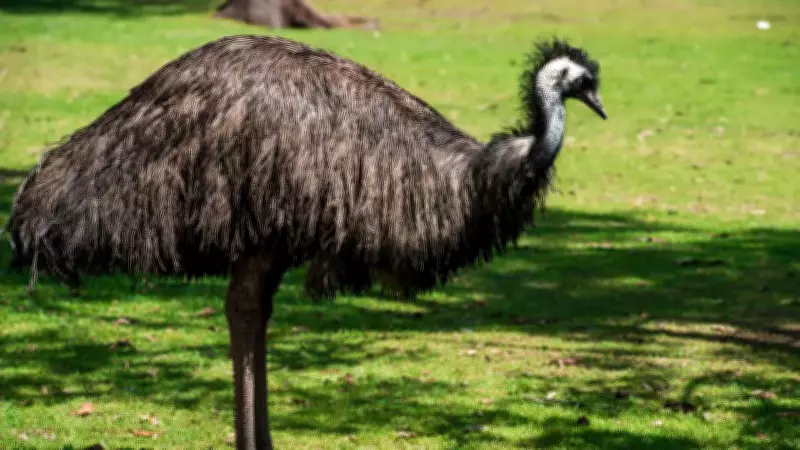
Emu
The emu is a large, flightless bird native to Australia. It possesses strong legs that enable it to move swiftly and cover considerable distances across the ground. Its small wings do not allow flight, so it relies on ground locomotion instead.

Kiwi
The kiwi is a unique flightless bird from New Zealand. It has loose, hair-like feathers, strong legs, and a small, compact body with reduced wings. The kiwi spends most of its time on the forest floor and is especially adapted for life on the ground.
Penguin
Penguins are flightless seabirds that have traded aerial flight for expert swimming. They live mostly in the Southern Hemisphere and use their wings as flippers to move through water with great skill. Their bodies are specially adapted for cold, aquatic environments rather than flying.
Cassowary
The cassowary is a large flightless bird found in the Australo-Papuan region. It is known for its strong legs, powerful build, and ground-dwelling lifestyle. Although it cannot fly, it is well adapted to moving through dense forests and is recognized as one of the most distinctive birds in the world.
Rhea
The rhea is a large flightless bird native to South America. It is related to the ostrich and emu and lives in open country. With its long legs and lightweight build, the rhea is suited to running rather than flying, making speed its main defense against danger.
Kakapo
The kakapo is a flightless parrot native to New Zealand. It is nocturnal and ground-dwelling, unlike most parrots. This bird is also critically endangered, making it extremely rare.
These seven birds prove that having wings does not necessarily mean a bird must use them to survive in its habitat. Each bird has adapted uniquely to its surroundings, whether by running, swimming, or hiding.