The world of art is a repository of human genius, but it is also a testament to profound loss. Over centuries, masterpieces that defined eras and captured the soul of artists have vanished without a trace. Stolen in daring heists, looted during wars, or simply disappeared, these paintings leave behind empty frames and haunting questions. Their absence is a permanent scar on our shared cultural heritage. Here are the stories of five such iconic works, whose original versions are tragically no longer available for the world to see.
The Gardner Museum Heist: A Double Blow to Art History
One of the most audacious crimes in the art world occurred on March 18, 1990, at the Isabella Stewart Gardner Museum in Boston. Thieves disguised as police officers pulled off the largest art theft in U.S. history. Among the 13 precious works taken were two irreplaceable masterpieces.
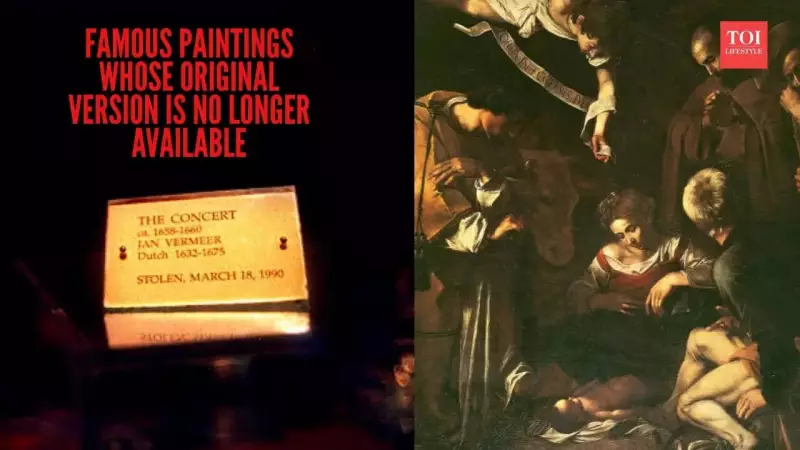
Johannes Vermeer's "The Concert", painted around 1664, was a serene glimpse into a domestic musical gathering, celebrated for its exquisite use of light. Alongside it, Rembrandt van Rijn's "The Storm on the Sea of Galilee" (1633) was stolen. This painting was Rembrandt's only known seascape, depicting a biblical scene with dramatic intensity. Despite a massive FBI investigation and a multi-million dollar reward, both paintings remain missing. Their empty frames still hang in the museum as a poignant memorial to what was lost.

Wartime Loot and Mysterious Thefts
The chaos of war has often been a catalyst for the disappearance of cultural treasures. Raphael's "Portrait of a Young Man", painted circa 1513-1514, is considered one of the most significant losses of World War II. This elegant Renaissance portrait was looted by Nazi forces from the Czartoryski Museum in Kraków, Poland. Its whereabouts are unknown, symbolising the immense cultural devastation of the conflict.
In a similarly brazen theft, Caravaggio's "Nativity with St. Francis and St. Lawrence" was cut from its frame in the Oratory of Saint Lawrence in Palermo on the night of October 17-18, 1969. This powerful 1609 altarpiece, showcasing Caravaggio's signature dramatic realism, vanished. It is widely believed to have been stolen by the Sicilian Mafia and may have been destroyed. A replica now hangs in its place, a shadow of the original masterpiece.
The Unsolved Mystery of the Ghent Altarpiece
Even older masterpieces are not immune. The magnificent Ghent Altarpiece, created by brothers Jan and Hubert van Eyck in 1432, is a cornerstone of Northern Renaissance art. However, it has been incomplete for decades. On April 10, 1934, one of its central panels, "The Just Judges," was stolen from the Saint Bavo Cathedral in Ghent, Belgium. The thieves left a ransom note, and while one panel was later returned, "The Just Judges" was not. Despite a deathbed confession and numerous theories, the panel has never been recovered. Many experts fear it was destroyed.
These stories are more than just tales of crime; they are urgent warnings. Each lost painting represents a fragment of our collective history, creativity, and identity that future generations will never experience firsthand. They remind us that art is not merely decoration—it is memory, beauty, and a dialogue across time. Their loss underscores the critical importance of preservation, security, and appreciation for the cultural heritage that defines humanity.