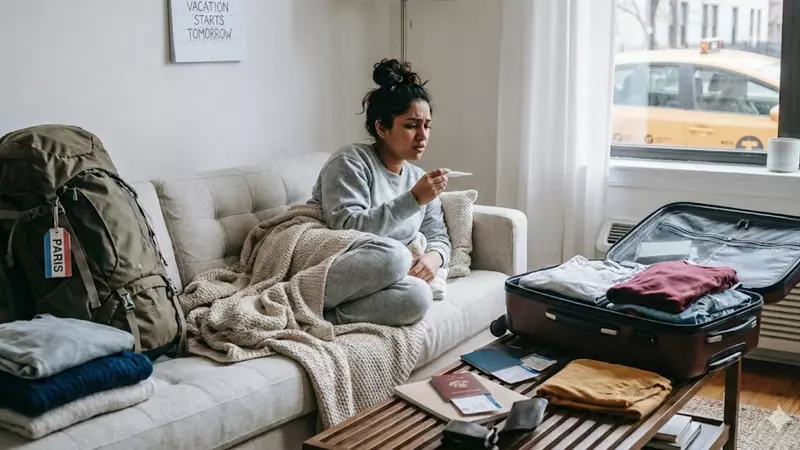
You've powered through a hectic work period, counting down the days to your well-deserved break. The bags are packed, the out-of-office is on, and you're finally ready to unwind. Then, it hits you: the fatigue, the scratchy throat, the unmistakable onset of a cold or flu. Why does illness so often gatecrash our holidays and weekends? This frustrating phenomenon, often called 'leisure sickness' or the 'let-down effect', is a real experience for many, though science is still piecing together the full picture.
What is Leisure Sickness? The Evidence So Far
The term 'leisure sickness' was first coined by Dutch researchers in a 2002 study. They surveyed 1,893 individuals and found that approximately 3% reported falling ill more frequently during weekends or vacations compared to their regular workweek. Common symptoms included headaches, extreme tiredness, colds, flu, muscle pain, and nausea. The study noted that infections were more likely on longer vacations than on weekends, with symptoms peaking in the first week of a holiday.
However, this foundational research had limitations, relying on participants' memory and using subjective definitions of terms like "seldom" and "often." More targeted research, like a 2014 study on migraines, provided intriguing clues. It found that for some chronic migraine sufferers, a reduction in daily stress could actually trigger a migraine attack within 24 hours. If work is the primary stressor, this pattern translates directly to falling sick on days off.
The Science Behind the Sudden Slump: Stress and Your Immune System
The relationship between stress and immunity is complex and key to understanding leisure sickness. During periods of acute stress—like a demanding work sprint—your body releases hormones like adrenaline and cortisol. In the short term, these hormones can give parts of your immune system a temporary boost and provide anti-inflammatory effects that may mask pain.
"This means when you are highly stressed and busy, you might actually have a temporary heightened resistance to infection," explains the science. The problem arises when you finally stop. The sudden drop in these stress hormones removes that temporary shield and pain relief. Your body enters a sudden transition phase, making you more vulnerable to viruses or bacteria you may have already encountered, and allowing underlying symptoms to surface fully.
Other factors also play a role. Holidays often involve travel, exposing us to crowded planes and new germs. We might drink more alcohol, compromising immunity, or engage in unfamiliar physical activities. Conversely, some experts suggest that during busy work periods, we are simply too distracted to notice minor symptoms, which become unmistakable once we slow down.
How to Protect Your Peace (and Health) on Your Next Break
While the exact mechanisms of leisure sickness are still being studied, you can take proactive steps to safeguard your health. Building a resilient immune system is a year-round effort. A Finnish study of over 4,000 previously inactive public employees found that those who took up regular vigorous exercise took less sick leave.
Managing chronic work stress is also crucial. Techniques like meditation, mindfulness, and relaxation exercises have strong evidence for reducing stress levels. For travel-specific protection, ensure your vaccinations (like flu and COVID-19 boosters) are up to date and consider wearing a high-quality mask (like an N95) in crowded airports and aircraft.
Ultimately, the goal is to transition into leisure mode more gently. Instead of crashing from 100 to 0, try winding down gradually before your holiday starts. Maintain healthy sleep, diet, and exercise routines even during busy periods, so your body isn't in a state of extreme depletion when you finally take a break. By understanding the potential for leisure sickness, you can plan not just your vacation itinerary, but also your wellness strategy, ensuring you truly get the rest you need.