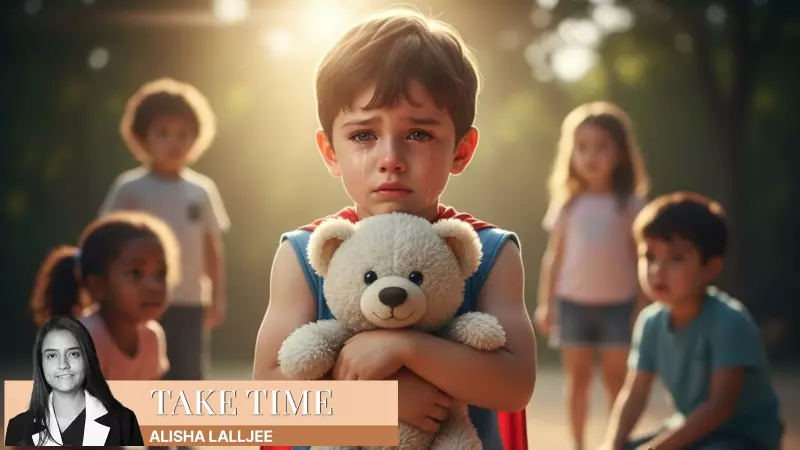
In many Indian households, the label of a 'strong child' is often worn as a badge of honour. This strength is typically defined by a child's ability to not complain, to hold back tears, to adjust without fuss, and to manage their feelings independently. Parents, with the best intentions, often express pride in this trait, believing they are fostering resilience to prepare their young ones for a challenging world.
The Hidden Cost of Suppressing Tears
When an adult tells a child, 'You're strong, don't cry,' the motivation usually stems from care, not dismissal. The aim is to help the child cope, to shield them from disappointment, and to prevent them from feeling overwhelmed. However, children absorb the implied meaning, not the good intention. Over time, they learn that strength is rewarded when emotions are invisible. Tears become something to apologise for, associated with weakness or being a burden, despite being a fundamental human response to emotional overload.
Dr Alisha Lalljee, in her insights dated January 5, 2026, clarifies that crying is not a bad habit to be unlearned. It is a crucial biological and emotional release that helps the nervous system regulate itself. Long before language develops, tears are a child's primary tool to express fear, pain, and the need for connection. As they grow, crying evolves into a mechanism to process complex feelings like disappointment, loss, and rejection.
Crying as a Biological Release and Path to Regulation
Asking a child to stop crying prematurely teaches suppression, not strength. Many so-called 'strong' children learn to hold themselves together because they sense stress or emotional unavailability in adults around them. While praised for being mature and self-reliant, they internally carry an emotional weight without a safe space to set it down. Their composure is often less about resilience and more about adaptation, learning that love and approval feel safer when they don't express too much need.
Adults frequently struggle with a child's tears because they trigger their own discomfort, unresolved emotions, or fears of parental failure. The instinct is to rush in and fix the distress with distractions, minimisation ('It's not a big deal'), or quick solutions. What a child truly needs in moments of high emotion is not immediate problem-solving, but a calm, present adult. When a caregiver remains emotionally available during a child's tears, the child learns that feelings are safe, temporary, and survivable. This repeated experience of supported overwhelm is the true foundation of emotional regulation.
Building True Resilience for the Long Term
The physical role of crying is significant. Emotional tears help release stress hormones and activate the body's calming nervous system. When crying is consistently discouraged, the unprocessed emotional energy doesn't vanish; it gets stored in the body. This can later manifest as anxiety, irritability, unexplained anger, sleep issues, or physical complaints. The child may look strong on the surface but is internally managing a load of unprocessed stress.
Cultural expectations add another layer of complexity. Boys are often taught that strength equals toughness and emotional restraint, while girls may be permitted to cry but then criticised for being 'overly emotional.' In both scenarios, children learn to distrust their natural emotional expression, potentially shaping adults who struggle to identify their feelings or feel guilty for having them.
Allowing children to cry does not mean abandoning boundaries or protecting them from all hardship. It means recognising that emotions and strength are not opposites. A child can cry while still learning responsibility, resilience, and problem-solving. Saying, 'I know this is tough. I'm here with you,' while maintaining necessary limits, teaches that emotions can coexist with structure. This balance cultivates authentic emotional strength.
Home should be the primary sanctuary where children don't have to perform resilience. The outside world—through school, peers, and society—will inevitably demand toughness and composure. Home should counter this by teaching that falling apart doesn't mean losing love, that tears aren't a sign of weakness, and that seeking comfort is not a failure.
Children permitted to cry develop a healthier relationship with their inner world. They become adept at recognising emotional signals instead of ignoring them. They are more likely to seek support, set boundaries, and recover from setbacks without shame. They understand that genuine strength includes rest, expression, and connection. Letting children cry doesn't make them fragile; it makes them flexible. Like a tree that bends in the wind instead of snapping, emotionally supported children learn to navigate life's pressures without collapsing under them. In a world that pushes children to grow up too fast, giving them permission to cry is a profound way to safeguard their emotional health and their humanity.