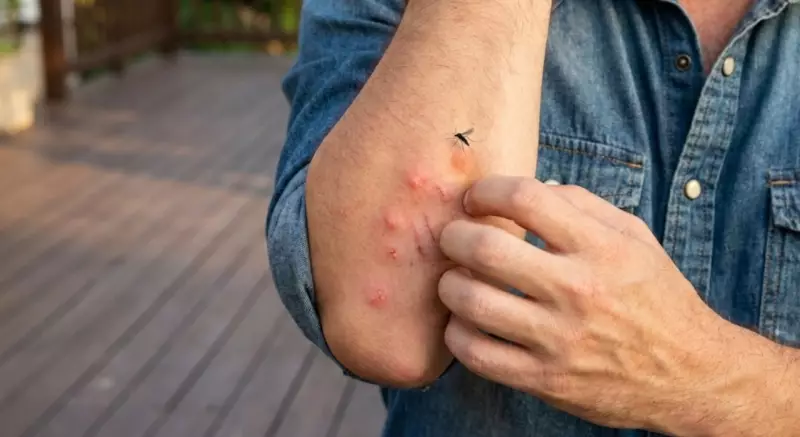
Have you ever been outdoors with a group, only to find yourself relentlessly targeted by mosquitoes while others remain unscathed? That frustrating feeling of being singled out is a common summer woe. However, entomologists confirm that this is not a personal vendetta by the insects. Instead, it's a complex, multi-stage decision-making process driven by specific signals your body emits.
The Layered Hunt: From Breath to Bite
Mosquitoes are far from random in their selection of victims. According to Professor Jonathan F. Day, an entomology expert with years of research in mosquito behaviour, these insects make layered choices based on visual, olfactory, and tactile cues. The hunt begins long before a mosquito lands on your skin.
The most critical long-range signal is carbon dioxide (CO2), which we exhale with every breath. "The amount of CO2 you produce, like people with high metabolic rates, genetic, other factors, increases the amount of carbon dioxide you give off," Day explained. Consequently, individuals who emit more CO2 become more attractive targets from a distance. This group often includes people with larger body sizes, pregnant women, and those who have just finished exercising.

As mosquitoes close in, they use vision to pinpoint a host. Clothing colour becomes significant here. "How you're dressed matters," Day notes. Since mosquitoes fly low, dark clothing creates a stark contrast against the horizon, making the wearer a more visible target compared to someone in light-coloured attire.
The Final Cues: Heat, Skin, and Blood Type Debate
Once a mosquito is near enough to land, body heat becomes a crucial tactile guide. Some individuals naturally have warmer skin, and mosquitoes use this to locate areas where blood vessels are closer to the surface. Dermatologist Dr. Melissa Piliang from the Cleveland Clinic adds that factors like alcohol consumption, exercise, pregnancy, or being overweight can increase attractiveness due to changes in body heat, metabolism, and skin chemistry.
Beyond these factors, the role of blood type has been a point of scientific investigation and debate. The theory focuses on antigens—proteins on red blood cells. Some people, known as "secretors," release traces of these antigens through bodily fluids like sweat.
Several studies suggest that individuals with blood type O might be more appealing to mosquitoes. A foundational 1974 study with 102 participants indicated mosquitoes preferentially chose hosts with blood group O. This was supported by further research in 2004 and a 2019 study that noted the "highest preference" for type O blood in controlled feeder tests.
However, experts caution that this is not a definitive rule. Pharmaceutical giant Pfizer notes that the evidence on blood-type preference remains controversial and contradictory. Professor Day and other scientists, like Joseph Conlon, a technical adviser to the American Mosquito Control Association, emphasise that skin odours and the unique community of bacteria (microbiota) living on our skin likely play a more substantial role than blood type alone.
No Single Reason, But a Cascade of Clues
The consensus among researchers is clear: there is no single "mosquito magnet" gene or factor. Attraction is a cumulative process. "These cues let them know they are going to a blood source," Day summarises, noting that CO2 is perhaps the most important signal.
With over 3,000 mosquito species globally and more than 350 chemical compounds identified in human skin odour, the puzzle is immensely complex. Science confirms that your appeal to mosquitoes builds from your breath to your clothing to your unique skin chemistry, with each element either drawing the insects closer or steering them toward someone else.