

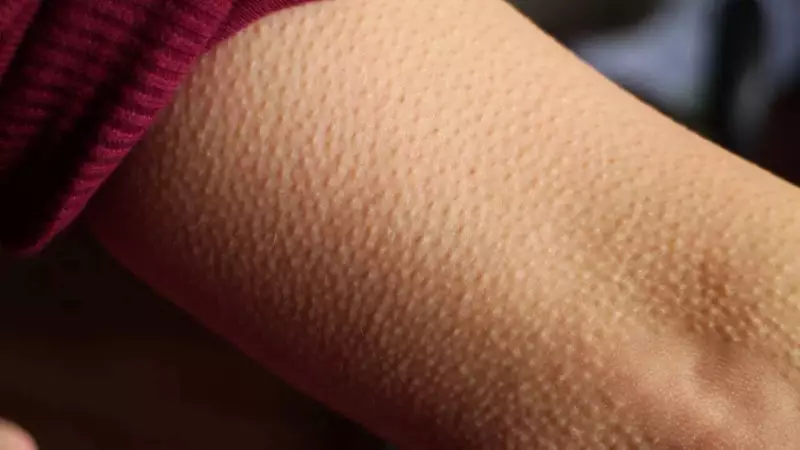
We have all felt them—those sudden, tiny bumps that prickle our skin on a cold morning, during a powerful piece of music, or in a moment of profound awe. Commonly known as goosebumps, this peculiar bodily reaction is often dismissed as a pointless evolutionary leftover. However, the real story behind this phenomenon is far more intriguing and reveals a deep connection to our ancestral past and modern biology.
The Science Behind the Bumps: What Causes Goosebumps?
Scientifically termed cutis anserina, goosebumps are the direct result of tiny muscles under our skin called arrector pili muscles. These muscles are attached to the base of hair follicles across most of the body, though not on the face, armpits, eyelashes, or eyebrows. When they contract, they pull the hair follicle upright in a process known as piloerection. This action creates the distinctive bumpy texture on the skin's surface.
This is an completely involuntary response controlled by the sympathetic nervous system—the same system that triggers our primal fight-or-flight reaction. As noted in an Elsevier study, this shared pathway explains why goosebumps can erupt without warning, whether from a sudden drop in temperature or a swift surge of emotion.

An Ancient Survival Tool: How Goosebumps Helped Early Humans
For our much hairier ancestors, goosebumps served critical survival functions. When the arrector pili muscles contracted and raised body hair, it trapped a layer of warm air close to the skin. This provided essential insulation, helping early humans retain body heat in frigid environments. Furthermore, the contraction of the muscles themselves generated additional warmth, offering another subtle layer of protection against the cold.
Raised hair likely had a second, defensive purpose. Similar to animals puffing up their fur to appear larger and more threatening, humans might have used goosebumps to make themselves look bigger and more intimidating when facing predators or rivals. This theory is strongly supported by the goosebumps' direct link to the fight-or-flight system, tying the physical response directly to perceptions of danger.
Why Emotions Trigger Goosebumps
One of the most curious aspects of goosebumps is their strong association with deep emotions. Many people experience them during moving musical passages, impactful speeches, or moments of sheer awe. This happens because the sympathetic nervous system is not only sensitive to physical threats like cold but is also intricately connected to the brain's emotional centers.
States of high arousal, motivation, or intense emotion activate much of the same neural pathway as physical threats. Therefore, goosebumps are as much an emotional response as a physical one—a reflection of the body's ancient wiring that persists even though it no longer serves a practical survival need in the modern world.
Unexpected Benefits for Skin and Hair Health
Beyond its historical role, the goosebump mechanism may play a subtle part in maintaining skin health. The arrector pili muscles are situated near sebaceous glands, which produce sebum—an oily substance that keeps skin moisturised. Muscle contraction gently squeezes these glands, promoting the release of sebum and helping to prevent excessive skin dryness.
Perhaps more remarkably, a 2020 study published in the journal Cell uncovered a fundamental biological function. Research on mice showed that the contraction of arrector pili muscles acts as a crucial signal, prompting dormant hair follicle stem cells to activate and proliferate. This finding suggests that the system responsible for goosebumps is actively involved in regulating hair growth, indicating it is far from a mere evolutionary vestige and may have an ongoing role in our biology.
In conclusion, goosebumps are a multifaceted phenomenon. They are a window into our evolutionary history, a shared physiological response to cold and emotion, and a potentially active player in skin and hair health. This common experience connects us directly to the survival instincts of our ancestors.






