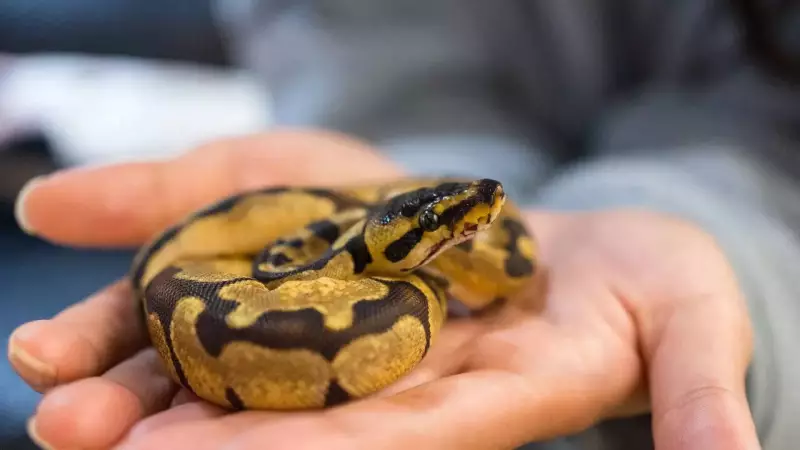
Forget wagging tails and happy licks. The world of reptile companionship operates on a different, far quieter frequency. While dogs are celebrated for their overt affection and cats for their selective fondness, snake owners often wonder if their scaled companions are capable of any form of attachment at all. The answer, according to emerging science and keeper experiences, is a nuanced yes—but one that requires redefining our understanding of 'bonding'.
The Science of Scent: How Snakes Recognize Familiar Humans
The key to understanding a snake's world lies in scent, warmth, and vibration. Unlike mammals, they do not form social bonds in the traditional sense. However, research indicates they are far from indifferent automatons. A pivotal study published in the journal Applied Animal Behaviour Science provided compelling evidence. The research found that corn snakes could discriminate between the odours of familiar and unfamiliar humans. This suggests a capacity for learned recognition, moving beyond pure instinct.
This scientific finding validates what many long-term snake keepers have observed anecdotally. A defensive hatchling may, over months, become noticeably calmer when handled by its primary caregiver. The snake might choose to explore slowly upon the enclosure opening rather than immediately retreating to a hide. These subtle behavioural shifts are the reptile's version of recognition—a quiet acknowledgement that this specific human is not a threat.
Decoding the Language of Calm: Signs Your Snake is Comfortable
Forget looking for excitement. With snakes, comfort is expressed through an absence of stress signals. Owners must learn to read a different set of cues. Signs a snake is comfortable and trusts a familiar person include:
- Looser body coils and relaxed muscle tone, rather than a tense, rigid posture.
- Steady, slow breathing and a general lack of defensive posturing like striking or hissing.
- A calm, exploratory tongue flick when being handled, as it gathers scent information.
- Choosing to rest calmly on an arm or shoulder without attempting to thrash or flee.
- Not retreating rapidly when the enclosure is opened by a known keeper.
These behaviours might seem underwhelming to someone expecting canine enthusiasm, but in the context of a snake's survival-focused psychology, they are significant indicators of reduced stress and acceptance.
Building Trust Through Predictability, Not Affection
The cornerstone of a positive relationship with a pet snake is predictable, low-stress care. Snakes do not seek cuddles or emotional reassurance. Instead, they thrive on routine. Consistent feeding schedules, stable temperature and humidity gradients, and gentle, respectful handling all contribute to a snake's overall well-being.
When a snake learns through repeated, positive experiences that its keeper provides food, safety, and non-threatening interaction, its stress levels decrease. This learned calmness in a keeper's presence is what owners often interpret as bonding. It may not be 'love' as humans define it, but it is a form of attachment built on familiarity and the absence of fear.
To strengthen this quiet connection, experts and experienced keepers recommend:
- Always supporting the snake's body fully when lifting it.
- Avoiding sudden movements and loud noises during handling sessions.
- Letting the snake set the pace; if it wants to retreat, respect that choice.
- Minimizing strong, foreign scents like perfumes or lotions on your hands.
It is crucial to manage expectations. Snakes do not guard doors, respond to their names, or seek lap time for comfort. Their brains are not wired for the complex social-emotional bonding seen in mammals. Expecting puppy-like devotion will only lead to disappointment.
However, for those willing to appreciate reptiles on their own terms, a profound connection is possible. It exists in the peaceful space where routine meets trust, expressed not through declarations but through calm coexistence. The bond with a snake is silent, subtle, and built on mutual respect rather than overt affection. For dedicated keepers, that quiet understanding is more than enough—it's a genuine, cross-species relationship that redefines the meaning of companionship.