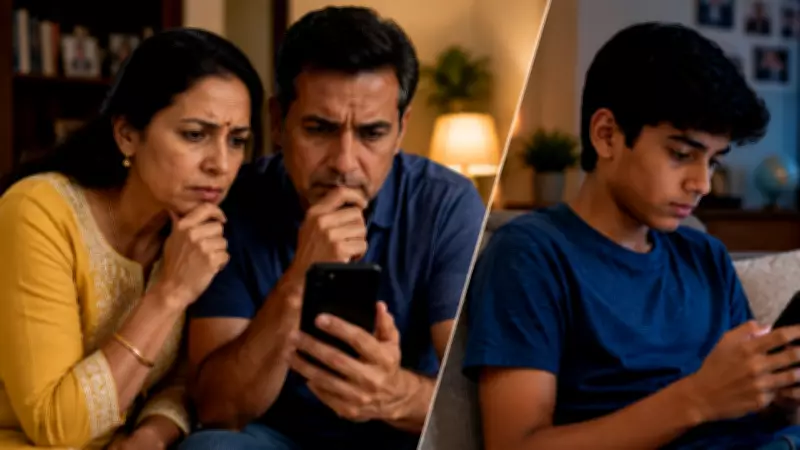
Parenting has always involved a difficult balance: protect the child, but do not crush their trust. In the age of smartphones, that balance has become even more fragile. A child’s chats can reveal bullying, online grooming, emotional distress, secret friendships, risky behaviour and even the quiet beginning of mental health struggles. They can also reveal something else: a parent’s deepest temptation to look, read and intervene before harm spreads.
So should parents read their child’s chats?
Experts tend to land on a complicated answer. Sometimes yes, but not casually, not secretly as a habit, and never as a substitute for real communication. The bigger question is not whether parents may ever check messages. It is what kind of relationship makes that checking necessary, and what it does to trust when it becomes routine.
Safety is real, but so is privacy
Children and teenagers live much of their social life through screens now. Group chats, direct messages and disappearing posts are where friendships are formed, tensions rise and pressure builds. That makes digital monitoring feel, to many parents, less like snooping and more like supervision.

There are moments when that instinct is justified. If a child is very young, has been targeted online, is being manipulated by an older person, or is showing sudden signs of distress, a parent may need to step in. In high-risk situations, checking chats can help a family spot danger early. A message from a stranger, a pattern of self-harm language, threats from peers or coercive behaviour may not be visible anywhere else.
But privacy matters too. As children grow older, their chats often become the one place where they speak freely. They complain, joke, confess, experiment with identity and ask questions they may not know how to ask at the dinner table. Read every message, and a parent may gain information while losing something harder to rebuild: the child’s sense of being trusted.
That is why many child development specialists argue that digital privacy should be treated as a growing right, not a gift that can be withdrawn without reason. Young children may need close supervision. Teenagers need more room, with boundaries that evolve as maturity does.
Secret reading can backfire
The central danger is not just what parents discover. It is how they discover it. Reading a child’s chats secretly may seem practical in the moment, especially if a parent is worried. Yet the emotional cost can be high. When children find out their messages were monitored without warning, they often feel embarrassed, angry or betrayed. Some become more careful, not more open. They move conversations to hidden apps, delete messages faster, and learn that honesty carries a penalty.
That is the paradox many families run into. The very act meant to increase safety can push risky behaviour further underground.
Trust, once damaged, is expensive to repair. Children may stop going to parents when they are bullied, confused or frightened. They may choose silence over support. For parents, that silence can be more dangerous than any single message thread.
Age and context matter
There is no single rule that fits every child. A ten-year-old and a sixteen-year-old do not need the same level of digital oversight. Neither do children with the same age but very different levels of maturity, impulse control or online exposure.
For younger children, parents may reasonably use shared passwords, device settings and regular spot checks as part of a transparent family agreement. At that age, the goal is less about secrecy and more about teaching safe habits. For adolescents, the approach should shift. Instead of constant reading, experts often favour conversation, coaching and limited oversight. Parents can ask to see chats when there is a clear concern, but doing so openly signals that the action is protective rather than punitive. The message should be: “I am worried about you, not trying to catch you.” That distinction matters. Children are far more likely to accept boundaries when they understand the reason behind them.

What parents can watch for instead
Parents do not need to read every message to stay alert. Behaviour often tells a story before text does. Sudden withdrawal, sleep changes, irritability, secrecy around devices, panic when a notification appears, a drop in school performance or a loss of interest in friends can all signal that something is wrong.
A child who refuses to hand over a phone once is not necessarily hiding danger. A child who becomes tense every time a device lights up may be signalling pressure or fear. The point is not to search for evidence in every case, but to notice patterns that justify a closer look.
Open-ended conversations help too. Parents who ask about online life the way they ask about school are usually more effective than parents who wait for a crisis. Questions like “Who do you talk to most online?” or “Has anyone made you uncomfortable in a chat?” create space for honesty without immediate judgment.
A healthier middle ground
The best answer may be neither total surveillance nor total freedom. A healthier middle ground looks like transparency, age-appropriate boundaries and an agreement that digital life is part of real life, not separate from it.
That can mean telling a child in advance that messages may be checked if there is a safety concern. It can mean setting up parental controls for younger children and easing them gradually. It can mean making it normal to talk about screenshots, group chat drama and online pressure without turning every conversation into an interrogation. Most of all, it means remembering that monitoring is a tool, not a relationship.
A parent who knows every chat but never knows how their child feels has missed the larger point. A parent who never checks anything, even when there are warning signs, may also be failing the child. The real task is not choosing between privacy and protection as if one must erase the other. It is learning when to step in, when to step back and how to keep trust alive while doing both. In the end, children do not need perfect parents. They need parents who are alert, honest and worth telling the truth to.