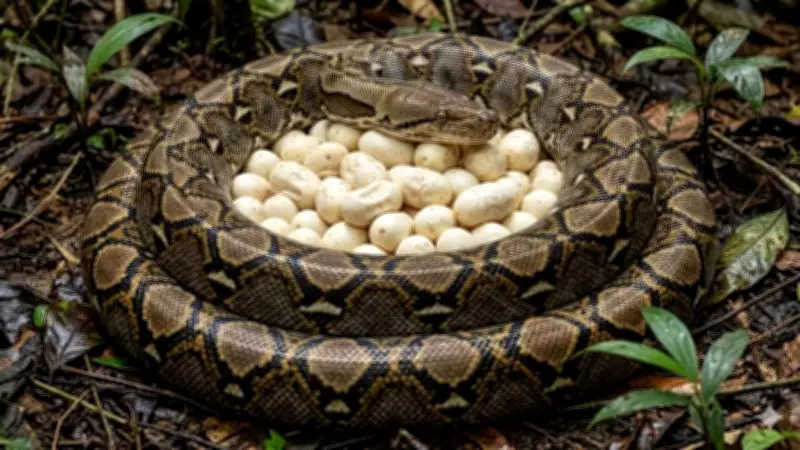
How Pythons Lay Up to 80 Eggs and Protect Them After Laying
Pythons reproduce through egg-laying, a method known as oviparous reproduction. A single female can lay between 20 and 80 eggs, depending on her size and environmental conditions. According to research on captive breeding of reticulated pythons in the Andaman and Nicobar Islands, clutch sizes vary significantly, but the species has the potential to produce a large number of eggs. After laying, the female python coils around her eggs, not only protecting them from harm but also maintaining stable conditions. Unlike many other reptiles, she remains with the nest, showcasing a distinct behavioral trait.
How Pythons Generate Heat to Incubate Their Eggs
One of the most fascinating aspects of python reproduction is their ability to generate heat for incubation. While most reptiles rely on external sources to warm their eggs, female pythons produce warmth through repeated muscle contractions known as "shivers." This process raises the temperature of the surrounding area, creating a stable environment for embryo development. Additionally, pythons may alternate between sunbathing and coiling back to optimize conditions for their offspring.
Maternal Care in Pythons: Unusual for Reptiles
Parental care is rarely associated with reptiles, but pythons are a notable exception. The mother does not abandon her eggs during the entire incubation period, which can last several weeks. She rarely leaves the clutch and hardly eats, dedicating herself to safeguarding the eggs. By surrounding them, she provides a safe environment that significantly boosts the survival rate of her offspring.

Why This Egg-Laying and Incubation Behavior Aids Survival
Laying multiple eggs increases the likelihood that at least some offspring will survive. Combined with incubation, this strategy ensures a higher hatching success rate. This behavior demonstrates that certain reptiles actively participate in the development of their young, challenging the notion that reptiles are passive in reproduction.