

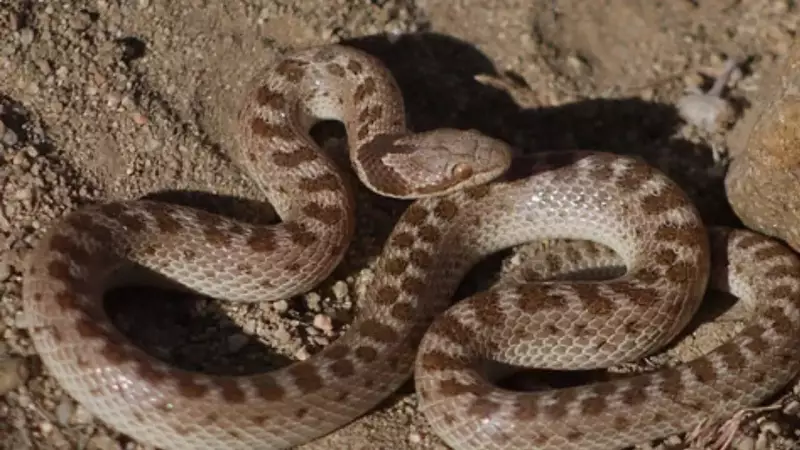
In the vast and varied landscapes of North America, from the arid scrublands of Mexico to the rocky canyons of Canada, lives a small and often overlooked resident: the Night Snake. Scientifically known as Hypsiglena torquata, this elusive reptile leads a secretive life under the cover of darkness, playing a surprisingly vital role in its ecosystem.
Taxonomy and Widespread Habitat
The Night Snake belongs to the biological kingdom Animalia, phylum Chordata, and class Reptilia. Its precise classification places it in the order Squamata, family Colubridae, and genus Hypsiglena. This colubrid family includes both non-venomous and mildly venomous snakes, a category that perfectly describes the Night Snake's nature.
Its geographical range is impressively broad yet patchy. It stretches from southern Mexico (including states like Guerrero, Jalisco, and Michoacán) northwards through the western United States (covering California, Arizona, Nevada, Utah, and others) and reaches into south-central Canada, specifically the province of British Columbia. Isolated populations are also found in Texas, Kansas, and Oklahoma.

This adaptable serpent thrives in diverse terrestrial environments. It can be found in canyon lands, oak woodlands, grasslands, savannahs, and even agricultural areas. During the day, it expertly conceals itself under rocks, within leaf litter, or in other debris, emerging only at night to hunt.
Physical Traits and Behavioural Adaptations
The Night Snake is a relatively small species, with adults measuring between 30 and 66 centimetres in total length. Its most striking feature is its pair of vertically-pupilled, bronze-copper coloured eyes, which enhance its night vision. Its dorsal side is tan with darker brown saddle-shaped blotches, while the head is brown with a distinctive creamy-coloured lip. The belly is typically a pearly white.
A notable aspect is the sexual dimorphism in the species, where females can be up to three times larger than males. There are also seventeen recognised subspecies, which show slight variations in scale counts and pattern details.
As a dedicated nocturnal predator, the Night Snake has evolved superb sensory adaptations. Its cat-like eyes, large corneas, and highly developed olfactory and vomeronasal systems make it an efficient hunter in low light. It uses its forked tongue to sample chemical cues from the air, guiding it to prey.
Diet, Reproduction, and Ecological Role
The diet of the Night Snake is that of an opportunistic hunter. It primarily feeds on small lizards, amphibians, insects, other small snakes, and occasionally eggs. Its venom is only mildly toxic, used to subdue small prey, and poses no real threat to humans.
Reproduction occurs from April to September. Females lay a single clutch of 2 to 6 eggs (averaging 3), which incubate for 50 to 60 days. The hatchlings are independent from birth, resembling miniature versions of the adults. Males reach sexual maturity at a snout-vent length of around 237 mm, while females mature at about 310 mm.
Ecologically, the Night Snake is a crucial component of its habitat. It helps regulate populations of small vertebrates and invertebrates, maintaining a natural balance. Predators like owls and hawks keep its own numbers in check. While largely secretive, some subspecies, like the Hypsiglena torquata texana, can cause minor discomfort if handled, though such encounters are rare. For humans, its main value lies in scientific and educational study, particularly in venom research and understanding reptile systematics.






