

The Little Albert Experiment: Psychology's Most Controversial Study on Human Fear
During the early 20th century, as psychology struggled to establish itself as a rigorous scientific discipline, researchers increasingly turned toward experiments that could demonstrate clear, observable laws of human behavior. One of the most influential concepts emerged from Ivan Pavlov's work with dogs, showing that animals could be trained to associate neutral stimuli like bells with food, eventually responding to the sound alone. This groundbreaking discovery prompted a direct and ambitious question: if animals could be conditioned this way, could human emotions be shaped through identical processes?
The Ambitious Experiment That Crossed Ethical Boundaries
This fundamental question drove the notorious experiment conducted between 1919 and 1920 at Johns Hopkins University by psychologist John B. Watson and his graduate student Rosalie Rayner. Their explicit aim was to provide experimental evidence that emotional responses in humans—particularly fear—could be learned through conditioning rather than being inherited or instinctive. The researchers conducted their study on an infant who could not provide consent, employing methods that would later be universally condemned as ethically questionable.
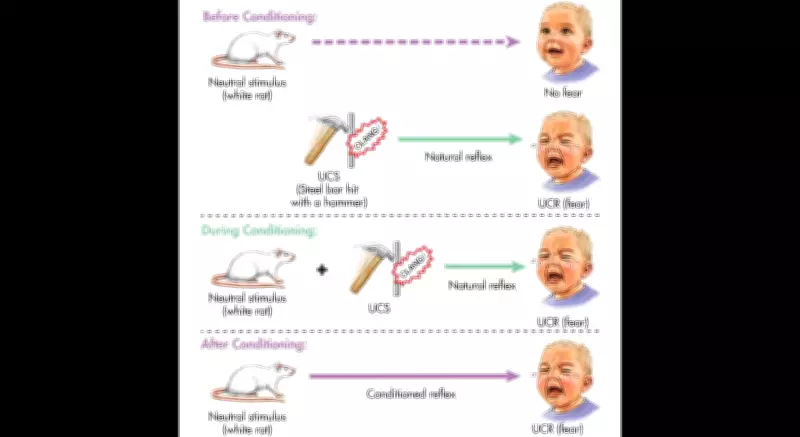
Watson and Rayner deliberately provoked fear by exposing the infant to a white rat and other stimuli while pairing each encounter with loud, frightening noises. They induced significant distress without implementing any measures to alleviate the fear, and crucially, they conducted no follow-up procedures to remove the conditioned response. By contemporary standards, this experiment represents one of the darkest and most infamous episodes in psychological research history, highlighting critical ethical limits regarding experimentation on human subjects.

Why "Little Albert" Was Selected for This Controversial Study
The subject of this groundbreaking yet troubling study was a nine-month-old boy referred to pseudonymously as "Little Albert." Watson and Rayner selected him deliberately based on specific characteristics documented in their published account. Described as "healthy from birth" and weighing approximately 21 pounds at nine months, Albert possessed an unusually calm temperament. Researchers noted he was "stolid and unemotional," rarely crying and showing minimal fear or distress in everyday situations.
Albert had been raised in a hospital setting because his mother worked as a wet nurse at the Harriet Lane Home for Invalid Children, part of Johns Hopkins University. This controlled environment provided researchers with consistent access to observe and test him over extended periods. This stability proved central to the experiment's design, as Watson and Rayner specifically wanted a child who did not already display strong fear responses. This ensured any emotional reactions could be clearly linked to the conditioning process rather than prior temperamental factors.
Establishing a Baseline: Curiosity Without Fear
Before initiating any conditioning procedures, the researchers conducted comprehensive baseline tests to observe Albert's natural reactions. They exposed him to various objects and animals including a white rat, rabbit, dog, monkey, masks (both with and without hair), cotton wool, and even burning newspapers. Remarkably, Albert showed absolutely no fear toward any of these stimuli. Instead, he reached out, touched the objects, and displayed genuine curiosity.
Observations from his mother and hospital staff corroborated these findings, noting that Albert rarely cried and had never demonstrated fear or anger in daily life. The only stimulus that reliably produced distress was a sudden, loud noise created by striking a steel bar behind his head. On the first occurrence, Albert startled visibly. During subsequent strikes, his lips trembled and he began crying. This natural response became the unconditioned stimulus that researchers would systematically employ throughout the experiment.

Conditioning Fear: Pairing a Rat With Terrifying Noises
The crucial phase of the experiment commenced when Albert reached approximately 11 months of age. Researchers placed a white rat near him, and as he reached out to touch it, they struck the steel bar behind his head, creating a jarring, frightening noise. This pairing was repeated systematically across multiple sessions.
During the first session, Albert startled and buried his face but did not cry immediately. In the second session conducted about a week later, his reactions intensified significantly. After several pairings, the rat alone began provoking hesitation. When the rat brushed against his hand, Albert withdrew sharply. After five pairings of rat and noise, the transformation became unmistakable. When shown the rat without any accompanying sound, Albert reacted with visible distress—his face puckered, he whimpered, turned away, and began crying. On one notable occasion, he attempted to crawl away so rapidly that researchers had to catch him before he reached the table's edge.
Between trials, Albert was given wooden blocks and played calmly, smiling and interacting as before. This contrast proved important for researchers, suggesting the fear response was specifically tied to the conditioned stimulus rather than representing a general change in temperament.
Fear Generalization: When Terror Spreads Beyond the Original Trigger
The researchers subsequently tested whether Albert's fear would extend to similar objects—a psychological process known as generalization. Their findings confirmed this phenomenon dramatically. When presented with a rabbit, Albert leaned away and cried when it touched him. A dog initially caused him to shrink back, and when it approached his face, he began crying uncontrollably.
A fur coat prompted immediate withdrawal and distress. Cotton wool was actively avoided, though he still interacted with its paper wrapper. A Santa Claus mask with white hair triggered crying and desperate attempts to turn away. Even the hair of the experimenters themselves provoked noticeable discomfort. These responses clearly indicated that the learned fear was not limited to the original object but had spread to other stimuli sharing similar textures and appearances.
The researchers also tested Albert in a different setting—a large lecture hall rather than the smaller room used previously. Some responses appeared less intense in this environment, but the fundamental fear remained present. When a dog barked suddenly near him in this new setting, Albert fell over and cried loudly.
The Final Visit: The One-Month Follow-Up That Raised More Questions
Approximately 31 days after the conditioning sessions concluded, Watson and Rayner returned to observe Albert once more. His reactions had changed in intensity but had not disappeared entirely. When shown the rat, he no longer cried as strongly but actively avoided it, showed visible unease, and engaged in thumb-sucking—a behavior researchers interpreted as self-soothing.
The researchers had originally planned to conduct "deconditioning" procedures to remove the learned fear. However, Albert's mother withdrew him from the hospital on that same day, and the experiment ended abruptly without any attempt to reverse the conditioning. This lack of intervention left Albert's conditioned fear unresolved, raising significant ethical concerns that continue to resonate today.
The Unresolved Identity of "Little Albert": Decades of Mystery
For decades following the experiment, the child's true identity remained shrouded in mystery. Two primary candidates have emerged through historical investigation. Psychologist Hall Beck advanced one theory identifying Albert as Douglas Merritte, the son of a wet nurse at Johns Hopkins. Merritte died at age six from complications related to hydrocephalus. Some later analyses suggested the child in the experiment may have shown signs of neurological impairment, raising concerns that Watson might have misrepresented his subject's condition.
A later and widely cited alternative proposed by researcher Russ Powell and colleagues identified Albert as William Albert Barger. Historical records showed a compelling match: his name ("Albert B."), age at discharge (1 year and 21 days, matching Watson's report), and physical condition as a healthy, "chubby" infant weighing around 21 pounds at nine months. If Barger was indeed the child, he lived until 2007. His niece later recalled that he maintained a lifelong aversion to animals, though no direct causal link to the experiment has been definitively established.
Why This Experiment Remains Deeply Controversial Today
Even by the scientific standards of its time, the Little Albert study raised significant ethical concerns. Within modern ethical frameworks, such an experiment would be categorically prohibited. Multiple factors contribute to its enduring controversy: Albert could not provide consent, his distress was deliberately induced without justification, the fear was never properly removed, and questions persist about whether his condition was accurately reported.
The experiment did successfully demonstrate a foundational psychological principle: that emotional responses can be learned through association, mirroring the conditioning observed earlier by Ivan Pavlov in animals. However, it also exposed the profound risks of treating human subjects—especially vulnerable children—as mere instruments of scientific proof. While the findings endure in psychology textbooks worldwide, so too does the profound unease about how they were obtained, serving as a permanent cautionary tale about ethical boundaries in scientific research.





