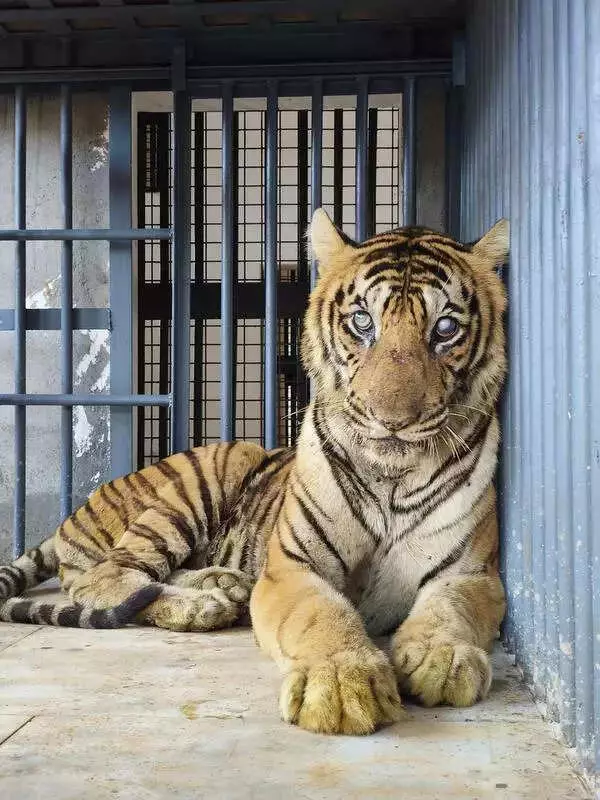
A 12-year-old male tiger, recently captured from the forest fringes of Kerala, has begun a new chapter at the Puthur Zoological Park in Thrissur. The big cat, which was found in the Kumbalatha region of the Ranni forest division in Pathanamthitta, is now under expert veterinary care after forest officials determined it could not survive in the wild.
From Forest Fringe to Special Enclosure
The tiger's journey to safety began on Monday when it was successfully captured by the forest department. The animal had been frequenting areas near human settlements, a behavior driven by necessity. Due to significant injuries, impaired vision, and overall poor health, its natural hunting ability was severely compromised. This forced the tiger to seek easier prey on the forest edges, bringing it into potential conflict.
After an initial examination by veterinarians at the capture site, a critical decision was made. Considering its age and health condition, the forest department concluded that releasing the tiger back into its natural habitat would be unsustainable and dangerous for both the animal and nearby communities.

Specialized Care for a Majestic Patient
On Monday night, the tiger embarked on a secure journey to its new temporary home. It was transported in a vehicle specially equipped for large carnivores to ensure its safety and minimal stress during the transit.
Upon arrival at the Puthur Zoological Park in Thrissur, the tiger was placed in a dedicated enclosure designed for quarantine and medical treatment. Here, a team of veterinary doctors is providing round-the-clock monitoring and care. A primary focus of the treatment is addressing a cataract in the tiger's left eye, which is a major factor behind its impaired vision.
Road to Recovery and Permanent Sanctuary
Currently, the tiger is in a recovery phase, steadily regaining its strength under the watchful eyes of its caretakers. The officials at the zoological park have confirmed that the animal is responding well to the initial care provided in its new environment.
The sequence of events highlights a critical aspect of wildlife management:
- Identification: Spotting a distressed animal in the wild.
- Rescue: Safe capture by forest department teams.
- Rehabilitation: Providing medical treatment in a controlled setting.
- Sanctuary: Offering a permanent home for animals that cannot be rewilded.
This case underscores the challenges faced by aging and injured wildlife in India's forests and the proactive role played by the Kerala Forest Department and zoological parks in offering a lifeline. The Puthur Zoological Park will now serve as a permanent sanctuary for this tiger, where it can live out its life free from the struggles it faced in the wild.