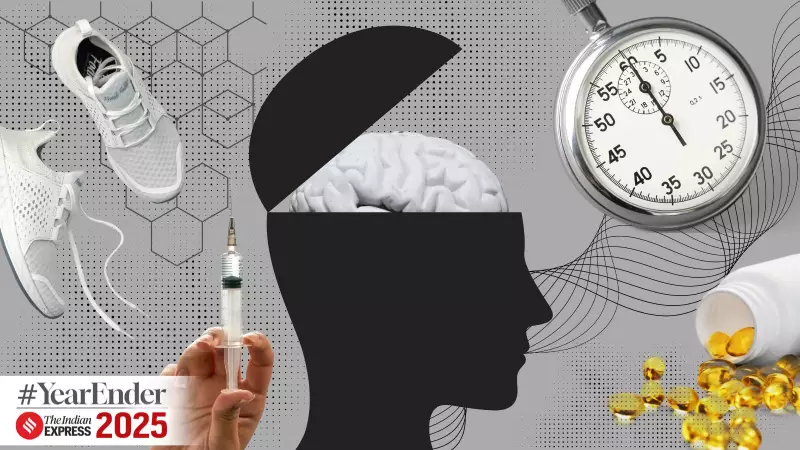
The year 2025 will be remembered as the moment humanity's ancient dream of immortality collided head-on with modern science, technology, and a hefty dose of billionaire ambition. The dominant health and wellness trend of the year was unequivocally the pursuit of longevity, a movement that blurred the lines between defying death and simply aiming for a healthier, longer life.
World Leaders and Billionaires Bet on 'Forever'
The conversation took a startlingly public turn in September 2025, when global power dynamics intersected with biotech fantasies. At a military parade, Russian President Vladimir Putin told Chinese President Xi Jinping that continuous organ transplants could make people younger, even suggesting immortality was within reach. Xi, in turn, mused that humans might live to 150 years in this century, remarking that a 70-year-old could be considered a "child." Observers noted the presence of North Korea's Kim Jong Un, a younger leader smiling alongside these septuagenarian strongmen, leading many to question if this was genuine scientific discourse or powerful wishful thinking.
This high-level chatter mirrored a massive financial plunge into longevity by the world's tech elite. The year kicked off with Netflix's documentary on Bryan Johnson, the "biohacking" venture capitalist behind 'Project Blueprint.' Johnson, who boasts 2.1 million Instagram followers, claims his 48-year-old body operates at "elite 18 year old levels" and declares, "We may be the first generation who won't die." His extreme regimen of strict diets, supplements, and therapies has sparked equal parts intrigue and skepticism, highlighted by his abrupt exit from a Mumbai podcast due to poor air quality.
Indian tech billionaires joined the fray. The Kamath brothers (Nikhil and Nithin) invested in Bengaluru-based wellness startup Biopeak and partnered with the Indian Institute of Science for its 'Longevity India' initiative. In October, Zomato founder Deepinder Goyal made a significant personal commitment, pledging $25 million to 'Continue Research,' an initiative asking: "What if we lived for 180 years, instead of 80?" A subsequent 'gravity ageing hypothesis' shared by Goyal ignited fierce online debate, showcasing the fine line between promising science and pseudoscience in this field.
Longevity Goes Mainstream: From Gen Z to Gym Routines
This obsession rapidly moved beyond boardrooms and billionaires. A McKinsey Group report revealed that up to 60% of consumers globally considered longevity or "healthy aging" a top priority. Gen Z and millennials are proactively driving demand for a new wave of products:
- Skincare aimed at preventing wrinkles.
- Supplements designed to slow cellular ageing.
- Epigenetic age-testing kits.
Social media discourse evolved beyond cold plunges. Everyday practices like tai chi walking and rucking (walking with weighted vests) gained popularity. Nutritional trends shifted from a protein focus to 'fibermaxxing,' and creatine joined collagen as a supplement staple. Community-based activities like run clubs, padel, and cycling groups surged as antidotes to loneliness and 'bedrotting,' reflecting a desire for social health alongside physical longevity.
The Thorny Questions Behind Living Longer
However, 2025 also forced a reckoning with the profound implications of extended lifespans. The vision of ageing dictators clinging to power raised alarming social and political questions. Practical concerns emerged about the environmental cost of larger populations, the stagnation of generational wealth transfer, and the risk that life-extending treatments would become a luxury for the ultra-wealthy, exacerbating inequality.
Elon Musk has publicly opposed longevity research, arguing it could concentrate power and ossify civilization, preventing necessary evolution. This philosophical dilemma was powerfully echoed in culture. While franchises like Pirates of the Caribbean and Avatar depict quests for eternal life, a 2025 adaptation of Frankenstein presented immortality as a curse, with the monster seeking not more life, but an end to it.
In a year marked by global conflicts, economic disruptions, and an internet descending into "AI slop" and "ragebait," the ultimate question shifted from "how" to live longer to "why" and "should we?" The pursuit of longevity in 2025 was not just about adding years to life, but about grappling with what makes those years meaningful. As the clock ticks toward the future, humanity is left to ponder: if you could live forever, would you truly want to?