

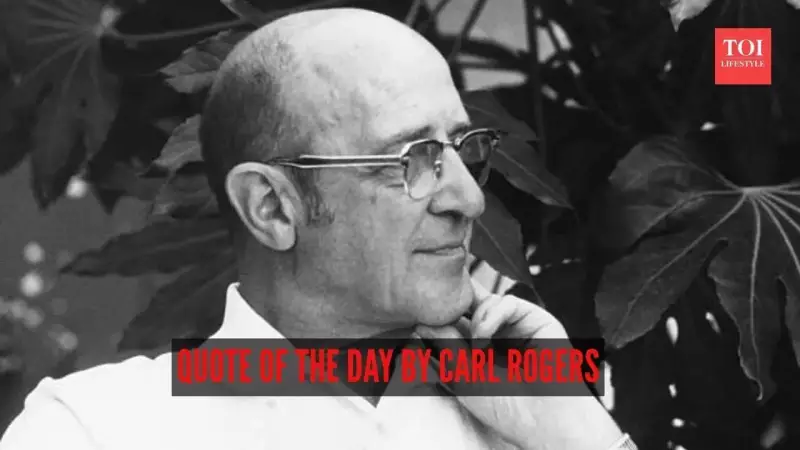
In the vast landscape of 20th-century psychology, few figures shine as brightly as Carl Rogers. Born in 1902 in Illinois, USA, Rogers emerged as a revolutionary voice, challenging the era's dominant focus on pathology and control. Instead, he pioneered a compassionate approach that celebrated human potential, personal growth, and the innate drive toward self-actualisation. His legacy, deeply relevant in today's fast-paced world, redefined well-being as an ongoing journey rather than a fixed state.
The Architect of Person-Centered Psychology
Rogers is best remembered for developing person-centered therapy, a groundbreaking method that transformed therapeutic relationships. He moved away from the traditional model of an expert diagnosing a patient. His approach was built on three core pillars: empathy, unconditional positive regard, and authenticity. Rogers held a fundamental belief that people are not inherently broken. He saw them as continually evolving beings capable of profound growth when provided with a supportive and non-judgmental environment.
His influence quickly spilled over from the therapist's couch into broader society. The principles of humanistic psychology began to reshape education, leadership models, conflict resolution, and personal development practices. Rogers' insight that a nurturing climate fosters growth became a cornerstone for building healthier institutions and relationships.

Decoding the Quote: "The Good Life is a Process"
One of his most enduring ideas is perfectly captured in a powerful statement from his 1961 book, On Becoming a Person. Rogers wrote, “The good life is a process, not a state of being. It is a direction, not a destination.” This quote serves as a powerful antidote to the modern obsession with end goals and final achievements.
At its heart, this philosophy challenges the widespread notion that fulfillment arrives only after hitting specific milestones—a promotion, a perfect relationship, or a financial target. Rogers argues that genuine well-being is found in the continuous movement toward greater self-awareness and authenticity. Happiness, in his view, is not a permanent condition you attain and hold, but something that unfolds through experience itself.
What This Means for Everyday Living
Embracing Rogers' perspective has profound implications for how we navigate our lives. It shifts the focus from the stressful pursuit of a distant endpoint to valuing the growth that occurs along the way. A person living the "good life" is not someone who has become a perfect, finished version of themselves. Instead, they are someone who remains psychologically open, constantly learning from experiences, and aligned with their own values rather than external pressures.
This view also encourages immense patience and self-compassion. It re-frames difficulties, doubts, and emotional pain not as evidence of failure, but as natural and inevitable aspects of the human process of becoming. The goal is to trust this ongoing journey, engaging fully with each moment instead of being fixated on a far-off destination.
Carl Rogers' humanistic vision offers a timeless and dynamic framework for a meaningful existence. By recognizing life as a direction and not a finish line, we are freed to find fulfillment in the very motion of our lives—in our awareness, our honesty, and our courageous, continual forward movement.






