From Earthquake Rubble to Classroom Wisdom: A Survivor's Journey
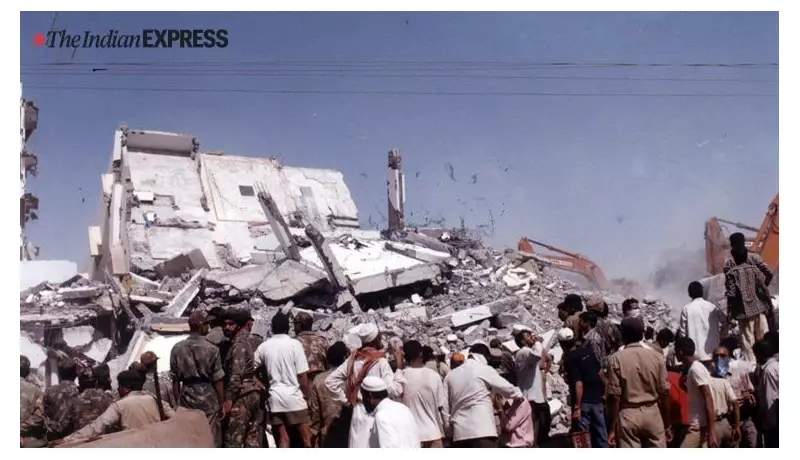
When the catastrophic earthquake struck Bhuj in Gujarat on January 26, 2001, Vaishali Joshi was a 21-year-old postgraduate literature student preparing for her examinations. Like many young adults, she believed life followed a predictable, stable trajectory. At precisely 8:46 AM, that assumption crumbled along with countless buildings across the region.
The Day Everything Changed
"At first, I thought something was wrong with me," Joshi recalls of those terrifying moments. As the ground convulsed violently and structures began collapsing around them, her father gathered the family inside their apartment. With remarkable clarity amidst the chaos, he told them: "This is not our home. This is just a building. Home is where we are together."
This profound statement would become the foundation of Joshi's transformed worldview. The family fled soon after, leaving behind all their possessions. With aftershocks continuing relentlessly, they spent several nights outdoors as Bhuj descended into darkness and isolation.

The Aftermath and Volunteer Work
The earthquake completely disrupted normal life in Bhuj. The city lost electricity, telephone connectivity, and medical facilities, while damaged roads severed connections with surrounding areas. Although Joshi's family escaped without serious injuries, the destruction was comprehensive. Her brother's small computer business was completely destroyed.
With homes damaged and reports of thefts in abandoned neighborhoods, the family temporarily relocated to Mandvi, nearly two hours away, where they stayed in a farmhouse. When the initial shock subsided and the long process of rebuilding began, Joshi returned to Bhuj as a volunteer.
She worked with the area development authority on compensation claims, rehabilitation processes, and town planning. Many residents had lost crucial documents including ration cards, property papers, and identity proofs in the collapse. Officials brought in from outside Gujarat often struggled to communicate with residents who primarily spoke Kutchi. As a local, Joshi became an essential bridge in this communication gap.
"People needed to explain what they had lost," she says, emphasizing how relief camps revealed the human cost of the disaster more starkly than broken buildings ever could.
A Defining Moment of Trauma
One particular incident remains permanently etched in Joshi's memory. A young child was rescued alive from a damaged structure after her entire family had perished inside. Moments after the rescue, the building completely collapsed. The child, traumatized by what she had witnessed, did not survive.
"That was when I understood how temporary life is," Joshi reflects, her voice carrying the weight of that realization even decades later.
Transformed Priorities and Philosophy
As Bhuj slowly rebuilt itself with stronger infrastructure and planned development, the earthquake continued to shape Joshi's inner life. "Before that, everything felt centred around studies, career and material goals," she explains. "After the earthquake, I realized how quickly all of that can disappear."
Over time, this experience significantly reduced her attachment to money and property. "What stays with you is not what you own, but who you are with, and how you treat people," she states with conviction born from firsthand experience.
From Survivor to Educator
In 2016, Joshi moved to Pune following her marriage and her husband's service transfer. He works as Deputy Director at a forensic science laboratory. She returned to her academic roots and took up teaching English literature.
Her experience in Bhuj continues to profoundly influence her teaching methodology and philosophy. "Before becoming engineers, doctors or professionals, students need to learn to be human," she asserts. For Joshi, literature transcends language study—it becomes a vehicle for understanding human relationships and moral responsibility.
Teaching provides her with a meaningful way to pass on the earthquake's hard-earned lessons—quietly, without spectacle, to younger generations who may not have faced such profound loss themselves.

Legacy of Resilience
Bhuj and Kutch have steadily rebuilt themselves over the years, transforming from sites of devastation to models of resilience. For Joshi, the earthquake represented not only a moment of destruction but a pivotal point where life demanded a deeper understanding of what truly matters.
Her journey from earthquake survivor to dedicated educator demonstrates how personal tragedy can transform into collective wisdom. Through her teaching, the lessons of January 26, 2001 continue to resonate, reminding new generations about the fragility of life and the enduring importance of human connection over material possessions.