

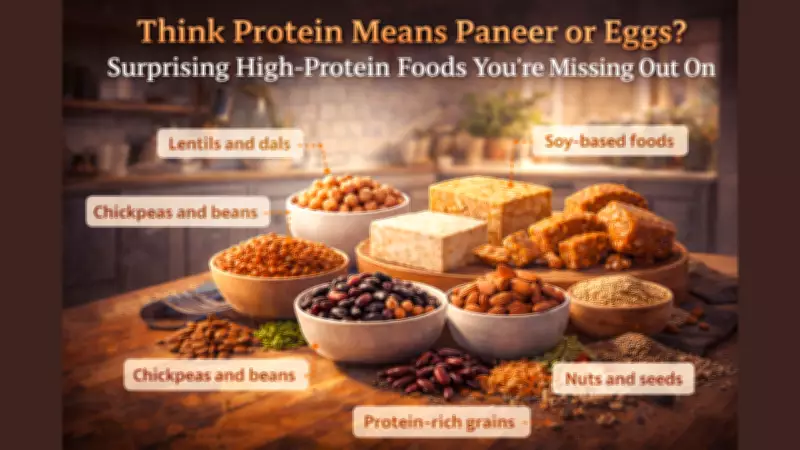
Beyond Paneer & Eggs: Discover India's Hidden Protein Powerhouses
For countless individuals, the concept of protein remains narrowly confined to paneer and eggs. It's an almost reflexive association: aiming for a healthier diet? Incorporate paneer. Requiring more protein? Consume eggs. While both are excellent sources, they represent merely the tip of the nutritional iceberg.
Relying solely on a limited selection of foods can quickly lead to monotony. More critically, it may result in missing out on other essential nutrients that your body genuinely needs. Protein does not exist in isolation; it is typically accompanied by fiber, vitamins, minerals, and numerous micronutrients that silently support optimal bodily function.
If you find yourself trapped in a repetitive dietary cycle, now is an opportune moment to explore alternatives beyond the conventional choices.

Lentils and Dals: Simple Yet Profoundly Underrated
Begin with what is already present in most Indian households: lentils. Varieties such as moong, masoor, toor, and chana dal often go underappreciated, perhaps due to their perceived simplicity.
However, they are remarkably robust. A single cooked cup of lentils can provide approximately 15 to 18 grams of protein, alongside substantial fiber that promotes prolonged satiety. This is particularly beneficial for weight management or reducing frequent snacking.
The Harvard T.H. Chan School of Public Health succinctly states: "Lentils are a good source of protein and fiber, and they're low in fat." The institution further notes, "Because of their hearty texture and protein content, they are sometimes used as an alternative for meat." This nutritional balance facilitates easy daily incorporation without excessive deliberation.
The most advantageous aspect? Significant dietary changes are unnecessary. Dishes like dal-chawal, khichdi, and sambar are already staples; merely perceiving them as protein-rich can transform your approach.
Chickpeas and Beans: Elevating Beyond Side Dishes
Chickpeas, rajma, and black beans frequently appear as supplementary components rather than focal points. Yet, they possess the potential to assume a central role in meals.
These legumes are abundant in protein and also rich in complex carbohydrates and fiber, ensuring sustained energy levels without abrupt fluctuations. If you often experience hunger shortly after eating, increasing your intake of these foods could be beneficial.
According to a report by UCLA Health, "A serving of beans averages about 8 grams of protein." Thus, you are not merely fulfilling protein requirements but also addressing broader nutritional needs.
Their versatility is another asset. Incorporate them into salads, blend them into spreads like hummus, or prepare them using traditional methods—no elaborate techniques required.
Soy-Based Foods: The Unassuming Protein Powerhouse
Soy has been surrounded by misconceptions over the years, but its nutritional profile is compelling. Foods such as tofu, tempeh, and soya chunks are densely packed with protein.
Notably, soya chunks can deliver around 50 grams of protein per 100 grams (dry weight), a substantial amount. Their affordability further enhances their practicality.
The World Health Organization has observed, "Soy products can be a valuable source of high-quality protein, especially in plant-based diets." The term "high-quality" is crucial, indicating that the body can utilize this protein efficiently.
As per a report published on the official website of the Union Ministry of Food Processing Industries, soybean contains 40% protein. "Soybean protein provides all the essential amino acids in the amounts needed for human health. Soybeans have almost 40% protein, making them higher in protein than any other legumes and many animal products. Protein in just 250 grams of soybean is equivalent to protein in 3 liters of milk or 1 kg of mutton or 24 eggs. The quality of soy protein is virtually equivalent in quality to that of milk and egg protein," the report elaborates.
Contrary to popular belief, soy-based foods need not be bland. They absorb flavors exceptionally well when seasoned, grilled, or incorporated into curries.

Nuts and Seeds: Incremental Contributions with Significant Impact
Almonds, peanuts, chia seeds, and flaxseeds may appear modest, but they consistently augment daily protein intake.
While not intended as primary protein sources, incorporating a handful into meals or as snacks can yield noticeable benefits. Additionally, they supply healthy fats, which are vital for overall well-being.
The Mayo Clinic explains straightforwardly: "Nuts are a good source of protein and healthy fats, which can help you feel full and satisfied." This satiety can deter indulgence in less nutritious snacks.
Grains That Offer More Than Mere Sustenance
Rice and wheat are dietary staples, but other grains provide more protein than commonly assumed. Quinoa and amaranth (rajgira) are notable examples, and even oats contribute a respectable amount.
These grains are not meant to replace primary protein sources but to complement them. The essence of a balanced diet lies not in a single "superfood" but in the synergistic combination of diverse foods.
Instead of fixating on a solitary protein source, consider how multiple sources can be integrated into a single meal.
Expansion Over Replacement: A Sustainable Approach
There is no necessity to eliminate paneer or eggs if you enjoy them. This perspective is not about exclusion but about broadening your options to avoid dependence on merely two foods.
This approach renders healthy eating less restrictive, more adaptable, and more achievable. Optimal nutrition does not stem from perfection in one aspect but from consistent, varied practices.
By diversifying your diet and paying closer attention, you may realize that the foods you have long consumed are already contributing more to your health than previously recognized.





