

For most of us, defecation is a basic, universal fact of animal life. However, zoological research reveals a surprising truth: several creatures have evolved to live without this process entirely. These animals process their food with such efficiency or through such unique biological systems that they produce little to no solid waste. This isn't a flaw but a remarkable adaptation shaped by millions of years of evolution.
The Science Behind Waste-Free Digestion
Biological waste handling is not a one-size-fits-all process. It is deeply influenced by an animal's body structure, its feeding habits, and the environmental pressures it faces. Some species have digestive systems that leave almost no solid residue, while others completely lack the anatomical parts typically associated with faeces. Advances in tools like microscopy and biochemical analysis have allowed scientists to closely study how nutrients and waste move within these simple or highly specialised bodies. In many cases, the absence of defecation represents peak metabolic efficiency, where waste is dispersed, absorbed, or transformed instead of being expelled.
1. The Resourceful Tree Hole Frog
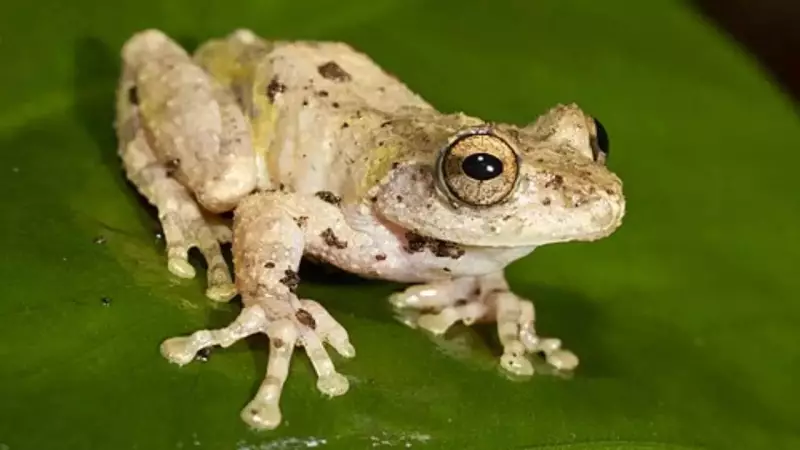
The reproductive strategy of the Kurixalus eiffingeri frog, found in parts of Asia, has long intrigued scientists. Its tadpoles develop in tiny, water-filled tree holes, an environment with extremely scarce resources that can quickly become polluted. This intense pressure led to an extraordinary adaptation: the tadpoles do not defecate at all during their entire development. They survive by consuming unfertilised eggs laid by their mother, a highly digestible food source with minimal indigestible content. Laboratory gut examinations confirm no faecal buildup. Nitrogenous waste is released as ammonia directly through their skin and gills. This process was documented in a detailed study published in the journal Ecology.

2. Sponges: Ancient Filter Feeders
As one of the earliest multicellular life forms, sponges operate without a digestive tract. Their porous bodies filter water, trapping food particles like bacteria inside specialised cells called choanocytes. Because digestion is entirely intracellular, there is no gut cavity where waste can collect. Any indigestible material is either broken down by other cells or simply flushed out with the water flow. Metabolic by-products such as ammonia diffuse directly into the seawater. Research in Frontiers in Marine Science uses advanced imaging to show how sponges thrive without an anus or faecal matter.
3. Flatworms and Their Single Opening
Flatworms possess a simple gastrovascular cavity with just one opening that serves as both mouth and anus. Food enters, is partially digested, and nutrients are absorbed by surrounding tissues. Any undigested remnants are ejected back through the same opening, preventing the formation of compact faeces. Their famously flat bodies allow nitrogenous waste to diffuse directly across their skin into the water or damp surroundings. Classical zoological studies, accessible via archives like JSTOR, detail this efficient ingestion and egestion cycle.
4. Jellyfish: Gelatinous Efficiency
Jellyfish share the single-opening digestive plan but on a larger, more complex scale. Food travels from the mouth to a central stomach, and nutrients spread through radial canals. Indigestible bits are periodically expelled back through the mouth, often broken down and mixed with seawater, not formed into solid pellets. Their thin tissue layers enable metabolic waste to diffuse away easily. Time-lapse imaging and tracer studies, synthesised in the journal Biology, illustrate how jellyfish manage without a dedicated excretory system.

5. The Incredible Tardigrade
Famous for surviving extreme conditions, tardigrades also exhibit unique digestion. They have a mouth and gut, but their feeding is so efficient that almost all material is absorbed at a cellular level, generating minimal solid waste. More remarkably, when they enter cryptobiosis—a dormant state induced by dehydration—their metabolism nearly stops, halting digestion and waste production for months or even years. Studies highlighted in The Scientist explore the physiology behind this extreme metabolic suppression, which eliminates the need for defecation.
Evolutionary Insights and Conclusions
These five examples demonstrate that defecation is not an absolute biological rule. Evolution has crafted diverse solutions for waste management, often prioritising efficiency and adaptation to niche environments. From the nutrient-poor tree holes to the deep sea, animals like the tree hole frog, sponges, flatworms, jellyfish, and tardigrades challenge our basic assumptions. Their existence underscores the incredible versatility of life and provides crucial insights into metabolic evolution, with potential implications for understanding fundamental biological processes and even informing bio-inspired design.





