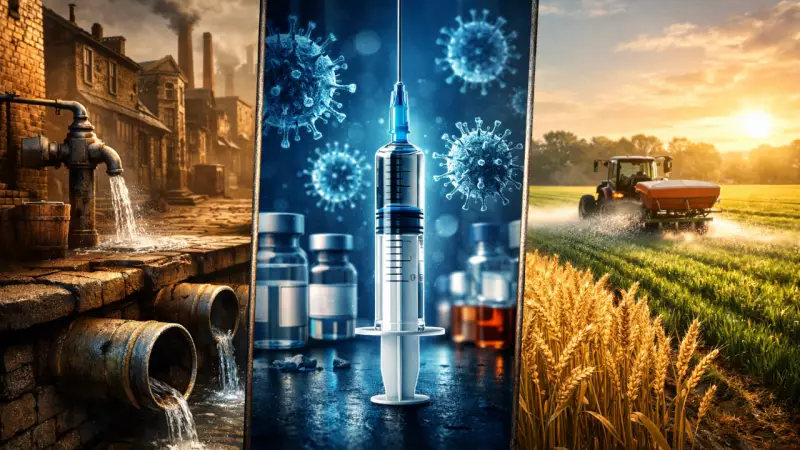
A simple question posted online by a doctor has ignited a sprawling and surprisingly nuanced debate about the very foundations of modern public health. Dr Neil Stone, an infectious diseases physician known for popularising the #Covid hashtag during the pandemic, asked a rhetorical question on X on January 9: "Name one human invention that has saved more lives than vaccines."
The Foundation of Survival: Clean Water and Sanitation
Contrary to expectations, the most engaged-with replies did not point to a medical marvel, but to a fundamental civic advancement: sanitation. Plumbing, sewage treatment, and water purification systems repeatedly topped the list. Long before the first vaccine was developed, these innovations dismantled the breeding grounds for deadly waterborne diseases like cholera, typhoid, and dysentery in crowded cities.
Historical records from Europe and North America show that the rollout of modern sanitation in the late 19th and early 20th centuries slashed deaths from many infectious diseases by more than half in major urban centres. Even today, the World Health Organization estimates that unsafe water and poor sanitation contribute to over one million preventable deaths annually. However, this success is uneven, with many low-income and conflict-ridden regions still lacking these basic systems.

The Engine of Population Growth: Synthetic Fertilisers
Another dominant answer highlighted the Haber-Bosch process, the industrial method for creating synthetic nitrogen fertiliser. Commenters rightly noted that modern agriculture, and by extension our global civilisation, is built upon this invention. Peer-reviewed research suggests that 40 to 50 percent of the world's current population is fed by food grown using synthetic fertiliser, implying billions might not exist without it.
Yet, this invention comes with significant environmental costs, including water pollution, oceanic dead zones, soil degradation, and greenhouse gas emissions. These downsides complicate its status as an unambiguous life-saver.
Antibiotics and Vaccines: The Medical Powerhouses
The conversation naturally included medical breakthroughs. Antibiotics, particularly penicillin, transformed medicine in the 1940s, turning previously fatal infections into curable conditions and making surgeries far safer. Their introduction caused a sharp rise in life expectancy in many countries.
Vaccines, however, hold a unique position due to their preventive power. WHO modelling estimates vaccines have saved approximately 154 million lives since 1974 alone, mostly children, not counting the eradication of smallpox. They are among the most rigorously tested medical tools, with large-scale trials dating back to the 1954 Salk polio vaccine study involving 1.8 million children.
A Debate Reflecting Modern Anxieties
This online discussion is not happening in a vacuum. It unfolds against a backdrop of renewed vaccine scepticism fuelled by the COVID-19 pandemic, online misinformation, and distrust of public health policies. In the United States, this sentiment has been amplified by the position of Robert F Kennedy Jr., now the US Secretary of Health and Human Services, whose past scepticism towards vaccine safety has raised concerns among experts about eroding public trust.
The debate ultimately converged on a profound historical truth. There is no single "winner." The dramatic extension of human life over the past two centuries is the story of stacked inventions—sanitation, fertilisers, antibiotics, and vaccines—each with its own benefits, risks, and unintended consequences. They did not replace one another but built upon each other, creating a layered legacy of survival. This complex reality stands as the clearest answer to Dr. Stone's question and a powerful rebuttal to oversimplified narratives in today's health debates.