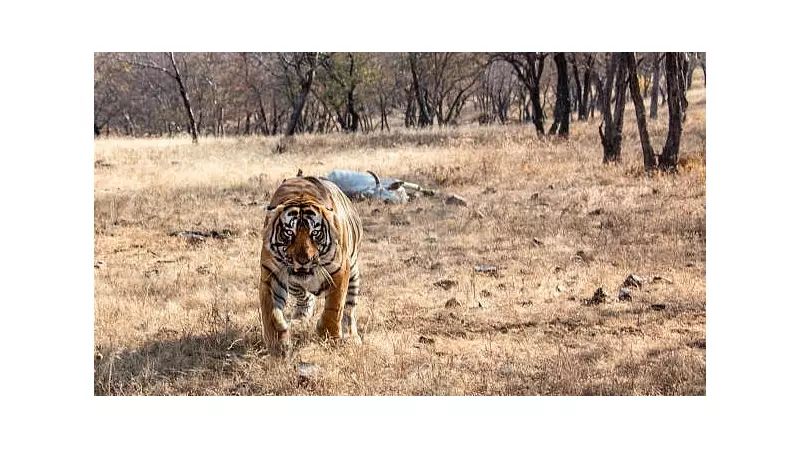
In a tragic incident that has sent shockwaves through the region, a 58-year-old farmer lost his life in a tiger attack near Bandipur National Park on Tuesday. This marks the third fatal tiger attack in the area within a span of just 15 days, raising serious concerns about escalating human-animal conflicts.
The Fatal Incident: What Happened
The victim, identified as Madesh P, was a resident of Gundlupet's Gopalpura village. The tragedy unfolded when Madesh ventured into the forest area near Kallabare forest range to collect firewood, a routine activity for many locals despite the known risks.
According to forest officials, the attack occurred around 2:30 PM on June 25, 2024. The tiger emerged suddenly from the dense vegetation and pounced on the unsuspecting farmer. The location of the attack falls within the jurisdiction of the Gundlupet forest division, adjacent to the core tiger habitat of Bandipur National Park.

Local villagers who heard Madesh's distress calls immediately alerted forest authorities. A rapid response team reached the spot promptly, but unfortunately, the farmer had already succumbed to his injuries. His body showed clear signs of a big cat attack, confirming the nature of the incident.
Immediate Response and Search Operations
Following the attack, the forest department launched an extensive search operation to track the tiger responsible. More than 50 forest personnel, including trained trackers and anti-depredation team members, have been deployed in the area.
The department has installed four camera traps at strategic locations to monitor tiger movements and identify the specific animal involved. Additionally, teams are conducting regular patrols and have established watchtowers to keep vigil over the area.
Forest officials have confirmed that this is the third human kill by a tiger in the Bandipur landscape within 15 days, indicating a worrying pattern of increased human-tiger conflicts in the region. The previous two incidents also involved local residents who had entered forest areas for various purposes.
Growing Concerns and Community Impact
The repeated tiger attacks have created an atmosphere of fear and anxiety among villagers living on the periphery of Bandipur National Park. Many residents now fear venturing into forest areas even for essential activities like collecting firewood or grazing livestock.
Local communities have expressed their concerns to forest authorities, demanding enhanced safety measures and better compensation for victims of wildlife attacks. The forest department has been actively engaging with village leaders to address these concerns while balancing conservation priorities.
Bandipur National Park, part of the larger Nilgiri Biosphere Reserve, is home to one of India's significant tiger populations. The park spans approximately 912 square kilometers across Mysuru and Chamarajanagar districts, forming a critical tiger habitat along with neighboring Nagarahole National Park.
Conservation Challenges and Way Forward
The recent spate of attacks highlights the complex challenges of wildlife conservation in areas where human settlements border protected forests. As tiger populations show signs of recovery thanks to conservation efforts, instances of human-animal conflict have inevitably increased.
Forest authorities emphasize the importance of following safety protocols when near forest areas. They have repeatedly advised villagers to avoid venturing into tiger habitats alone, especially during early morning and late evening hours when big cats are most active.
The department is also exploring long-term solutions, including creating better buffer zones, improving early warning systems, and enhancing compensation mechanisms for affected families. Conservationists stress the need for balanced approaches that protect both human lives and endangered wildlife.
As search operations continue, forest officials remain vigilant while also working to maintain the delicate balance between conservation goals and community safety in one of India's most important tiger landscapes.