

Tamil Nadu Grapples with Sharp Rise in Leprosy Cases and Deformities
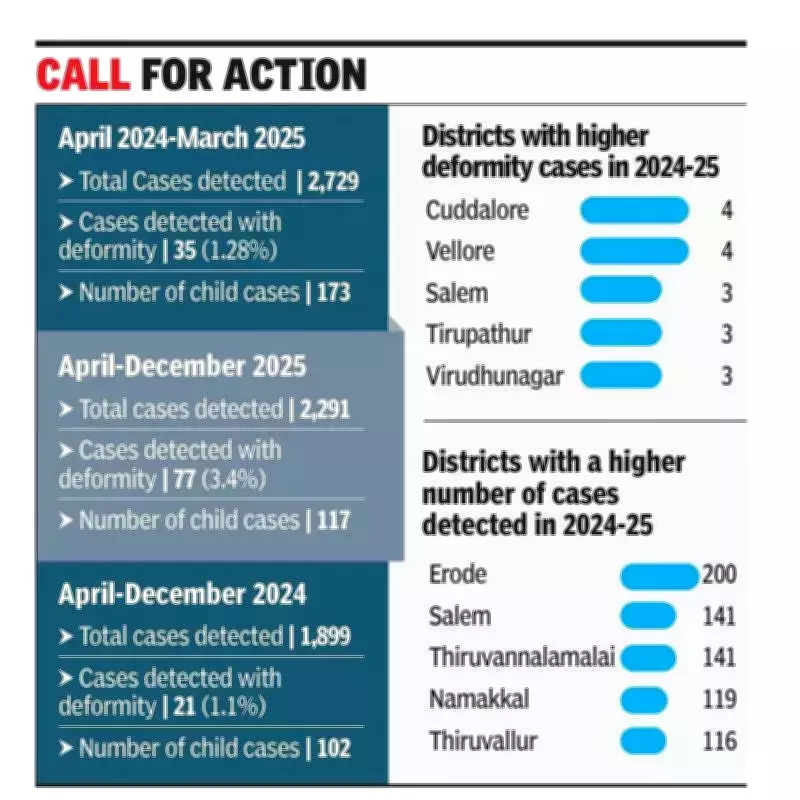
Coimbatore: The state of Tamil Nadu has identified a concerning surge in leprosy cases during the current fiscal year. From April to December 2025, health authorities detected 2,291 new cases, marking a significant 20% increase compared to the 1,899 cases recorded in the same period in 2024, according to data from the Directorate of Public Health.
Alarming Spike in Deformities Signals Delayed Diagnosis
While intensified surveillance efforts may be contributing to higher detection rates, medical experts are raising alarms about a parallel rise in severe deformities. This trend points to delayed diagnoses that allow the disease to progress unchecked.
In 2025, at least 3.4% of new patients (77 individuals) presented with Grade 2 deformities. These are visible, irreversible physical impairments resulting from advanced nerve damage. This represents a dramatic increase from just 1.1% (21 cases) in 2024.

"These deformities signal ongoing community transmission, as early intervention is crucial to prevent progression beyond subtle sensory loss," explained Dr. P. Sivakumari, Coimbatore's Deputy Director of Medical Services (Leprosy).
Official Targets Met, But Experts Warn of Future Challenges
Despite the rising numbers, Tamil Nadu has officially achieved key public health targets. Health Minister Ma Subramanian informed the state assembly that the prevalence rate has dropped to 0.29 per 10,000 population in 2024-25, down from 0.30 in the previous year, meeting the target of less than one per 10,000.
Similarly, the deformity rate has improved to 0.44 per million population in 2024-25 from 0.93 per million in 2023-24, achieving the goal of less than one per million.
However, healthcare professionals on the ground express deep concern about the sustainability of these gains. "Eradication by 2027 looks impossible if active cases keep rising," stated a government dermatologist from Coimbatore, who highlighted systemic challenges.
Systemic Issues and Social Stigma Hamper Progress
Experts cite multiple factors contributing to the current situation:
- Funding cuts: Central government funding reductions since 2005 have led to reduced surveillance staff, delaying diagnosis and treatment.
- Underreporting: Many cases diagnosed in private healthcare settings go unreported to official databases.
- Vulnerable populations: Highly contagious Grade 3 deformities are increasingly clustering among migrant guest workers living in crowded camps with limited healthcare access.
The public health department conducts special detection drives twice annually, but health educator S. Murugesan from Trichy argues this is insufficient. "Myths endure as fiercely as the disease," he noted, emphasizing that persistent social stigma prevents early diagnosis.
Early Symptoms Often Ignored Until It's Too Late
Leprosy typically begins with subtle warning signs that are frequently overlooked:
- Pale or reddish skin patches that feel numb to touch
- Thickened nerves
- Loss of sensation in hands or feet
"People ignore these symptoms. Even when deformities like facial disability or muscle weakness appear, many don't suspect leprosy. By the time they consult a healthcare professional, they've often reached Grade 2 or severe Grade 2 deformity," Murugesan explained.
Dr. J. Devi Meenal, Dean of Government Mohan Kumaramangalam Medical College Hospital in Salem, corroborates this assessment. Salem district has reported higher active cases primarily due to public awareness gaps. "Leprosy remains a significant social stigma. Only when people overcome this stigma can we achieve diagnosis at the earliest stages," she emphasized.
The combination of rising case numbers, increasing deformities, and persistent social barriers presents a complex challenge for Tamil Nadu's public health system as it works toward disease eradication goals.






