

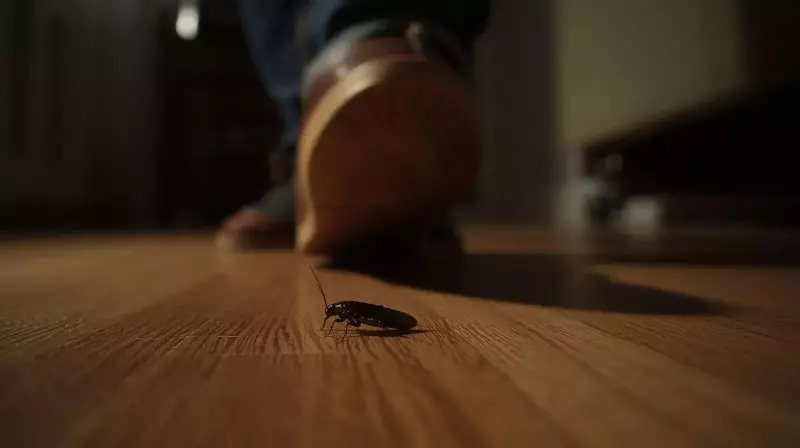
That sudden, instinctive reaction is familiar to most Indians. A flicker of movement in the kitchen corner, a scuttle across the bathroom floor. Before rational thought intervenes, the hand reaches for the nearest chappal. The cockroach, more than any other common pest, evokes this visceral response. It's quick, unsettling, and loaded with unhygienic associations. However, what happens in the moments after that satisfying thwack is often overlooked. Crushing a cockroach does not solve the problem; it can, in fact, make the situation quietly worse. The reasons are grounded not in myth, but in straightforward biology and hygiene.
The Unseen Aftermath of a Crushed Cockroach
When a cockroach is squashed, its body ruptures. Internal fluids and bodily matter are released onto your floor, counter, or wall. This isn't just a messy cleanup job. Cockroaches are notorious scavengers, frequenting drains, garbage, and decaying matter. They pick up a host of microorganisms along the way. Crushing them releases these pathogens into your living space.
Scientific studies have identified that cockroaches can carry bacteria like E. coli and Salmonella, which are linked to serious food poisoning and gastrointestinal infections. They can also harbour viruses and parasites. Even if an immediate infection doesn't occur, the spread of these particles and cockroach allergens can exacerbate asthma and allergy symptoms, particularly in young children.

Why Killing One Roach Can Attract Many More
The problem extends beyond immediate bacterial spread. Cockroaches communicate through chemical signals known as pheromones. When a cockroach is injured or killed, it can release specific substances that act as signals to others in the vicinity. These aren't deliberate alarm calls, but they effectively draw attention.
Consequently, squashing one cockroach can inadvertently signal to others that there is activity or even a potential food source (the remains) in that area. The lingering odour from the crushed insect's fluids can also make the spot more attractive. This means your decisive action might lead to increased cockroach traffic in the same area days later, with new arrivals bringing their own load of bacteria.
Effective and Safer Strategies for Cockroach Control
Given these risks, a more strategic, patient approach is far more effective for long-term control. The key is to target the nest and the population, not just the individual scout you see.
Gel baits are highly recommended. Roaches consume the gel and return to their hiding places, where they die and are often cannibalised by others, spreading the poison within the colony. Sticky traps are a non-toxic option that captures roaches without crushing them, preventing the spread of fluids and signals.
Prevention is equally crucial. This involves:
- Sealing entry points: Close gaps around pipes, cracks in walls, and spaces under doors.
- Denying food sources: Store food in airtight containers, avoid leaving dishes overnight, and manage garbage diligently.
- Reducing moisture: Fix leaky taps, ensure proper drainage, and ventilate damp areas like bathrooms.
While the urge to smash a cockroach on sight is powerful and understandable, resisting it can lead to a cleaner, more permanent solution. These resilient pests, with a fossil history spanning hundreds of millions of years, thrive on our reactive chaos and overlooked crumbs. Implementing quiet, consistent control measures changes your home's environment in ways they cannot tolerate, encouraging them to move on for good.






