

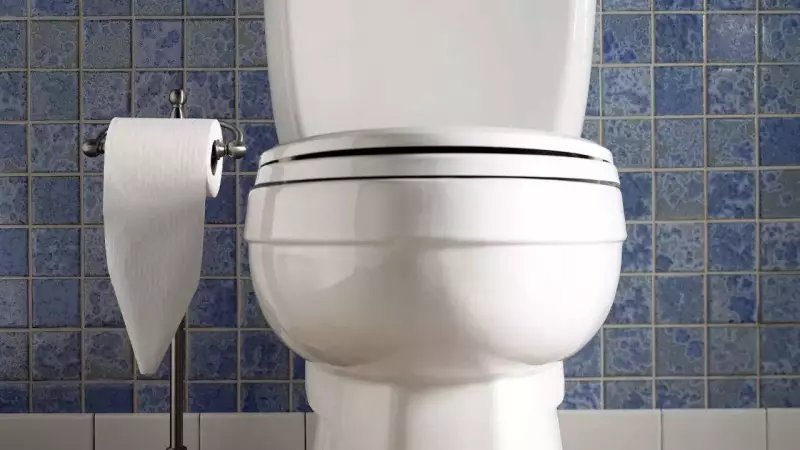
For most people, flushing the toilet is a mindless, automatic act. You press the button, hear the roar of water, and move on, assuming the process is clean and contained. However, groundbreaking research has uncovered a hidden, unsettling reality about what happens in those few seconds after the flush.
The Unseen Cloud: What Really Happens When You Flush
A peer-reviewed investigation published in the American Journal of Infection Control has put bathroom hygiene under a microscope. Scientists meticulously analyzed what spreads inside a bathroom when a toilet is flushed, conducting experiments with the lid both open and closed. They tracked the journey of microscopic particles released into the air and documented where they finally settled.
The findings are enough to make anyone pause. Flushing propels an invisible plume of tiny droplets and aerosols upward from the bowl. These particles, too small for the naked eye, ride air currents and can land on various surfaces. Perhaps the most surprising revelation was that closing the toilet lid did not completely stop this spread. While it reduced the emission, gaps around the lid and seat allowed some particles to escape and contaminate the surrounding area.

Why You Should Still Close the Lid (And What Else To Do)
Does this mean closing the lid is pointless? Absolutely not. The study confirms it remains a critical first line of defence. Closing the lid changes the flush's dynamics, causing larger droplets to hit the lid's underside rather than launching into the room. This is vital in real-world bathrooms where toothbrushes, towels, cosmetics, and other personal items are often within range.
However, since the lid alone is not a perfect seal, experts stress that effective hygiene requires a combination of consistent habits.
- Regular Cleaning: Frequently disinfecting the toilet seat, handle, flush button, and nearby countertops is more important than many realise.
- Ventilation: Always use an exhaust fan or open a window. Bathrooms that trap moist, stagnant air allow aerosol particles to linger for longer periods.
- Smart Storage: Keep personal items like toothbrushes in a closed cabinet or as far from the toilet as possible.
- Hand Hygiene: Thorough handwashing after using the bathroom remains a non-negotiable practice.
The Bottom Line: Awareness Over Fear
The core message from this research is not to incite panic but to promote informed awareness. The simple act of flushing does more than just clear the bowl; it creates a temporary, invisible cloud. While closing the lid doesn't block every single particle, it significantly interrupts the spread, especially when combined with other cleaning and ventilation practices.
Bathrooms are compact spaces where contamination doesn't simply vanish because we can't see it. Adopting small, layered habits—like flushing with the lid down, wiping surfaces, and ensuring good airflow—creates a powerful, cumulative shield that quietly protects everyone who uses the space daily.






