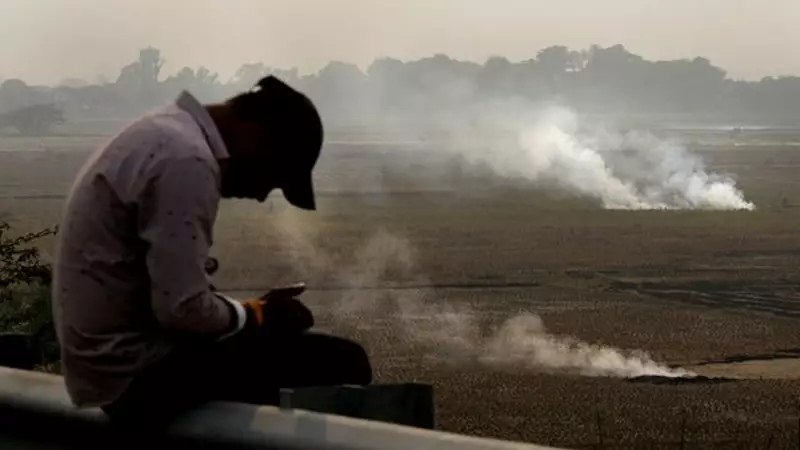
As Pune prepares for its upcoming civic elections, a clear and urgent demand is rising from the electorate: the need for breathable, clean air. Voters across the city are compelling political candidates to place air pollution at the forefront of their agendas, labeling it an invisible yet critical emergency that impacts long-term public health.
Citizen Voices Highlight Systemic Failures
In neighborhoods across Pune, resident groups are vocal about the daily sources of pollution and the lack of effective action. Monica Sharma, an active member of the Kalyaninagar Citizens' Forum, points to persistent issues like garbage burning, uncovered construction sites, and open trucks carrying debris as major contributors. "Despite multiple complaints, violations continue unchecked," Sharma stated, emphasizing the need for the Pune Municipal Corporation (PMC) and the Maharashtra Pollution Control Board (MPCB) to move beyond paperwork and take concrete action to reduce Air Quality Index (AQI) levels.
The sentiment is echoed in Vimannagar, where Anita Hanumante of the Vimannagar Vikas Samiti revealed plans for a 'Know Your Candidate' meeting focused squarely on air quality. Hanumante expressed frustration with encroachments and open-air cooking, whose fumes degrade air quality. Similarly, in Pashan, Pushkar Kulkarni of the Pashan Citizens' Sabha described the Pashan-Sutarwadi area as akin to a "gas chamber," criticizing the PMC's claims of 100% garbage collection while chronic dumping and burning persist.
A Charter of Demands for a Healthier City
The public outcry has crystallized into specific, actionable demands from various citizen collectives and NGOs. Hema Chari, the Maharashtra coordinator for Warrior Moms—a nationwide collective fighting for children's right to clean air—stressed the need for ward-wise air quality mapping to accurately measure pollutants and inform policy.
Ranjit Gadgil, programme director of the sustainable urban development NGO Parisar, called for an overhaul of the complaint redressal mechanism to ensure timely resolution of pollution-related grievances. The organization's charter for a safe Pune also includes setting up pollution control systems at crematoria. Environmentalist Ameet Singh from Shivajinagar advocated for a cross-party consensus to implement an Emissions Grid to track pollution sources city-wide.
The Core Voter Expectation: Accountability
Underpinning these technical demands is a fundamental political expectation. Residents have unequivocally stated in their manifestos that they seek corporators who are "visible, accountable, and responsive". The call is for elected representatives who will enforce existing norms—like bans on garbage burning and dust control at construction sites—and innovate with data-driven tools like AQI mapping to tackle what voters now perceive as a public health crisis, not just an environmental concern.
The message from Pune's voters is clear: as they head to the polls, the quality of the air they breathe is no longer a negotiable issue but a primary determinant of their vote, pushing the invisible emergency of air pollution into the visible realm of electoral politics.